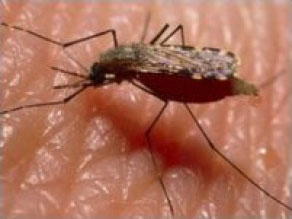
malaria
A research team from the Singapore-MIT Alliance for Research and Technology, SMART, has devised a way to use magnetic resonance relaxometry,MRR, a close cousin of magnetic resonance imaging, MRI, to detect a parasitic waste product in the blood of malaria- infected patients.
“This technique could offer a more reliable way to detect malaria,” says Jongyoon Han, a professor of electrical engineering and biological engineering at MIT.
Han, one of the senior authors of a paper describing the technique in Nature Medicine, said:”There is real potential to make this into a field-deployable system, especially since you don’t need any kind of labels or dye. It’s based on a naturally occurring biomarker that does not require any biochemical processing of samples.”
With traditional blood-smear technique, a technician stains the blood with a reagent that dyes cell nuclei. Red blood cells don’t have nuclei, so any that show up are presumed to belong to parasite cells. However, the technology and expertise needed to identify the parasite are not always available in some of the regions most affected by malaria, and technicians don’t always agree in their interpretations of the smears.
“There’s a lot of human-to-human variation regarding what counts as infected red blood cells versus some dust particles stuck on the plate. It really takes a lot of practice,” he says.
The new SMART system detects a parasitic waste product called hemozoin. When the parasites infect red blood cells, they feed on the nutrient-rich hemoglobin carried by the cells. As hemoglobin breaks down, it releases iron, which can be toxic, so the parasite converts the iron into hemozoin — a weakly paramagnetic crystallite.
Those crystals interfere with the normal magnetic spins of hydrogen atoms.
Disclaimer
Comments expressed here do not reflect the opinions of Vanguard newspapers or any employee thereof.