By Chioma Obinna
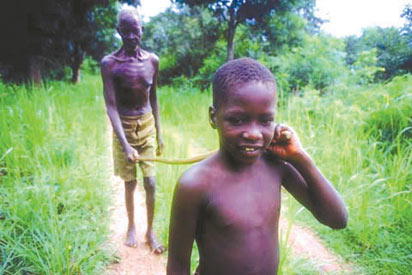
BLindness remains one of the most debilitating illnesses in the world today.
No thanks to the fact that it is a problem which encompasses several degrees of impaired sight, ranging from the simple impairments of sight, to a total lack of sight, is currently plaguing the Nigerian population.
Unarguably, blindness is no respecter of age, race or gender. As long as an individual has eyes, he or she is at risk of blindness from several causes.
Statistics from published reports of the National Survey on Blindness in Nigeria show that out of 100 Nigerians that are blind, cataract was accountable for 43 cases. Glaucoma accounted for 17, corneal scars 8, while the remaining 32 is said to be due to Non-Communicable Diseases.
4 in 100 Nigerians are blind: According to reports, four Nigerians out of 100 are blind, and even after issuing spectacles for best correction, the rate still remains as high as not less than 3 of 100.
Experts are worried that with alarming increase in the prevalence of diseases such as diabetes which the World Health Organisation, WHO, has listed among the leading causes of blindness, the number of Nigerians who are visually impaired may rise to 10 million by 2020.
Nigeria has the largest number of diabetics in Africa; an estimated burden of about 1.7million and the number is expected to increase to 4.8 million by the year 2030.
Early diagnosis
According to a Vitreo-Retina specialist, Dr. Aloy Majumdar, early diagnosis and management of diabetes is a major factor in the prevention of blindness in diabetics.
Unfortunately, legion of problems which include brain drain, dearth of ophthalmologists, poor eye care, etc., are currently worsening efforts by stakeholders and government to achieve the Vision 2020 which targets ‘sight for all’.
An eye specialist, Dr. Gboyega Ajayi, had in a report, lamented that despite the huge number of Nigerians that were in urgent need of eye care, the country could only boast of 300 ophthalmologists, adding that, 80 per cent of cases of blindness in Nigeria could be avoided if genuine eye treatment was sought at the early stage.
Sadly, for the country to adequately take care of those in need of eye treatment, there is need to train not less than 1,500 ophthalmologists by 2020.
But today, Nigerians can heave a sigh of relief, as end is in sight for challenges militating against eye care in the country, courtesy of the recent expansion by an indigenous eye hospital, Cathem Eye Hospital, Lagos to provide advanced Vitreo-Retina surgical for patients who ordinarily will sell their properties in quests to get medical treatment abroad.
Relief: With the introduction of Vitreo-Retina facilities, Nigerian patients will now have access to advanced vitreo-retina care.
The facility, fully equipped with hi-tech diagnostic instruments and retina management facilities would help to bring relief to patients with blind eye disorders such as diabetic retinopathy, retinal detachment, macular hole, retinal tears, myopia associated retinal degenerations and age-related macular degeneration.
Located in the heart of Lagos, the hospital is silently championing the campaign against “brain drain” and ensuring that Nigeria reduces the amount of foreign exchange, normally spent by patients seeking medical care in advanced eye care procedures/ treatment.
The ultra-modern centre also has latest technology for cataract surgeries and glaucoma.
Speaking, the Medical Director, Dr. Brigid Erikitola confirmed she was moved by the plight of Nigerians, who travel abroad daily for eye surgeries in this rare speciality.
Erikitola said the need for the Centre was imperative as many Nigerians travel abroad due to few facilities for retina surgery in Nigeria.
Of major concern is the fact that retina surgery, done early in the disorder gives better results and thus should be carried out urgently so as to give a better visual outcome. Delay in the proper management usually leads to irrecoverable loss of vision.
In his view, the Vitreo-Retina specialist, Majumdar, argues about the need to identify, diagnose and adequately treat the retina disorders as of paramount importance in the final outcome.
Diabetes: Elaborating further, he stated that Nigeria has the largest number diabetics in Africa: an estimated burden of about 1.7 million and the number is expected to increase to 4.8 million by the year 2030. Diabetes and its associated disorders like kidney, eye, heart, nerves and skin are definitely going to be a huge burden over the medical care facility all over the world and Nigeria is no exclusion.
He said that most of the diabetics were quite ignorant of the blindness consequence of the diabetes related disease of the eye which is extremely prevalent but less diagnosed and not usually given the due importance as to the kidney diseases related to Diabetes.
Retina management: Majumdar maintained that Cathem Eye Hospital is equipped with the technically advanced retina related diagnostic and management facility, capable of delivering the appropriate retina management to patients in line with the International protocols followed in developed countries.
Further, he explained that the Retina Surgical facility available is compatible for the minimally invasive Vitreo-Retina surgery (MIVS) and Sutureless vitreo-retina surgical techniques which ensure quicker recovery and least discomfort to the patients.
The Advanced laser facility available at the hospital ensures appropriate laser treatment with minimum collateral damage to healthy tissues thus improving the results.
“People suffering due to the retina disorders will now have a world class retina management facility in the country, thus eliminating the need to travel abroad for the international standard eye care.
Disclaimer
Comments expressed here do not reflect the opinions of Vanguard newspapers or any employee thereof.