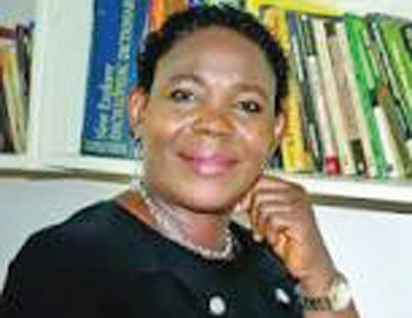
Lola Akande
Barely a year after her second novel, What It Takes, was launched into the literary market, Dr Lola Akande of the Department of English, University of Lagos, has launched a third novel.

Lola Akande
By her latest work, Where Are You From?, Akande has lived up to her description as an author who does nor write to earn cheap popularity but to seriously address national problems. The book launch was held during a Faculty of Arts Seminar Presentation themed: Ethnicity and the National Question: Content and Style in Where Are You From?
At the core of the novel are citizenship, indigenisation, inter-ethnic marriages and youthful exuberance. Where are You From interrogates the true meaning of federalism and highlights the frustration and disappointment young Nigerians face in their quest to succeed in a country with ethnic differences.
“We seem to be having a big problem in our hands in this country. Everybody is faced with the question of where we come from. How you are treated or mistreated in this country depends on where you come or fail to come from. I am concerned because it is getting worse and the dangers are frightening especially among young people,” Dr Lola explained.
“So, this is a novel, a work of fiction through which I aim to make my contribution. I’m not saying that I’m able to solve the whole problem but I believe talking about it is part of the solution. So let’s begin to talk about ethnicity and ask ourselves whether this is the kind of country we want to leave for our children,” she said.
On the issue of ethnicity, the author averred that “there’s nothing wrong with ethnicity depending on how we use it. The problem with ethnicity is that we use it wrongly. As a Yoruba woman, I married an Igbo man and I lived in Kano and I don’t see anything wrong with these tribes.
“I had students in mind while writing which is why the language is simple and the plot linear.” She commented on the style and diction employed, stressing that “I want the children to read the book and know what we are doing so that they will not grow to become like us in terms of how we view ethnicity.”
According to her “the trajectory of the protagonist, Anjola’s life, is that she is unable to define her belongingness.
Young, innocent, idealistic and naive, Anjola embarks on the National Youth Service Corps, NYSC programme with the confidence of getting a job immediately after the programme. She goes to Kaduna, based on assurances by a Kaduna-based lover, but ethnic challenges frustrate her effort to get a job. Unknowingly to her, her struggles have just begun.”
And this sadly, is the case of most Nigerians.
Disclaimer
Comments expressed here do not reflect the opinions of Vanguard newspapers or any employee thereof.