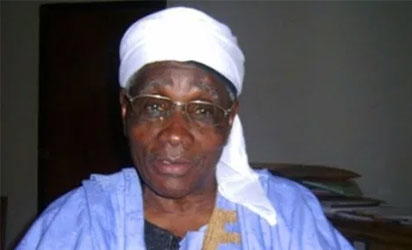
Ango Abdullahi
By Levinus Nwabughiogu
ABUJA – Barely 48 hours after President Muhammadu Buhari asked Ndigbo of the South East to halt secession struggle and embrace national integration, the National Chairman of Northern Nigeria Union, Professor Ango Abdulahi, has said that Nigeria’s unity was not settled.
He also said President Buhari’s endorsement and adoption for a second term in office in 2019 by the North was not automatic.
Abdulahi spoke, last night, at a news conference in Abuja on the union’s readiness to host the 5th Commemorative lecture in honour of late Dr. Olusola Saraki on November 27 at International Conference Centre, ICC.
The elder-statesman said it would be inhuman to say that the unity of Nigeria had been settled, noting that the many challenges still bedeviling the polity would always prompt questions about the unity of the country.
He said: “Two days, I spent about 2 hours of interview with Biafra Radio of Germany and the issues have been unity, marginalization, dissatisfaction and so on and so forth.
‘’So, based on this current debate, if you want to be honest and sincere, you cannot say that Nigeria’s unity has been finally settled and no more issues will be raised about it because it is not even human to say so, in the sense that if you’re really thinking about the constitution of the country, no constitution anywhere around the world is perfect.
“Issues are being raised about constitutions of countries within themselves. Take for example, recent discourse in Britain; there was the issue of referendum to determine whether Scotland wants to remain or not after 350 years.
‘’You can see what is happening in Spain today. You can look at very many other countries like India, which started with one country, the following year, it is India and Pakistan, etc. Unity is not a final settled question in any country, particularly a country in diversity like Nigeria.”
Disclaimer
Comments expressed here do not reflect the opinions of Vanguard newspapers or any employee thereof.