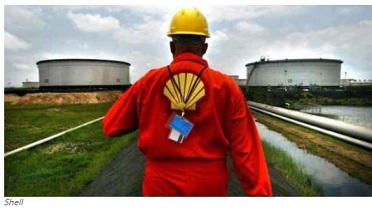
Shell engineer
By Tracy Lawei
THE House of Representatives moved on Wednesday, October 25, 2017 to narrow the disagreements between the Shell Petroleum Development Company, SPDC, and Ogulagha, its host community in the Burutu Local Government Area of Delta State.
At stake are the Forcados Oil Terminal (Tank farm), the Forcados Crude Loading Platform (CLP), the South Bank Flowstation, and the North Bank Flowstation. Other oil facilities in the area are the Yokiri Flowstation, Yokiri Gas Lift Station, the Estuary Production Platform, the Forcados-Yokiri Integrated Gas- gathering facility in North Bank, the Afremo A Production Platform, the Afremo B Production Platform, the 54 clusters of oil and gas wells (each cluster bearing two or more oil wells) and the Forcados Terminal Gas Plant for power generation.
The community which said the SPDC commenced its hydrocarbon exploration and exploitation activities in Ogulagha kingdom 49 years ago and subsequently constructed and commissioned the Forcados Oil Terminal on its soil on September 27, 1971, has always neglected it.
At the Public Sitting of the House of Representatives Committee on Public Petition, the community painted a picture of what it called “pains, environmental degradation and total neglect” by the transnational oil corporation.
The Ogulagha Kingdom Youth Council, OKYC, which dragged Shell to the House, claimed that from the oil facilities in the Kingdom alone, Shell and four other oil companies produce 260,000 barrels of oil per day, which represents approximately 15 per cent of the 1.8m barrels of the country’s daily oil output. It also claimed that a good portion of the 4mscf of gas produced daily is being flared through six flare points within the kingdom, while a small volume is harnessed to generate electricity in Forcados Terminal.
The community spokesmen, Comrades Justice Timiadi Akuna, the OKYC President, Shedrack Lucky Agediga, his predecessor, and Dose Mienkiriya, the OKYC Secretary said youths in the community are left out of training schemes and sidelined while people from other parts of the country benefit from the projects. They complained to the Honourable members that the “ SPDC has no deliberate employment plan for people of Ogulagha kingdom. From inception till date, SPDC has refused to have a clearly defined employment plan to curb the ravaging unemployment menace in the kingdom as most of our qualified sons and daughters who would have been employed have been systematically thrown out due to lack of proper framework.”
They claimed that the first Ogulagha indigene to be employed was in 1980, 12 years after oil production began in the community, and that the next person employed was in 1998.
The spokespersons argued that: “It is very sad and incredible to hear that Forcados Terminal that has been in existence for over 46 years does not have one person from the kingdom as a Community Liaison Officer, CLO, or Community Relations Officer, CRO. Can this happen in any other oil-producing community or kingdom in this country or in the world at large?”
They said after series of agitations, from 2007 to 2008, the SPDC agreed to absorb 18 qualified youths from the kingdom in their training programme with the promise that they will be employed if they successfully completed the training. They claimed that while 16 of the 18 youths passed the training programme with distinction, only three of them were employed as direct junior staff while the other 13 were placed in different categories as casual workers.
They claimed that while the community protected the oil facilities during the armed militancy in the Niger-Delta, the SPDC “relegated all Ogulagha kingdom contractors to grass-cutting, housekeeping, toilet washing and all kinds of dehumanising contracts” while outsiders were rewarded with juicy contracts.
The community demanded:
*Fifty per cent of the Forcados offshore oil facility surveillance vessels contract.
*Engagement of four Community Relations staff in Forcados Terminal.
*SPDC should train some Ogulagha youths in the FYIP gas-gathering facility in the kingdom.
*SPDC should immediately engage the outstanding 13 trainees as staff.
*Recall all Ogulagha Kingdom persons sacked due to SPDC asset divestment.
*Convert all Ogulagha graduates who are currently on contract into permanent staff, and
*Henceforth, Ogulagha indigenes be given first consideration for any project/contract to be executed in the kingdom.
The SPDC Government Integration Manager, Mr. Abubakar Ahmed who represented the company said Shell has heard the complaints of the Ogulagha people, that the company is not disputing the issues presented by the community and that Shell will look into all issues raised. He promised that Shell will engage the community in further dialogue. He said most of the projects in the host community are based on contracts and that the company will have to investigate complaints about abandoned projects in the community.
Hon. Julius Pondi, the Member Representing Burutu Constituency which includes Ogulagha Kingdom said the promise of Shell that it will verify the projects in Ogulagha is an old one and that the company should act immediately. He rejected the offer of Shell to host a meeting with the community leaders in Port Harcourt, insisting that such a meeting should be held in the community.
The Chairman of the House Petitions Committee, Honourable Uzoma Nkem Abonta advised Shell to treat the issues raised by the community with all seriousness adding that if Shell meets its basic obligations to its host community, all sides will be at peace. He adjourned further sitting on the issue until December 6, 2017 with the hope that Shell would have done the needful in the community.
Disclaimer
Comments expressed here do not reflect the opinions of Vanguard newspapers or any employee thereof.