By Sonny Atumah
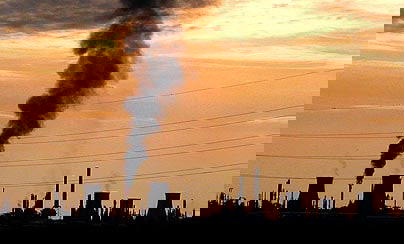
The global trepidation for carbon emissions has assumed a more serious dimension with influential nations caving in to pressures to reduce fossil fuels demands by 2030. This is against predicted timelines of 2050-2100 to develop alternative or renewable energy sources. Deliberations are on with 195 nations assembled with their instruments of approval, at the twenty-second Conference of Parties, COP22 from November 7-18, 2016 at Bab Ighli in the Kingdom of Morocco southern city of Marrakech.
Last year’s Paris Conference made nations legally bound to keep global warming below 2 degrees Celsius. International climate negotiations to reduce carbon dioxide and other greenhouse gases linked to climate change have been on since the first Earth Summit of 1992 in Rio de Janeiro, Brazil. The Rio summit was a precursor to the United Nations Framework Convention on Climate Change in Japan where the 1997 Kyoto Protocol was drafted.
Observers thought the Paris Agreement was a double bind considering scrambles for global fossil fuels and the posture of discouraging usage. The possible situations are separated by technology, almost giving vent to the International Energy Agency, IEA prediction that, renewable energy could become the world’s largest source of electricity ahead of known conventional sources of coal, oil, natural gas, and nuclear by 2030. The Group of 20 nations, G20 last September met in China, with genuine commitments for ratifications of COP21.
Indeed climate change affects water supplies, agriculture, power, transportation systems, health, safety and environment. NASA reports that the first six months of 2016 was the planet’s warmest on record in modern temperature record dating back 1880, with an average temperature of 1.3 degrees Celsius. This week smog covered the skylines of New Delhi necessitating schools shut for three days.
Global campaigns have been that fossil fuels impact negatively on climate change, so alternative energy sources are being advocated to render fossil fuel useless. Since the Kyoto Protocol it has been a series of bad-tempered arguments among the world industrialised nations to ratify commitments to reduce carbon emissions. Nations that have alibied the ratification of the Kyoto Protocol, with suddenness became heaven-sent anti-global warming patrons.
The three heavy global carbon dioxide emitters videlicet; China (27.6 percent), United States (14.5 percent) and India (6.7 percent) have accepted the Lima 2014 legal framework that obligated them to pay for carbon dioxide emissions. These greatest industrial emitters which hitherto, tipped and ran on reduction of carbon emissions have assumed championship of environmental safety with unimaginable velocity, with anticipatory hedging in relevant alternative energy technologies.
Renewable energies like biofuel (ethanol and biodiesel), biomass, geothermal, solar, hydropower and wind are naturally generated. The Global Energy Wind Council in its biennial Wind Energy Outlook just reported that wind power capacity would reach 2110 GW, and generate up to 20 percent of world electricity, with an annual investment of two hundred billion euros, €200 billion by 2030.
The implied scenario is akin to head and shoulders for petroleum, and a worry for nations that are fiscally dependent on primary fossil fuels for economic survival. Nigeria has not invested in fossil fuels technology to benefit from future geopolitical energy business trends, yet inundated with environmental issues. Nigeria, grappling with industrial infantile paralysis and not in the ranks of carbon emitters, made mandatory commitment for the future irrespective of present emissions status.
President Muhammadu Buhari’s mandatory submission last year promised a 20 percent cut in carbon emissions, with a commitment that Nigeria would meet the goal, by focusing on natural gas usage, investment in renewable energy, energy efficiency and climate smart agriculture. On September 22 2016 he signed Nigeria’s COP21 agreement of 20 percent unconditional cut in carbon emissions and 45 percent conditional cut in greenhouse emissions.
Buhari’s address to the 2015 Paris Conference touched on issues that have been agitating us; the mission rights, survival rights, the position of our fuel and our economy. His interrogation which may not be answered was baneful of COP21. We are forced to channel funds in energy efficiency and renewable energy infrastructure from presumptuous heavy carbon dioxide emitters that depleted the ozone layer. In Africa, South Africa, Egypt and Algeria are the only countries in the top 40 global emissions bracket.
Global institutions like the World Bank, regional development banks, export credit agencies and overseas private investment corporations are discouraged from injecting funds in infrastructure for fossil fuel extraction and use. Fossil fuels subsidies in developing countries are eliminated to reduce production and consumption. Industrialised nations that are heavy polluters and high fossil fuel production subsidisers put a caveat that all countries including non-polluters like Nigeria should put funds in clean and renewable energy projects; products of their research and technology.
World number one auto maker, Toyota plans to transform its product line with the goal of selling very few conventional gasoline vehicles by 2050. The plan is to sell fuel cell vehicles by 2020 and divest from gasoline engine. Manufacturers are not adopting large scale production of plug in electric vehicles for now because recharging time is prohibitive.
Climate Action reports that the German Bundesrat, Legislative body that represents the 16 federal states has approved the resolution for the ban on internal combustion engines, ICE arguing that the current lower costs for gasoline and diesel cars are detrimental when trying to encourage buyers from switching to zero emission cars. It is to encourage Germany’s world car manufacturers including BMW, Porsche, Audi, Mercedes and Volkswagen to advance in the development of electric vehicles.
Darrell Delamaide of Oilprice.com reports that U.S. researchers are recording breakthroughs in artificial photosynthesis that seeks to mimic the action of plants in capturing energy from the sun to produce biomass by breaking down water and combining it with carbon dioxide as a new
Disclaimer
Comments expressed here do not reflect the opinions of Vanguard newspapers or any employee thereof.