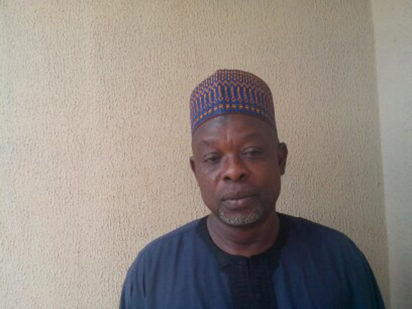
.Says Nigeria records over 8,000 job losses in port concessioning
By Udeme Clement
Nigeria’s economy at 56 is characterised with devaluation of naira that is about N500 per dollar, recession, high rate of unemployment and other challenges. Mr. Umar Omeiza Jimoh, an economic expert and the current Deputy President- General, Senior Staff Association of Statutory Corporations and Government Owned Companies, speaks on the state of the economy and the way forward
As a stakeholder, how do you describe Nigeria’s economy at 56 independent?
Unemployment, job losses, infrastructure and technology deficits are some of the major challenges giving the economy a serious setback. We recorded over 8,000 jobs losses during port concessioning. This must not happen again and government should take note. 8,000 citizens losing jobs at one period, in one sector is alarming. No country develops with such alarming rate of job losses. When you empower your citizens, you empowered the nation as well. Development of the maritime industry is strategic for economic growth.
For government to succeed in diversifying the economy into non-oil sectors to enhance greater productivity, the maritime sector, which is the gateway to national development, where all economic activities are anchored must be adequately structured. We should forecast the volume of exports we need in the short term and work towards achieving it, because our import currently overwhelms export. Export of agricultural produce that government is looking at to earn foreign exchange will be done through the maritime industry. Machines for industries are equally imported through the same industry. So, this sector is crucial to economic growth.
Previously, we had ports in Apapa, Rivers, Calabar and Warri. But due to increased in the volume of trade, government established Tincan port and Federal Ocean Terminal (FOT) to ensure success of oil and gas related business. Our association has collaborated with government over the years to ensure that its policies are carried out strictly. This happened when the ports were concessioned. In the regime of ex- President Olusegun Obasanjo, his economic reforms recorded maximum success in maritime due to the proactiveness of our assocation. We refused outright sale of the port, as we knew that the concessionaires would only front for foreigners.
We gave 10 reasons to include security of the country, which could have been in jeopardy, monopoly of the port by foreign partners and revenue that would have been accruing to foreign firms instead of our government. For instance, when US was attacked, they quickly reversed institutions with Public Private Partnership (PPP). It was easy for them, because those institutions were not out rightly sold. With our proactiveness, government listened to us and only the terminals were concessioned.

What measures will you advise government to put in place to tackle economic recession at 56?
We should look at measures like infrastructure development, especially motorable roads, constant electricity supply and many others. In the maritime industry, the States where ports are located should create packing areas, so that our roads are not used as packing areas for tankers. The tank farms at Apapa should be relocated from ports areas to decongest the roads. Government should not think that making coastal length will solve the problem facing the industry. Rather, it will bring a lot of burden on government in the long-run, in terms of port maintenance, lightening, security and infrastructure development.
What we need at 56 is to build the industry and make Nigeria the maritime hub in the West African sub-region. Is Nigeria generating sufficient revenue and large volume of exports to maintain many ports? We need to imbibe complementarity of modes of transports to link the ports with rail to dry ports hinterland. This will ease congestion of the ports and bring about huge employment opportunities to the citizenry.
Looking at the crisis facing the economy at 56, do you think sale of national assets will get Nigeria out of the current recession?
Sale of national assets is not the solution to the crisis facing us as a nation. The Nigerian National Petroleum Corporation (NNPC), Nigerian Ports Authority (NPA), Nigerian Maritime Administration and Safety Agency (NIMASA) Navy, Military formation and other institutions are national assets binding us as a nation. These assets are the binding factors that promote national unity in the country. We must look at security of the nation and the social cost involved in sale of national assets. This is not the first time Nigeria is experiencing recession. It happened during the regime of late Musa Yar’Adua, but it was well managed. Government ensured that there was no increase in prices of goods and services in the country, even workers were not sacked. This government is also trying and I must commend the President for tackling the situation.
Government can use PPP to make these assets work. We can use consistent economic policies, train and retrain workers for them to deliver and government should reward appropriately. We also need dissemination of credible information on developmental strategics to move the economy forward like advanced countries. People criticised the Minister of labour when he stopped banks from sacking workers, forgetting that if companies operate as economic entities only to make profit without employing the people, they are not helping the economy. Nigeria is lagging in technological development and we need this to create a synergy between various sectors of the economy, to fast track development. Government must speed up technological development for Ajaokuta Steel Company to be revamped.
How can this be done?
Let the Steel company be revived and developed to full capacity before concessioning the management. It must not be privatised now because if well managed, it can meet the steel demands in the country.
What are the demerits of port concessioning?
With concessioning, the use of terminals has become regimented, such that we do not have common user facility any more. You have to go to concessionaires when your vessel arrives and their charges are higher than what NPA ought to collect. So, due to high cost of terminal charges, our ports are less competitive than those in the sub-region. Government is losing revenue because many people often divert their vessels to neighbouring countries due to these outrageous charges. Other problems associated with the ports now are infrastructure decay, especially the roads, which increase turn around time of vessels. Over 8,000 workers lost their jobs. What would have been done then, was to train those people to fit into specific areas of job description, in order to deliver, rather than throwing 8,000 Nigerians into the labour market unexpectedly. This is what we called multi-tasking technique.
The ports were concessioned years ago, is it not time for government to review the agreement and see how the nation’s ports are functioning?
To me, port concessioning agreement is due for review.
Looking at Nigeria’s economy at 56 years, are the workers well equipped in terms of getting living wages?
Maritime is an international sector and there is no where local content is not considered. The salaries are structured by government and whatever happens to the economy affects maritime. Generally, salaries are poor now due to devaluation of Naira and non provision of necessary amenities also make nonsense of our salaries. Our leaders in Trade Union Congress (TUC) have called on government about this issue and government should without delay look at it critically to ensure that this is addressed in 2017 budget. Empowerment of workers motivates them for higher productivity. We are appealing to government to stop owing workers salaries. What we are being paid is already devalued, yet salaries are delayed. Electricity bills, school fees, rent and other services are not free.
Disclaimer
Comments expressed here do not reflect the opinions of Vanguard newspapers or any employee thereof.