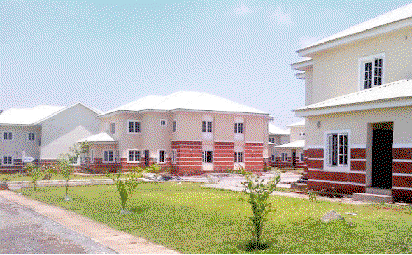
File: An-estate-in-Abuja
By Yinka Kolawole, with agency report
A mortgage is a lien on a property/house that secures a loan and is paid (interest and principal) in installments over an agreed period of time. The mortgage secures your promise that you’ll repay the money you’ve borrowed to buy your home. Mortgages come in many different shapes and sizes, each with its own advantages and disadvantages. It is essential you select the one that is right for you, your future plans, and your financial situation.
How to qualify
To qualify for a mortgage you must: meet certain eligibility requirements; be financially capable of servicing your mortgage (ideally repayments cannot exceed 33 percent of borrower’s earnings); be credit worthy with no history of bad debts; provide adequate security for the loan.
In terms of mortgage eligibility, prospective borrowers will be assessed for their eligibility to apply for their preferred product. The eligibility requirements include: Age – Prospective applicants must be at least eighteen years and no more than 65. The maturity of the mortgage should not extend beyond the applicant’s retirement age. Purpose of loan – The mortgage must be used to finance the acquisition of a home.
Financial ability
The Morgagee must also be sure of the financial ability of the mortgagor. The following determines the financial ability of the mortgagor: Income – Applicants must provide proof of their gross monthly income and allowances by way of an employment contract, tax returns, and most recent pay slips. Variable income such as overtime and bonuses are usually not considered as part of gross income.
Applicants who are self-employed need to provide an income statement prepared by a qualified accountant. This should be supported by historical information on bank accounts to prove the income declared. Security – Applicants must be able to provide evidence of employment for a period of at least three years.
Applicants who are not in formal employment should provide satisfactory evidence of their ability to sustain the declared level of income. Capacity to service loan – Applicants should be able to provide complete and accurate information regarding their financial responsibilities and commitments. The applicant’s monthly repayment obligation under the agreement must not exceed 33 percent of their gross income.
Where the applicant has other existing loans, the combination of mortgage installment plus other loans must not exceed 33 percent of the gross income. Deposit – Prospective home buyers are required to contribute a minimum of 20 percent of the property value.
The borrower will be required to provide evidence of this amount at the time of application and deposit it in a designated account before the loan facility is disbursed. Credit worthiness – Credit reference checks will be carried out on all credit facilities the applicant may have contracted. The Mortgagee must be satisfied that the applicant has a good credit rating before the mortgage is granted.
Quality of Security
Another aspect that is considered in mortgage is the quality of security, which includes: Tenure -The mortgage facility has to be secured by an unencumbered freehold or leasehold property. In the case of leasehold properties, the remaining term of the lease must exceed the maturity date of the mortgage by at least 10 years.
Value – A valuation report prepared by a surveyor acceptable to the mortgagor and dated no earlier than six months prior to the application would be submitted. Instrument – Most loan facilities must be secured by a legal first mortgage on the land and building, life insurance and fire insurance assigned to the Mortgagee.
Disclaimer
Comments expressed here do not reflect the opinions of Vanguard newspapers or any employee thereof.