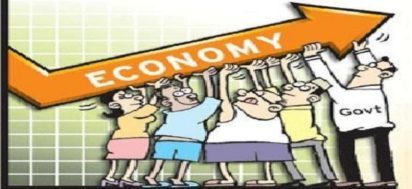
Economic recession
By Victor Ahiuma-Young,
KADUNA—Org labour weekend in Kaduna, contended that prompt payment of existing salaries by state and local governments and urgent wage increases in both the private and public sectors, linked with productivity improvement, were the quickest ways to stimulate and rescue the nation’s economy from recession.

Speaking through the General Secretary of National Union of Textile, Garment and Tailoring Workers of Nigeria, NUTGTWN, and a member of the National Executive Council, NEC, of Nigeria Labour Congress, NLC, Mr. Issa Aremu, Labour posited that Nigeria needed wage-led economic recovery.
Aremu, who is also the Chairman IndustriALL Global Union, Africa Region, in a statement, noted that recent Central Bank of Nigeria, CBN, report on the economy and to a large extent, the latest report of National Bureau of Statistics, NBS, observed that weak demand for goods was one factor responsible for low capacity utilization of many private sector companies.
The statement read: “So to overcome the economic crisis, workers, whose wages buy basic goods and services must not only be paid on time but their wages must be increased. Nigeria cannot overcome recession with the existing miserable pay of workers and pensioners.
‘’To this extent, President Muhammadu Buhari must urgently constitute the tripartite committee on the review of the current national minimum wage.
‘’Nigerian workers have long been in depression, not just recession, going by the crisis of compensation manifesting in salary arrears and collapse of wages caused by massive Naira devaluation and price inflation of close to 20 percent. There is wage income poverty that cannot help economic recovery.”
Labour lamented that minimum wage was N125 ($240) in 1981, stressing that then Nigeria had stable, strong exchange rate and lower inflation.
“In real terms, workers in 1981 earned more than the current N18,000.00 minimum wage. The 2010 negotiated national minimum wage of N18,000 was about $120 in 2010. With Naira devaluation, it has unacceptably fallen to less than $45 in 2016, a quarter of its nominal value in 2016 and less than 1 per cent of its value in 1981 about 40 years ago worsening income poverty.
“For Nigerian economy to recover, there must be massive public spending in reconstruction and significantly mass spending by working people through improved wages.
‘’You also cannot fight corruption from below with poorly paid work force. Poorly paid worker is not only hungry but rightly angry and even vulnerable to corrupt practices,’’ Labour said.
Disclaimer
Comments expressed here do not reflect the opinions of Vanguard newspapers or any employee thereof.