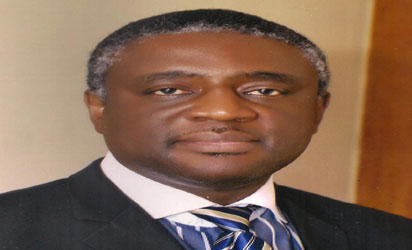
Mr. Joseph-Oteh
By Jane Echewodo
Joseph Oteh is a Lagos based lawyer and human rights activist. He is also the Executive Director, Access to Justice. In this interview, he spoke on prevalent conflicting court orders, delay in concluding corruption cases and other sundry issues.
Excerpts
What is your reaction to the conflicting judgments being delivered by courts in Nigeria?
Conflicting judgments of courts particularly when they occur in courts of coordinate jurisdiction are a major cause for concern; these conflicts seriously embarrass and undermine the judicial process, citizen confidence in the integrity of the courts and the image of the judiciary as a whole. People begin to wonder: what is happening with the courts? But this is not a new sprout, as it were.

Mr. Joseph-Oteh
We have ploughed this road a few times before, and it is not unlikely that we still will. We often see the Judiciary bumping like this when there are high-level political stakes in a litigation.
Recall that we saw them often during the transition to civil rule programme orchestrated by the Military, when certain elections were annulled and a flurry of judicial orders criss-crossed one another; we saw them when certain Governors in the second republic were targets of impeachment processes and the National Judicial Council had to step in to wield the big stick and force some respite to the situation.
So, I was a little surprised when I saw the same situation playing out again with respect to Abia State. Well, yes, we’ve come this way before, and it appears that we are still trying to make some more progress on that learning curve.
What is your take on the application of Alternative Dispute Resolution, ADR, to settle dispute rather than take such cases to court?
ADR is simply a revolution in terms of the way it has affected the way we do business with courts, and that is quite good. The ADR system resonates more with our communitarian philosophy and mediatory character as a people. And the interesting thing is that courts are now taking the leading position as champions of ADR themselves compared to the time courts were the ones resisting it.
In fact, some courts are now going as far as insisting that most civil disputes first pass through a mandatory ADR procedure before they become candidates for judicial resolution. Is this a right development, I’m not too sure, but it has its advocates. What measures do you think should be adopted to dealing with corruption cases in our courts?
The loudest issues in corruption cases have been the problems of delay, and to a lesser extent, poor conviction rates. Delays are difficult issues to deal with, but we must not make the mistake of thinking that delays are only features of corruption cases. Court delays are writ-large in our court rooms, across federal and state jurisdictions. Delays are knotty to deal with in many respects, not only because it is difficult to pin-point those who carry responsibility for it the most, but also because some aspects of it are caused by accused persons wanting to exercise their rights to the fullest extent conceivable.
Recent amendments to the Constitution sought to narrow the range of these rights in order to remove obstacles caused by interlocutory appeals, but our Judges, whose province it is to interpret the law have been wrestling with the application of these amendments and, in a number of cases, are granting rights to accuse persons to take appeals bordering on the validity of those amendments to appellate courts.
But, speaking more broadly, I think delays have everything to do with three major factors; first, the way the courts are run and cultured to run; second the personal skills and dedication of judges themselves, and three, similar issues arising from the way other parties in a case are organised. Some of these problems are avoidable and man-made actually.
For example, when Judges are transferred in the course of hearing a case, and maybe that case is almost concluded, the case oftentimes has to begin afresh, i.e. de novo. We see this happen intermittently in the Federal High Court for example.
Or when, the Chief Judge of a court gives an order saying that all courts will shut for business without notice owing to the death of a Judge of the court. This does not look like the court leadership takes a serious view of the business of the court. With a culture like that, how can we avoid trial delays? We need a better system that makes courts and judges perform up to scratch.
Police brutality is getting rampant these days. What do you think the Federal Government should do to contain this development?
Police violence is caused by a multi-dimensional set of factors – they include the way the police force or service is set up, the dominant culture of that institution, the type of orientation the officers of the force have; weak internal or external oversight of the conduct of police officers, a lot of things really. However, to even begin to address it, we must fight the culture of impunity within the police force and this is basically what those who have studied the problem have said.
The more the police thinks it can kill and get away with it, the more law enforcement feels it is invincible, it will abuse power in these ways. And this is not just a problem with the police – it is found in other law enforcement agencies, as well as in security forces. Where ever power is exercised without accountability, one result is inevitable – impunity.
What will you say about the continued detention of the Shiite leader?
Grievous. The facts of what led to his arrest and detention, as well as the continued detention of Ibrahim Zakzaky is a blatant expression of impunity, and the kind of atrocity you cannot associate with a democratic, constitutional government. But because he has gone to court to challenge his detention, we shall reserve our comments on this.
What role do you think the judiciary should play in this current democracy?
The Judiciary is institutionally the defender of the rule of law and civil freedoms in a democracy. That duty encompasses protecting the rights of everyone to economic opportunity as well, for civil rights are hollow and un-nourished without the rights to take part in the economic life of the country. Maintaining the rule of law must mean that courts of developing countries must take suffering seriously, and sustain a push to free the people from economic bondage and social exclusion and create a more egalitarian society.
Do you think the judiciary has been supportive to the present government?
The Judiciary should neither support, nor oppose, as it were, a “government” in power. As far as government goes, the Judiciary should maintain its political neutrality and be its own man, remaining “non-aligned” to any government, but aligned and faithful to the constitution and the laws of the land.
The Judiciary should only support good governance, and support the realisation of the fundamental objectives and directive principles enshrined in the Constitution, and enforce the law. To the extent that the current government passes valid, constitutional law, the Judiciary should interpret, apply and enforce those laws. That should be where the “support” begins and ends.
Disclaimer
Comments expressed here do not reflect the opinions of Vanguard newspapers or any employee thereof.