Stories by Jonah Nwokpoku,
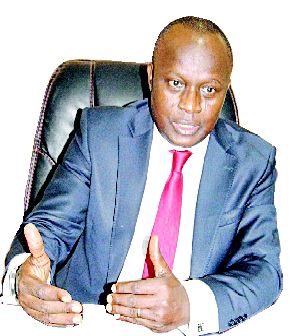
Dare-Ojo Bello is the MD/CEO, Matt O’Bell Ltd, an information technology company. MattO’Bell recently launched an Enterprise Resource Planning, ERP solution called OdooSME and targeted at small and medium enterprises, SMEs in Nigeria. In this interview with Vanguard, he spoke on the solution and its place in driving productivity and growth for SMEs in the country.
 What is OdooSME?
OdooSME is robust ERP software developed for SMEs. It is simply a business application that allows SMEs to run their businesses more transparently, efficiently and ultimately helping them improve productivity and profitability.
OdooSME is coined from two names. These include: Odoo and SME. Odoo is a business application that was initiated over eleven years ago with the aim of providing SMEs with the same technology tools that has helped the efficiency and productivity of big companies across the world.
And then SME, which we all know, means Small and Medium-sized Enterprises. Across the world, Odoo has about 700 partners. Partners are the ones that are in the local environment; they push the product, support it, and implement it for clients. In Nigeria today, we are one of the leading partners. We are a business partner to Odoo.
Odoo is the software that we implement for our clients. To make this software run for SMEs, we built a platform, customized it and offer it as something we can deliver to SMEs, and we named it Odoo SME. We used the tool available from Odoo to build Odoo SME platform, so it is our solution.
How does OdooSME help in addressing issues of corporate governance?
OdooSME helps a lot in instituting corporate governance in a business. We call it best practice. For example, if an organisation uses ERP solutions, and you do not want cash beyond a particular limit to be disbursed by the accountant without a second approval, you can do that in ERP. It enforces control, it enforces best practice. It ensures that nobody can circumvent those policies basically.
Whereas if it was basic accounting software; you will just run through with your accounting. ERP helps you go through several layers of approvals which cannot be gotten from a typical accounting system.
What has been the response to OdooSME since launch in Nigeria?
We launched OdooSME on the 6th of June but before then, we had clients we had already run projects for and several prospects that were not able to take our project because of the cost we mentioned. So we kept telling them we are going to launch an SME platform. Even some banks had approached us to build an ERP based SME platform for them.
We spent nine months building this solution and we carried our entire prospects including existing customers along. There have been a lot of interests because people want to see if it is exactly the same solution that we get when we do projects. They want to know if a $20,000 solution can be deployed as a N1, 500 solution. We gave them thirty day trial, and a lot of them have gone in to look at those trials. The comments they came up with as feedback, have helped us to refine a lot of things as well, and the response have been very good.
How can OdooSME help to bridge the gap between SMEs and big corporate organisations?
First, whether we like it or not, when we look at the way SMEs start out, one man/few people running a business, the tool that have made big organisations successful, they are not easily accessible to them. Yet, you want SMEs to be able to use information to drive their businesses. So, SMEs need new technologies to survive.
SMEs are disadvantaged from the start. And the further you go into the business, you do need that information, to know whether you are doing well or going through the right direction. These are information you can use to benchmark against competitors, market performance and all that. Without these, you are really dead on arrival as an SME.
With an ERP like OdooSME, you have a tool from day one, even if you are already running a business, you need a tool, that tool must be affordable which is very key. It has to be robust, because it must be like every other ERP. It has to be easy to use. Ease of use comes with ease of learning, when we provide materials; will they be able to understand it?
Odoo is targeted at SMEs generally, with the intention of providing an ERP with all its robustness. We have taken out complexity, and made it a solution that SMEs can easily learn and easy to use, so that when you start using it, you can connect with software as if you are using your Yahoo and all that, and that is why its web based.
How can your solution assist government in repositioning SMEs for economic development?
Government want to support SMEs. At the same time, they want to be sure if the funds are duly utilised. If you have to render some form of stewardship, government will be interested in knowing what you did with the first tranche of funding. That report itself has to be backed up by something. So if you have a system that is able to show evidence that this is what we were able to do with the first seed capital, it will build trust. And then government can now say it has seen the performance.
But of course, it is not just the figure, before those figures were even produce in the first place; it means that the business has been controlled in an acceptable manner based on the first practice that is built into an ERP solution.
By the time you are looking at the figure, which is the final output of activity that has been done in a controlled manner. Government then places confident and then say this company, they have showed some kind of credibility, so it is now time to take them to the next level. This is what the Bank of Industry usually does. When we started, we got only N5 million, we showed them what we could do with it, and then they came back and gave us N20 million. Government needs to get that confidence, and that confidence might come from the kind of system that you run.
Disclaimer
Comments expressed here do not reflect the opinions of Vanguard newspapers or any employee thereof.