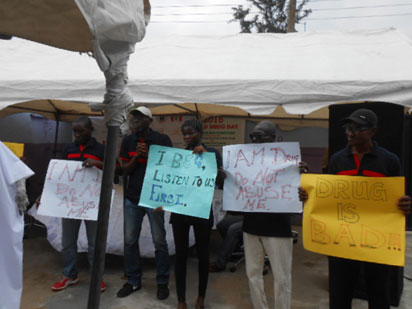
DRUG ABUSE: The implication of drug abuse on the individual, family and the society is quite enormous. Drug abuse damages the central nervous system that is the major organs of the body thereby resulting to brain, Liver damages among others.
By Chioma Obinna
On this year’s International World Drug Day, stakeholders have raised alarm over the rising cases of drug abuse in Nigeria, describing the trend as a threat to nation building. This is coming on the heels of the 2015 report of the United Nations Office on Drugs and Crime, UNODC, which estimates that 246 million people, or 1 in 20 people between the ages of 15 and 64 years, consumed an illicit drug in 2013. Findings show that many Nigerians youths are now being exposed to drugs earlier in life.

DRUG ABUSE: The implication of drug abuse on the individual, family and the society is quite enormous. Drug abuse damages the central nervous system that is the major organs of the body thereby resulting to brain, Liver damages among others.
Addressing a cross section of drug users as part of activities to mark the International Day against Drug Abuse and Illicit Trafficking in Lagos, with the theme: “Listen First”, Lagos Manager, Centre for the Right to Health, CRH, Mrs. Christy Ekerete-Udofia regretted that most youths are yet to understand the dangers inherent in drug abuse.
She said society had also made it almost impossible for those already into drugs to come out due to the stigma and discrimination. Ekerete-Udofia said to stem the tide, the theme was a good start as it an initiative to increase support for scientific prevention of drug use. “This year’s theme is an effective investment in the wellbeing of children and youth, their families and their communities. We all know that parents have the most influence in helping their children grow happy and learn to cope well in difficult situations.
The theme “Listen First” serves as a wakeup call to all as even in very difficult circumstances, a strong bond between children and parents can mean less risky behaviours, hence, the need for parents to listen to the children who are leaders of tomorrow.” Ekerete- Udofia further called on the Federal Government to build drug abuse detoxification centres as part of strategies to check the trend and provide services for those affected already.
“If you go to the various bunks in Lagos, they are craving to come out. They are stuck and need help. We can’t help because the funding right now is not adequate to detoxify them. We are doing more of prevention and treatment for HIV and services. The problem is huge.”
Representative, Lagos State Agency for the Control of AIDS, LSACA, Mr. Micheal Essience, said to reduce drug abuse and its potential harm, there is need to listen to the children first. On his part, Dr. Tega Ayowo, said people go into drugs for different reasons including creating what they described as ‘safe haven’ or an escape from social, financial, and religious pressures.
“Most challenging are the social problems. This would have been addressed but due to fear of the unknown, they fall back. Many parents do not have time for their children. There is need for parents to equip their children with skills with which they can be able to face others. Also speaking, representative, UNODC, Mr. Bertrand Redonnet, said the Agency is providing funding for treatment of drug users in Nigeria to ensure access to necessary treatment.
Commonly abused drugs
Codeine is a drug normally used in the management of pain and diarrhoea, but it is currently being abused because of its potential to excite users when consumed in excess. Abusers consume large quantities. For instance, cough syrup containing codeine is commonly abused and it leads to adverse effects like dependence, tolerance, sedation and euphoria.
Some pain relievers including morphine, pentazocine, tramadol and pethidine are also abused. Other drugs of abuse include marijuana, depressants, dissociative anesthetics, hallucinogens and stimulants. Alcohol, cannabis, amphetamines among others are now being consumed frequently and in large quantities by the youth.
Disclaimer
Comments expressed here do not reflect the opinions of Vanguard newspapers or any employee thereof.