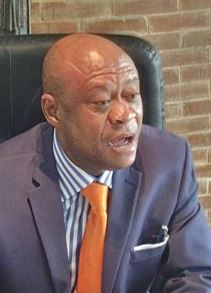
Emma Una., Calabar
Joe Abang is Cross River State Attorney General and Commissioner for Justice. He has been in legal practice for the past 25 years. In 2007, he contested against former Governor Liyel Imoke for the state top job. Since then, his political image has been on the upswing. He spoke with mycrossriver.com on legal issues in his State. Excerpts:
 You have appeared at the Supreme Court three times and several other courts in less than a month. Tell how your experiences.
I am not an arm chair Attorney General. You ask why I decide to be in court. The reason is that I try to show leadership by example. Recently, we had 22 Youth Corps members posted to my ministry and these are people the Council on Legal Education expects us to train. I am not going to sit down in the office and teach these young lawyers how to practice law. I led the team for the hearing of the state case at the Supreme Court. I was also in the High Court with the young lawyers to teach them how to go about this business.
I have noble plans for the Ministry of Justice and for the growth of the profession in the state. I have made it known to my principal, Gov. Ben Ayade, and he agrees with me that there is a lot to be done in the Ministry. On the day of my inauguration, the governor gave every Commissioner terms of reference and when he got to my turn, he said, “I trust you will give us justice”, and that I will do. This morning, I was with the Speaker of the House of Assembly on my plans to review our laws that are obsolete and have impeded the prosecution of criminals. I am bringing executive bills to amend Section 390 of the Criminal Code which will make it easier to prosecute criminals. Any part of our law that is inhibiting the prosecution of criminals would be reviewed and amended to make it easier for us to have access to justice.
I have sent my team to go and under study the Lagos State judicial system. I want to set up the Office of the Public Defender and Citizens Adjudication Centre separate from the Ministry of Justice. The office will be somewhere in town so that if a husband and wife quarrel, they can go there and resolve their differences, landlord and tenant misunderstanding can be taken care of there, issues that should not take people to court can be addressed there. We will station lawyers there to render free services to the public. We realize that the economy is so bad and not all our people have money to hire a lawyer to defend them or prosecute their cases.
During the last administration, there was this complaint that the state was losing so much money because people were taking government to court and winning. How do you intend to address the situation?
When I assumed office, I was worried about that, but I have spoken to my directors and I discovered that they are intelligent and knowledgeable. Then question then is, why the deluge of cases against the state and I discovered that they lacked motivation.
So I decided to get the governor to approve the harmonization of the directors and law officers salaries in the Ministry with those in the judiciary. Today, our lawyers are well motivated. After that, I did a study of the cases done in the past in Ogoja, Obudu, Akamkpa, Akpabuyo and discovered that law officers always stayed away from court because the former governor approved the Litigation Fund for Law Officers but access to the fund was not possible and this meant many lawyers could not go to court to represent the state because you don’t expect them to pay transport fare to court from their salaries. This invariably led to the default judgments that the state experienced. Default judgment happens when one party attends court and the other does not. But such judgment can be set aside upon cogent reasons before the judge who gave the judgment, so it is not the final judgment. I am in the process of setting most of them aside and I am calling the beneficiaries of the judgments to come forward for discussion. I give you an example of so many local governments that have come here with garnishee judgments against them.
Their accounts were frozen and so what did I do? I called the person who got the judgment and said he is owed N500 and froze the account of the local government with one million naira and the workers’ salary is there. “So, let us sit down and talk it out”. I have called one or two judges to say “the Attorney General is interested in this matter, we want to withdraw it and discuss” and the matter is withdrawn and we resolved it. We have so many of them and I intend to resolve the problem through a synergy between the Bar, the Bench and the Ministry. I have a case where a man sued the state for 5.6 million and, when I saw the file I told my staff to call the man. I asked him what was the problem and he said the state was owing him salary of 156,000 naira. Now if the lawyer does not attend court, the judge would give ruling for 5.6 million. So I appeared before the judge and said we could not continue with the matter in court, so the matter was taken off the court. The next day, I wrote a letter to the department concerned and asked them to pay the man and the matter was resolved.
Prolonged adjournment of cases seems to impede justice delivery. How do you ensure that cases are completed within a short period.
Justice delayed is justice denied. This has its origin in the culture of our civil service. The bureaucracy affects even the judiciary. Cases are adjourned not because the court takes delight in it. If a counsel on one side is ready and the other one is not, the rules require that you must agree. We have amended the rules for civil procedure in Cross River where when a case is filed, everything that concerns the case is also filed while the other party is also to file everything that he needs to defend the case and, soon after, a date is given for pretrial consent. Maybe it is not a matter that would go to trial and the pretrial judge may advise out- of- court settlement. These are the new checks and balances to prevent prolonged adjournment and prolonged hearing.
How are you coping with the work environment, considering the avalanche of outstanding cases in the courts against the state?
I met over 570 files on my desk and so I stay here till 9 pm everyday to attend to the files and, today, there is no file left. I can assure you that there will be no more heaps of files while I am here. I do not believe that public service is a place where people demonstrate ‘I don’t care attitude’. Let us begin to make a difference. The governor is from the private sector and I am from that sector too; so let’s see the difference we can make. In the private sector, if you leave a case file till the next day, how do you feed your family? You want to make sure that it is treated and you get your money and move to the next one. So to justify my salary, I have to treat a case file and move to the next one. Also, I feel that after years in private practice, I should contribute to the development of my state and I thank His Excellency for giving me the opportunity.
Disclaimer
Comments expressed here do not reflect the opinions of Vanguard newspapers or any employee thereof.