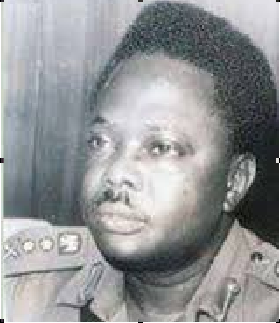
Murtala Muhammed
Saturday, February 13, 2016, marked 40 years after the assassination of General Murtala Ramat Mohammed by the late Col Bukar Suka Dimka in an aborted coup. Before him, there were only two other military rulers – General Johnson Aguiyi-Ironsi (the first military head of state) and General Yakubu Gowon, who led Nigeria during the civil war.
Gen. Mohammed’s six-month stint in power gave Nigeria a sense of direction. He came across as a courageous soldier who brought dynamism into leadership. Not for him the avarice and greed that consumed the generations of military leaders that came after him. He was a man with a mission and set goals towards achieving it, but the vaulting ambitions of some officers within the military truncated that dispensation after only six months in power..
Murtala’s ascension to power was at a period of economic paradox. It was a time of the first oil boom that Nigeria ever experienced, when the nation was at the height of financial prosperity, but ironically craved a turnaround from the rot that had set in after nine years in power by General Gowon, who was famously quoted to have said that Nigeria’s problem was not money but how to spend it.
The country was a flourishing nation haemorrhaging under endemic corruption aided by an over-bloated bureaucracy. That was the collective psychology until that fateful July 29, 1975 when Murtala emerged as head of state in a bloodless palace coup while the then head of state, General Gowon was attending a conference outside the country.
Murtala, who played a leading role for the Federal side during the civil war, initiated many changes in the country and undoubtedly left enduring legacies. It was his administration that began the process of moving the federal capital from Lagos to Abuja. His regime created additional seven states in addition to the existing 12 at the time in response to popular agitations. The states were: Gongola, Niger, Bauchi, Ondo, Ogun, Bendel and Imo.
He also hastened infrastructural development of the country. A visionary leader, General Mohammed’s government initiated the process of transition to civil rule. Its implementation fell on his successor, General Olusegun Obasanjo, who faithfully accomplished it and handed over to civilians on October 1, 1979.
One of the major landmarks of the administration was the mass purge of the civil service and the compulsory retirements of top civil servants, including the “super-permanent secretaries”. Till date, some regard the action as the destruction of the civil service and its resort to corruption for self-preservation.
Though his reign was brief, Murtala’s epoch remains a reference point in exemplary leadership, selfless service and patriotic commitment to the upliftment of the nation.
Disclaimer
Comments expressed here do not reflect the opinions of Vanguard newspapers or any employee thereof.