By Emmanuel Edukugho
Nigeria boasts of rich, interesting cultures some of which are waning for different reasons ranging from westernisation to mere indifference of traditional institutions and practices. From today, we begin to celebrate different aspects of the Nigerian culture on Saturdays. Feel free to contribute any aspect of your culture that could make interesting reading. It should not be more than 500 words. Send your contributions to [email protected]

We begin with a story on AWANKERE, a feature in the Warri area of Delta State. Enjoy it.
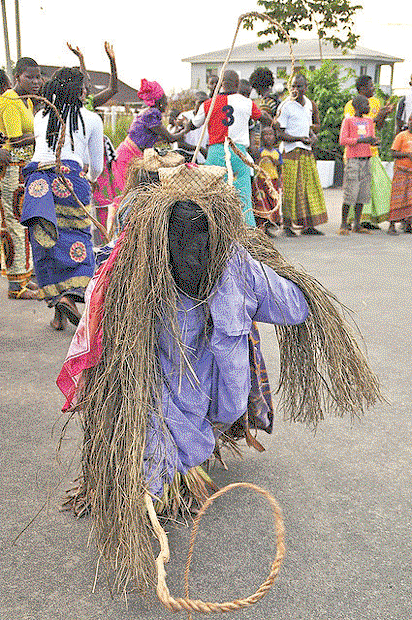
People living in the ancient town of Warri often looked with nostalgia to the season of Awankere, also called Umale Okere, an annual masquerade festival with epicentre of the celebration at Okere main square. It’s a mix of culture, tradition, dancing and humour. Umale Okere is virtually the most popular Itsekiri festival in Warri with so much social fun and excitement, attracting indigenes and non-indigenes alike beyond ethnic divide. Visitors and residents of Warri, including eminent personalities from all walks of life converge at Okere to watch the festival.
People – young and old, including children, line up on both sides of the expansive Okere Road from Esisi junction to the centre point, a massive crowd, jostling curiously to catch a glimpse of the masquerades, men and women dancing to the traditional drum beats with amidst sexy, obscene remarks by women and tantalizing songs, emotional and romantic.
The elegance and beauty of the festival, graced by the masquerades in attires almost akin to the costume and apparels worn by Eyo masquerades in Lagos during Adamorisha festival are amazing.
The origin of Umale Okere festival dates back to pre-independence years in the era of British colonialism. It emanated from Ekpen family, owners of Okere that married a woman called Diden who hailed from the neighbouring Ekurede, the place where the palace of the Olu of Warri is located. An Ekurede woman married to Ekpen family of Okere. The masquerades are customary acknowledgement of the marital ties between the two.
According to Elder Aggrey Erikowa, son of late Chief Erikowa who got his Chieftaincy title from Olu of Warri, Erejuwa II who had since passed on to join his ancestors before commencement of Awankere festival usually held during the rainy season between June to July/August lasting for seven market days, spiritual cleansing of the environment must be done. This involves sweeping of Okere streets by virgins for three months before the masquerades can come out from the shrine.
The oracle will be consulted by traditional priests and trusted diviners to ascertain whether the staging of the festival and outing of the masquerades could bring blessing to the community or a curse/calamity. However, from inception, the festival had usually been peaceful, full of merriment, social interaction, enjoyment with plenty of assorted native menu and drinks almost in every home at Okere, Ekurede, Ajamogha and the environs.
It has become tourist destination. Erikowa said the shrine from where the masquerades called “Umale”in Itsekiri emerged is at Ajamogha, a short distance from Okere. They come out in large number, say between 200, 500 or even more, clad in over-flowing white robes, covered from the head to the feet, head scarves and white hats. They will dance in circle in front of the shrine, after move to Ekurede to pay traditional homage as in-law because Ekpen, owners of Okere, married an Ekurede woman. It is assumed that both people of Okere and Ekurede are co-owners of Umale Okere, although it all originated from Okere.
But at a time, there was a fracas or dispute at the shrine between Okere and Ekurede which led to the withdrawal of Ekurede from participating in Awankere festival. This dispute did not stop the paying of yearly homage to the Ekurede neighbours, by the masquerades from Okere. This time around, the homage was paid in front of Olu of Warri’s palace until both sides resolved their differences and reconciled.
Eventually, Umale Okere festival has become one of the carnivals that unite not only Okere people some of whom are Urhobo but also neighbouring villages like Ugbori. To a large extent, non-Itsekiri people also participate in the celebration which has turned into a tourist destination in Warri kingdom, only surpassed by Oye Ekoro, the yearly coronation anniversary of His Royal Majesty, Ogiame Atuwatse II, current Olu of Warri who ascended the throne in 1987.
 Today, Umale Okere is the foremost surviving trado-cultural carnival in entire Warri cosmopolis, peaceful, non-violent, social and fashionable. One of the main features is the long cane or whip sourced from bushes carried by males to hit the wet ground making bizarre sounds to add fiery, astonishing dimension to the carnival, creating a sense of sentimental attachment. There are a lot of side attractions. Women may embrace men in a show of emotional love that is instant, in the open, with no-holds-barred.
It’s a delight to watch as women, married or single cajole men, singing sexually provocative songs in Itsekiri and pidgin English, the language of Warri. But this display of seeming promiscuity should not be taken for granted, only just part of the fun at Umale Okere outing. Who says filial bargain can not be struck at the end of the day! It is unlike Agbassa Juju that used to be celebrated by Urhobo at another section of Warri. This was characterised by violence, death and display of sharp cutlasses to test the fetish prowess of participants. Fortunately, it has gone into extinction because of its crudity and brutality.
On the other hand, Okere Juju still thrives and flourishes. There is an Ogwa or Town Hall in Okere where the Umale or Juju go to after leaving the shrine, before heading to Ekurede and coming back. At the Ogwa, the masquerades gather to eat delicious traditional cuisine like Owo soup and starch, dry fish, big yams plantains, cow heads, big fresh fish with Owo which is the favourite, and very expensive to prepare.
The leader of the masquerades is called Öshogwa Umale”with several bodyguards while the others filed out in a single line for seven market days of Okere till the last day. At the rear of the masquerades is “Okwooye”, wearing a big hat and holding a whip, dressed in baggy attire touching the ground due to oversize.
The mother of them all, referred to as Queen, is called “Eleghe”, very gentle, majestic and moves in measured steps, walking on red carpet. It is rarely seen in public – once in 50 years. Many people see Eleghe only once in their life time. Its public appearance is now reduced to 25 years. According to Erikowa who lived in Ekurede, since 1956, Eleghe came out twice.
For the masquerades, after their appearance on the seventh market day, they go back to the shrine known as “Ekun”, opening their faces on the way. Women come out to seek their blessings and favour for children, to strike out failures and curses from their lives, to seek success in life. On the last day also, everyone comes to appeal to the Umales as they return to the shrine to cast away their misfortunes and problems, bring prosperity, give them long life, take away sickness, troubles and not to have afflictions in life again.
Disclaimer
Comments expressed here do not reflect the opinions of Vanguard newspapers or any employee thereof.