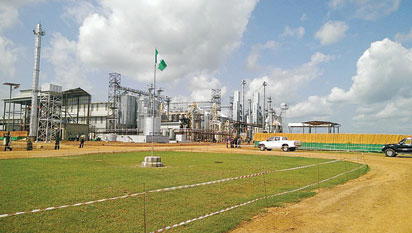
Olam Rice Mill, Nassarawa
Olam management has re-instated its commitments to helping Nigeria advance its journey to self sufficiency in rice production by bridging the gap in local production and importation. This is coming on the heels of the company call for caution in the handling of excessive import duties and levies on rice as it might lead to smuggling of cheaper rice from neighbouring countries which will be counter productive to the protection of domestic rice producers and local rice investors.

Olam Rice Mill, Nassarawa
“Whilst Olam fully appreciated the need to support and protect domestic rice producers and local rice investors amongst which we would count the 3,000 rice farmers in our out-grower programme in Nasarawa State.
We understand that Nigeria still needs to import rice until local production reaches a level of self-sufficiency. We therefore caution the potential smuggling of cheaper rice from neighbouring countries that could occur should import duties and levies become excessive.”
In a release made available to vanguard, Olam’s total investment including fixed and working capital in Nigeria is about N177 billion across various agricultural and processing supply chains contributing to the development of the non-oil economy.
According to the release ,Olam said from what they have seen from the progress of their smallholder out-grower programme, which is set to embrace 16,000 rice farmers by 2018, that large scale commercial farms can work hand in hand with small-scale farmers.
“The Olam farm also supports an ‘out grower programme’ whereby surrounding rice-growing communities are supported by the Olam farm with training, pre-finance, fertiliser and seeds in order to improve their paddy yields. The release added “Currently, 3,000 farmers are engaged in the programme, with a target of 16,000 by 2018. This investment is specifically in line with the Government’s Agricultural Transformation Agenda to produce rice for the domestic market thereby boosting self-sufficiency.”
With specific reference to rice , Olam noted that since 2005 and in addition to its import business, that they have been investing in domestic rice production by supporting smallholder farmers with training and finance, as well as investing in local milling and selling into the Nigerian market. “In 2013, we invested over 19 billion Naira in a 10,000 hectare farm with integrate mill which directly employs 950 people from the surrounding communities, producing 36,000 metric tonnes of rice for the Nigerian markets (mama’s pride and Mama’s Choice brands).”
The company said for over 25 years that Olam Nigeria has expanded from cashew into cocoa, sesame, cotton, rice, wheatmeal, biscuits, confectionery, beverages and kitchen ingredients such as tomato paste. ‘’Success has been based on delivering value to both customers and farmers through first class operational capabilities and a long term commitment to develop Nigeria’s agricultural supply chains.
“With offices and operational units across all geopolitical zones of the Nigerian Federation, Olam Nigeria has a wide and growing network of farmers, suppliers, wholesalers, Local Buying Agents (LBAs), customers and service providers. Today, these networks encompass approximately 500,000 farmers and have created tens of thousand of jobs in direct employment.”
Disclaimer
Comments expressed here do not reflect the opinions of Vanguard newspapers or any employee thereof.