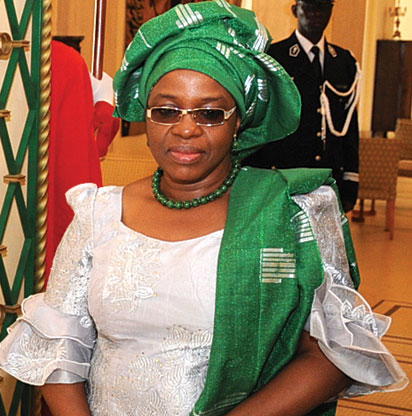
Mrs. Katyen Jackden, Nigeria’s Ambassador to Senegal and Mauritania
By Franklin Alli
Mrs. Katyen Jackden, Nigeria’s Ambassador to Senegal and Mauritania, spoke recently with Vanguard at the Embassy in Dakar. In this interview, she disclosed that there are lots of business opportunities Nigerians can tap into in Senegal, especially in agriculture, tourism and housing sector. Excerpts:
Tell us about Nigeria and Senegal relationship since the time you have been here; what business opportunities exist for Nigerian industries?

Mrs. Katyen Jackden, Nigeria’s Ambassador to Senegal and Mauritania
Thank you very much and let me say good afternoon and welcome to Nigeria House, your House in Dakar, Senegal. By way of introduction, I am Katyen Jackden. I am Nigeria’s Ambassador to Senegal and Mauritania. I cover Mauritania from here. You asked about the relationship between Nigeria and Senegal.
I want to believe those relationships are very strong. It has been very cordial, very brotherly and it is waxing very stronger. I served here as an officer in the Embassy before I was appointed Ambassador, so the relationship has been waxing very strong.
Our bilateral relationship is very good at political level, and it is also very good at economic level.
What is the percentage of Nigerians living in the 14 million population and the attitudes of Senegalese toward Nigerians?
We are a little bit more than ten thousand Nigerians but we have only five thousand registered in the Embassy. The Senegalese are very hospitable to foreigners. You know in every community, there are bad eggs, but generally, I would say the Senegalese are very hospitable toward Nigerians. There are mixed marriages between Nigerians and Senegalese; so I think the relationship is good.
What is the trade volume between Nigeria and Senegal?
In terms of trade volume between the two countries, I have always said that it is mostly done at the informal level. Although, we are not able to quantify the trade figure, I would say it is in favour of Senegal because Nigerians come here to buy Senegalese products, especially textile and fashion products.
A lot of Nigerians every week come here to buy items and take them home and apart from that, the main thing that we sell to Senegal is oil but now that Senegal has discovered its own oil, I wonder what is going to happen next. Therefore, I can say that trade is mostly at informal level. We are trying to see how the business community can come together and form Nigeria-Senegal Chambers of Commerce to further improve trade ties.
Do you think the discovery of oil by Senegal will affect the relationships?
In fact, the discovery of oil is a welcome development; what we want is for our region to grow. The oil they have discovered will be used to the benefit of their people; it is going to be a healthy competition. Don’t forget that we also import refined crude oil from some of these neigbouring countries. So I don’t think it is going to affect the relationship, negatively.
What are the challenges you face in marketing Nigerian products to the Senegalese?
I believe Nigerians have not discovered the Senegalese market. That was why last year, because of our engagement with Senegal government, Nigeria was designated special honor at the Dakar International Trade fair. The aim of that was to come here and showcase made –in-Nigeria products to the Senegalese market. When I was here in the Embassy as an officer, Nigerian textiles and plastic products used to sell here a lot.When I came back in 2012, I found out that other people have taken that market from us.
So, it is for Nigerians to be very aggressive in marketing their products to this market. We are trying to see how we can work with the traders and industries to come and showcase their products to the Senegalese. That is part of the plans we are putting in place, to promote trade and investment forum; we are also going to organize road shows to make sure that Nigerian products come to the Senegal market. Senegal is import economy and there are lots of things Nigerians can bring into Senegal.
What is your take on the attitude of Nigerians here?
We estimate there are about 10,000 Nigerians here. Generally, Nigerians are very tolerant and are going about their businesses. That is not to say there are no bad eggs among them. Some Nigerians that come here find themselves in detention because they default in immigration laws. The reason is because Nigerians believe ECOWAS is free movement, so people come here to stay; they don’t bother to regularize their stay after three months.
It is good to know that right from home, when you come here, you are allowed to stay for three months and after the three months, you are expected to regularize your residence in terms of showing that you have a means of livelihood and not to live on the society. Those are some of the challenges we have, otherwise, Nigerians are generally well-behaved.
What do you think government can do to make your job easier?
Let me say that my work can be made easier if I am assisted to make Nigeria much visible in Senegal. Before, we used to have publications to share with people who come here to enquire about this and that in Nigeria. This day, we don’t have publications to share. We do write to the Ministry of Tourism and Nigeria Export Promotion Council, NEPC, but we don’t get feedback.
There is limit to what you can do once you are outside the country. Again, our own media is too critical of our country, and we forget that these things are actually read outside the country. If we paint ourselves as good people, people will see us as good people; if we paint ourselves bad, people will see us as bad people.
What is your take on Dangote’s investment in this country?
In terms of single foreign direct investment, I think Dangote is the biggest African foreign direct investor in Senegal. All the African countries put together, Danagote is the biggest investor from Africa. I think what Dangote is doing in terms of cement is helping to promote regional integration. Of course, there are a lot of opportunities for Nigerian industries. The current government of President Macky Sall has development agenda which Nigerians can key into. There are opportunities for investment in agriculture sector, tourism and housing sector.
Disclaimer
Comments expressed here do not reflect the opinions of Vanguard newspapers or any employee thereof.