By Laju Iren
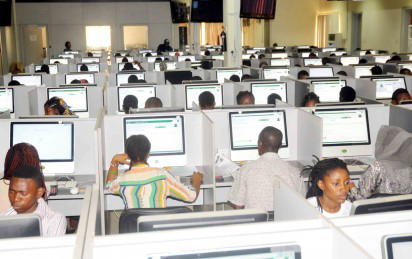
E-Learning seems to be the next best thing. Apple is making iPads that kids in kindergarten can use; primary and secondary schools that have the money to spare are taking no prisoners as far as Information and Communication Technologies, ICTs are concerned and tertiary institutions are investing more and more in creating ‘wireless’ campuses.

It would seem that as long as the intentions are right, nothing could go wrong in the union between education and technology. However, for the Principal of Olashore International school, Mr. Derek Smith, this position is not entirely correct.
Smith, whose school is dogged in its quest to be one of the most technologically advanced schools in Africa ironically says that if technology is not correctly applied in a learning environment, it could leave students worse than it met them.
Smith, who has observed technological interventions in schools in the United Kingdom, South Africa and Nigeria, told reporters at a briefing last week: “From my observations, half of the technological interventions in schools fail. In fact some make the learning situation worse.”
“Although I have a lot of respect for the technology, it is important to note that educational institutions that plan to adopt technology must focus on the learning. The important thing is the learning not the tech.
To focus on the learning, schools must embark on vigorous research, invest time and resources, train staff adequately, and be ready to embark on a step by step process. Training staff and equipping them in the area of ICTs is extremely important because teachers generally do not like change. It is necessary to take time out to familiarize teachers with technology.
I have seen situations where the school provides the students with laptops, but the laptops gather dust because the teacher does not have one” added Smith. Olashore’s plan to empower all its students with iPads has not escaped the attention of industry stakeholders in both technology and education. The school is currently entering into partner ship with Apple through Core Group Africa, the authorized exclusive distributor for Apple in Nigeria.
Research information
When the plan is fully implemented, the students and teachers will be solving complex problems and discovering latest research information simultaneously with the teachers in real time. However, the iPad roll out will not be done in a hurry. According to Smith, the plan to give all students iPads will be fully completed by 2021.
Giving reasons for this, he said: “We already have an eighty-five percent success rate in the West African Senior School Certificate Examinations, WASSCE. I’m not going to just put iPads in the hands of my senior students at once and jeopardize the results because assessment is not fully up to date with technology. What we will do is to begin with the class seven and let it evolve from there.”
Evolution seems to be the key word when it comes to using technology in education. The Olushore way is to move beyond using technology to enhance education to using it as a spring board to transform education. Letting a student type an essay assignment on his computer is enhancement, but getting the same student to use ICTs to make a PowerPoint presentation, upload it online and share with other members of the global village is the very definition of transformation.
As the evolution of eLearning continues, the Chairman, Board of Governors at Olushore, Prince Bimbo Olusore, pin points a valuable lesson. His words: “Nigeria can no longer wait and be playing catch up with technology or keep waiting for technology transfer. We have to leapfrog to catch up and get our young Nigerians prepared for the new technology driven world.”
Disclaimer
Comments expressed here do not reflect the opinions of Vanguard newspapers or any employee thereof.