By Jimoh Babatunde
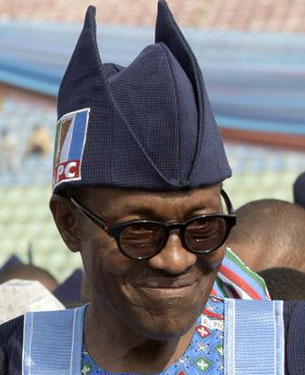
The month of May is going to be a special year in the annals of Nigerian history as General Muhammadu Buhari will be sworn in as the President of the country having defeated the incumbent, President Goodluck Ebele Jonathan. In the same month of May another Nigerian, Dr. Akinwunmi Adesina, the current Minister of Agriculture and Rural Development, might be elected the President of the African Development Bank as the financing institution is electing a new president to replace the incumbent President Donald Kaberuka.
 Dr. Adesina, who has gotten the support of General Buhari, will be slugging it out with a number of top-level finance officials in the region who have equally announced their interest in running for the position.
Other candidates short-listed for the post along side Dr. Adesina,are Ethiopia’s Finance Minister, Sufian Ahmed; Cape Verdean Finance Minister, Cristina Kamara; current Vice President of the Islamic Development Bank, Birama Sidibe and Chad’s Finance Minister, Kordjé Bedoumra.
According to the AfDB Board, the selection of the most eligible candidates to succeed President Donald Kaberuka was done by a Steering Committee of the Board of Governors at a meeting held in Abidjan on 11 Feb. Kaberuka is currently serving his second five-year term as AfDB President.
The out going AfDB President, Donald Kaberuka, many watchers of the financing institution said has taken the bank to an enviable height that anybody coming must be able to do more .
It is here that Dr. Adesina Akinwumi wealth of experience come in to to tackle some pressing challenges in AfDB as many believe that the bank faces competition for influence in Africa from emerging players like China. Realising the expectation from the bank, Adesina has promised Africa a bank that will increase private sector lending to curb widening inequality on the continent.
“I see a bank that needs to do more in the private sector,” Adesina said. He would focus on “new financial instruments that can tap into these pools of money, give us lower interest rates and long-term capital that Africa can use towards development.” He also promise to focus the bank’s own lending on projects that have trouble attracting private investors, such as water and sanitation in the poorest countries. The African Development Bank’s private sector lending was about $2.1 billion in 2013, up from $250 million in 2005, he said.
If elected, increasing access to energy through infrastructure expansion would be his top priority, followed by growing private sector jobs and industrialization, youth employment, reviving rural economies, and regional integration, he said. For those who have followed Dr. Adesina’s career will not doubt his capacity to deliver when the chips are down. Adesina was AGRA’s Vice-President for Policy and Partnerships for five years, before moving to his current role as Nigerian Agricultural Minister.
While at AGRA, Akin Adesina helped farmers and agro-dealers in Ghana, Kenya, Mozambique and Tanzania access over US$100 million in finance through the use of innovative financing instruments. He also worked to design the risk sharing facility for the Central Bank of Nigeria, which leveraged US$3.5 billion of lending from banks to agricultural value chains.
In 2011 Adesina become the Nigerian Minister for Agriculture, and has implemented a range of measures which have resulted in significant changes in Nigeria’s agricultural sector. One of these measures is his efforts to make Nigeria self-sufficient in rice production.
By encouraging greater involvement of private seed companies into the rice industry and providing farmers with subsidized access to seed and fertilizer, since 2012, rice production has increased by seven million tons, while net farmer incomes have risen by $2.5 billion. Nigeria is on-track to be self-sufficient in rice production by 2018.
Adesina has also been commended for transforming the Nigerian fertilizer industry by improving transparency into the supply and distribution of fertilizer, by ending the government’s role in the buying and distribution of seed and fertilizer.
Disclaimer
Comments expressed here do not reflect the opinions of Vanguard newspapers or any employee thereof.