INEC PVCs
By Douglas Anele
But expediency is not always right or else any anti-corruption measure, no matter how dehumanising and inhumane, would be justified. In the case we are discussing, Umaru Dikko could have died at some point in the perilous journey if his kidnappers had succeeded in their mission. Remember, there is no guarantee that brutal military methods, including lengthy prison terms, will eliminate corruption.

INEC PVCs
The fact that corruption in China is worsening is a clear warning that extremely harsh punishments without imaginative preventive measures may actually lead to more creative methods of graft. As I have always argued, corruption is so sophisticated now because of innovations in information and telecommunication technologies. Consequently, what is needed most are smart institutions manned by competent people who can disrupt the processes of corruption before they mature, with the capability of tracing the labyrinthine movement of stolen public funds and assets whenever corruption is detected.
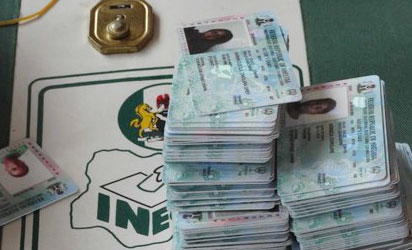
In the euphoria following Gen. Buhari’s victory, Buharimaniacs tend to ignore serious flaws in INEC’s conduct of the election. First, the pattern of distributing the Permanent Voters Cards (PVCs) was pre-arranged in favour of the North, as usual based on manipulated census figures which creates the misleading impression that the arid and semi-arid parts of Northern Nigeria are more populous than Southern Nigeria. Second, the same favouritism for the North was evident in media reports that conflict areas of the Northeast had a higher percentage of PVC collection than most states in the South.
And what about the “fact” that Gen. Buhari got 1,903,999 votes in Kano state alone, whereas the total votes cast in the entire Southeast were 2,663,154? In my opinion, both the pattern of PVC distribution and collection and results declared by Prof. Jega were programmed to favour Gen. Buhari ab initio. Some states, particularly in the South, witnessed significant suppression in the number of voters inspite of high level of interest, whereas Kano, Katsina, Jigawa and Kaduna recorded incredible number of voters.
Buharimaniacs would point to Rivers, Delta and Akwa Ibom states where a sizeable number of the electorate voted for President Jonathan. But the facts of geography undermine the demographic anomaly of a more populous North, including segmentation into different age categories. At any rate, it is well known that the phenomenon of under-age voting is more prevalent in the North than in the South. Therefore, when in his first speech after being declared winner, Gen. Buhari claimed “Nigerians have spoken,” he should realise that his victory is not without blemish, and that there are legitimate grounds for contesting it in court if President Jonathan had wanted to do so.
With respect to Gen. Buhari’s pledge to deliver on his election promises, the rational response is to keep one’s fingers crossed, although there are some pledges which he cannot fulfill even in four years. For example, a 100 level student of economics knows that given the state of Nigeria’s economy, the incoming administration cannot achieve dollar-naira parity, increase the price of oil unilaterally and pay N5000 each to 20 million poor Nigerians.
Thus, Gen. Buhari would soon realise, after being sworn in as President, that the highfalutin and flowery rhetoric of election campaigns is quite different from the difficult task of providing good governance for Nigerians. Buharimaniacs who romanticise his purported leadership qualities ignore the fact that Gen. Buhari would need time to adapt and adjust to the slow and cumbersome processes of democratic governance. Unfortunately, no one can say for sure how fast or how well he would be able to do that. His antecedents both as military dictator and chairman of PTF do not inspire confidence in some Nigerians who believe, correctly, that his ideas about economic management, socio-political engineering and nation building are antiquated.
It is amusingly ironic that a few weeks to the presidential election, Prof. Wole Soyinka, a relentless critic of Gen. Buhari, advised Nigerians to forget the past and move on! The respected playwright and literally icon may have reasons for swallowing his own vomit at this time, but if it is based merely on Buhari’s claim that he is now a democrat, then Soyinka can be legitimately accused of being too optimistic.
Anyway, the deliberate amnesia he recommended is not in Buhari’s interest. Gen. Buhari’s past includes brutal suppression of freedom, abuses of human rights, executions with retroactive laws, inappropriate economic policies, and the war against indiscipline. Therefore, if Nigerians had acted on Prof. Soyinka’s advice, Gen. Buhari would have lost again because his biggest selling point is his perception nationwide, rightly or wrongly, as a disciplined strong leader with the capacity to fight corruption effectively, which his campaign organisation continuously drilled into the consciousness of Nigerians.
I believe that it is unwise for the citizens to forget the antecedents of those aspiring to rule them, because it is only through a thorough and objective assessment of the past conduct and activities of prospective public office holders that rational choices can be made during elections. In other words, since the past is organically connected to the present and the present to the future, it is of crucial importance that detailed information about those contesting for elective positions must be made public to reduce the possibility of kakistocracy.
Let us now address the issue raised by my friend, Femi Adesina, that the Igbo committed political suicide by giving overwhelming support to President Jonathan in the last election. Superficially, it would appear that Adesina is right, judging by the vengeful mentality and winner-takes-all attitude that dominate the mindset of Nigerian politicians. However, at a deeper level, my friend is wrong. What the Igbo people demand and deserve, just like members of other ethnic nationalities in the country, is justice, equity, fairness and guarantee of security to pursue their legitimate activities.
And it was the throbbing desire to defend their inalienable rights that made them fight bravely alongside Chief Chukwuemeka Odumegwu Ojukwu during the civil war. Any human group that survived a civil war cannot be subdued by the kind of political exclusion Adesina envisaged for the Igbo in the coming dispensation – the Igbos are a resilient people. Unlike the talakawas and almajiris who eke out a miserable living as factotums to members of the Northern establishment that depend too much on federal government’s patronage, the Igbo have proved beyond reasonable doubt that they can survive and thrive anywhere as long as there is enabling environment for them to engage in legitimate transactions.
So, even if the Igbo are excluded from the topmost political power equation because they voted for Jonathan, the more critical issue is whether the governors and members of the legislature in South-eastern states can rise to the occasion and provide world class governance for the people. Of course, Ndigbo must continuously demand what is due to them from the federal government.
Moreover, they must join with other Nigerians to work for restructuring of the skewed federation so that more fiscal and political powers would devolve to the six geopolitical zones. Gen. Buhari and APC will be the ultimate losers if they run a government that discriminates against a particular group based merely on the results of the presidential election – or on any other discriminatory criterion for that matter.
Despite my pessimism about Gen. Buhari’s capacity to lead the country successfully at this time, it is in the best interest of Nigerians that everyone should support him, especially if he implements policies and programmes that can alleviate the sufferings of the people. Meanwhile, Buharimaniacs should realise that the time for delusional negative triumphalism, propaganda and vicious attacks of opponents, is over. From May 29, 2015, Gen. Buhari and his team must hit the ground running. We are waiting and watching!
Concluded.
Disclaimer
Comments expressed here do not reflect the opinions of Vanguard newspapers or any employee thereof.