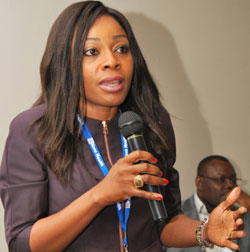
Jeff-Nnamani
Dr Dorothy Jeff-Nnamani is Managing Director/CEO, Novo Health Africa. Novo Health Africa is a Health maintenance Organization (HMO) in Nigeria with the mission to develop, provide and manage sustainable health care programmes, service and support systems through a dedicated team of professionals, ensuring quality and outstanding client servicing.
In this interview with Saturday Vanguard to commemorate World Malaria Day, Jeff-Nnamani tasks stakeholders, Nigerians, all and sundry to help eradicate malaria parasite – a silence killer in Nigeria and African. Excerpts:
The programme centres on malaria, why malaria?

Jeff-Nnamani
Malaria, as we all know, is a disease that has been around with us and people most times forget how deadly it is. Malaria is a major contributor to mortality in children under 5, pregnant women and the elderly. This program is centered on malaria because we have over the years as an organization collected credible statistical data on diseases common among Nigerians. What we saw is alarming and collaborates data on other sources on Malaria.
It is therefore an evidence- based program seeking to create awareness and call for support of the federal government approved National guidelines on management of Malaria. Do you know that from our data (2014), out of all the diseases analyzed, Malaria alone stands at 43% for all the out-patient visits? One disease claimed this percentage out of all other health issues you can think of. How prevalent is that? This trend was also observed for admissions especially in children.
This, for us speaks volume. Now you can begin to imagine the impact malaria has on our lives. To really understand the effect on our physical, social and work life, imagine what this means for staff absenteeism in an office. So if something is properly done, then absenteeism can reduce significantly, so to say.
Now because it is endemic in Nigeria, there are people with significant parasite load, who have not visited the hospital but physically experience that feeling of unwell and therefore cannot operate optimally. So at work, those people are present but absent -present absenteeism. The effect of this affects the GDP of an entire nation. What about resources committed in each of the hospital visits? Resources that can be directed to socially improving one’s life.
Because of the magnitude of the effect of malaria on the population we need to look seriously at winning this fight. If you look in the course of history, there are so many other infectious diseases that are deadlier than malaria that have been phased out, eliminated and we have been able to achieve global eradication of those infectious diseases. We believe that malaria can as well be eradicated.
So, by this programme, we are calling all stakeholders to get involved; the doctors and others because there is something each and every one of us can contribute. It is not left for international organisations alone. Of course for many years, Nigeria and the rest of the world have committed huge resources to fight malaria, yet we still have to deal with the scourge.
So, we are calling everybody, we are all stakeholders, to do what is necessary from the fundamentals of raising awareness, taking precautions on the first line of defense against malaria which is protection from mosquito bites, to the professionals who should be able to give accurate diagnosis and treatment of malaria.
It is important that doctors understand so that they will be able to detect and make accurate diagnosis and also provide correct treatment of malaria because if you don’t know about the correct treatment protocol you cannot offer a patient due treatment. You may even be doing more harm than good. In serious cases especially in children death can occur. It is therefore important that we wake up to this call.
So far, the fight has been on going and we have not been able to curb malaria. What is missing in this fight against malaria?
It’s because malaria has been with us and people don’t feel threatened even though it is a major contributor to mortality. In our industry, we have the privilege of partnering with many hospitals across the Nation which has exposed us to understanding some fundamental challenges in the management of Malaria. We have a number of other infectious diseases that present with similar symptoms like those of malaria, so if appropriate guidelines are not followed you may arrive at misleading diagnosis. Also we must stress on constant education on malaria. As we are meeting our providers in this forum today, we are reminding them of their pivotal role in this struggle.
Every contact with a patient serves as an opportunity to provide health education. Educational materials should be available during hospital visitations and patients encouraged to undertake their own responsibilities such as self or family protection from mosquito bite like the use of insecticide treated mosquito nets. Go back to the time we had Ebola scare, everybody had personal responsibility to sanitize. You could hardly spot any Nigerian without their hand sanitizer. In short it practically replaced mobile phones (laugh).
There were so many literature, you could read from the internet and people were well informed. You knew what to do, even in churches people were cautious and we were able to contain Ebola as deadly as it is. In the case of malaria, I think people are nonchalant about malaria due to poor knowledge of its harmful impact, both direct and indirect. According to WHO, Malaria is a major public health problem in Nigeria contributing directly to poverty, low productivity, reduced school attendance and accounts for more cases and deaths in Nigeria than any other country in the world. The federal MoH in Nigeria estimates financial loss from malaria (in the form of treatment costs, prevention, loss of man-hours etc) to be roughly 132 billion Naira per year and attributes 30% of childhood deaths and 11% of maternal deaths to Malaria.
Is Novo Health Africa having any programme with World Health Organisation, WHO to make World Malaria Day a success?
We’ve set the ball rolling today in support of WHO’s World Malaria Day and the federal government approved National guideline for malaria.
WHO representatives are the key speakers in this programme with statistical illustrations of the global impact of the parasite and also emphasized on the urgent need for all stakeholders to adhere to the approved protocols, prevention and control intervention strategies. So we are supporting and creating awareness for the fight against malaria and calling on all stakeholders to join this global struggle.
What is Novo Health Africa all about?
Novo Health Africa, is a Health maintenance Organization (HMO) in Nigeria with the mission to develop, provide and manage sustainable health care programs, service and support systems through a dedicated team of professionals ensuring quality and outstanding client servicing.
We provide health insurance and other forms of health care financing, health management solutions and community health project delivery. We collaborate with NGOs, the public and private sectors to provide support in addressing health care related issues.
Is Novo Health Africa taking malaria awareness to the rural areas?
In that case, we have been looking at the financial impediment for people going to the hospital in general and we acknowledge this challenge in Novo Health Africa. We have Novo Health Africa Foundation which serves as a vehicle to provide healthcare for the underserved population.
We are committed to raising the quality of care and provision of healthcare services to Nigerians regardless of socio-economic status. So, we have Novo Health Africa Foundation as that arm to ensure that people who lack access to healthcare facilities because of limited finances get access on the platform of the foundation.
The foundation is funded internally through a monthly wilful charity contribution by staff and management of Novo Health Africa. It is a strong sign of our commitment to the Nigeria health care system and our corporate social responsibility. Presently, we have such programme running in Ajeromi Local Government in Ajegunle where we provide health education, health checks and registered members of the scheme receive medical services in nearby hospital. We also plan to replicate same in Port Harcourt and Abuja where we have our regional offices.
Disclaimer
Comments expressed here do not reflect the opinions of Vanguard newspapers or any employee thereof.