By Prince Osuagwu & Laju Iren
Nigeria has fared a bit better in technology advancements, particularly in the area of telecommunications. It all started with the deregulation of the telecom sector where the nation’s carrier, NITEL held sway for decades of telecom underdevelopment.

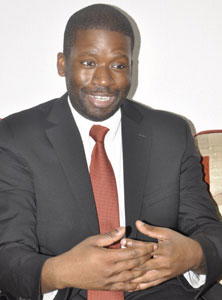
Anderson Osagie
However, by 2001 when the first set of mobile licenses were auctioned, ushering in the Global System for Mobile communications, GSM operators, the stage for revolution and the possible explosion experienced at the moment was set.
A country with over 150 million people yearning to talk to one another in most convenient way without hindrances, it was little wonder why, in less than a decade, the sector leveraged the country to overtake major world powers to become one of the fastest growing telecom economies in the world.
Today, with over $32 billion investment, over 142 million active mobile subscriptions and over 80 million internet subscriptions, it wouldn’t surprise many, why Nigeria has become the haven of world investors.
But with all that flambouyant credentials, the country still lags behind in one of the areas that matter most- local software content. Foreign investors could build infrastructure and other components that help drive the economy but a nation that desires to hold its own must have an appreciable local content base.
That is a lapse a Nigerian-born American citizen, Mr Anderson Osagie discovered and is planning to fix it. Osagie is not deceiving himself to have the ability to do it all alone, but he believes that if the scores of Nigerian software engineers traversing the length and breadth America, Europe and other developed nations would think home, the country would be greater in technology.
Meanwhile, Osagie, an American trained software programmer, Founder and Principal Engineer of Listuwa, a company which focuses on analytics, security, big data and advertising, is home on a fact finding, exploratory mission. He has been a software engineer in the United States for about fifteen years and his ideas to equip young Nigerians with the power to create wealth with software programming are worth listening to.
“There is somewhat of a stigma against Nigerian technologists because of the erroneous belief that majority of people here are scammers. But the country can build its own army of local software developers. The way to go is targeting people who show some kind of interest in software engineering whether in schools or churches, educating and empowering them with personal computers. Building local technologists would be much easier in the area of software than hardware. For hardware, the infrastructure has to be there. But for software, it’s very accessible. You can learn programming in a week; all you need is a computer. You can continue harnessing those skills and providing those skills to businesses within the community and nation. It’s one of the most accessible professions you can get into. There isn’t much investment except your time and education”.
Even on the perceived infrastructure challenge plaguing the country, Osagie said “I know that when the mobile operators came here, they had infrastructure issues and had to even build on their own, but like I said, that was hardware issue. It is quite different from the issues I would have to face initially because my specialty is in software engineering; Meaning that it’s already built on the backbone of that infrastructure that mobile carriers and satellite carriers had provided. There still definitely going to be investment in the future, but for initial stages, we can piggyback off the infrastructure already provided. In America, Amazon provides web services, infrastructure and cloud services across the US, but they have also expanded to Ireland and London. Recently, I spoke with the IT manager of Konga who told me that using the mobile infrastructure, they are able to locate their servers overseas and still be able to access them”.
But, is Mr Osagie forgetting that the US is somewhat a stabilized economy where even disruptive technologies can thrive better than here with challenges of spectrum, leadership and right policies. Does he think he could replicate his success in the US here?
“I agree that there are certain obstructions here. We built our company in America based on the infrastructure that they had, as well as the politics and the economy. I think where I can be of value, especially many years from now, would be to accelerate Nigeria’s progress towards having that infrastructure. For example, accountability in the budget could be followed up by using technology to automatically analyze who is spending what on what. That is just one example where we may not already have the infrastructure, but we can accelerate our path towards that infrastructure by creating accountability through technology. We need to build infrastructure that enriches our lives past the basic necessities.”
If competition, particularly those already established decides to muscle his ideas out of reckoning?
“Those, big giants, the Goliaths to my David all exist in America as well. What we on our team realised is that it’s not a sum-zero game where they take away and I lose or vice versa. If there is not enough of the pie to share, then we expand the pie. My associates are usually busy because there is always a need to meet. Also, these big companies don’t necessarily have ties to the market. But that’s different for me. Although I am in the US, most of my relatives are here and they have ties to the market. They know the environment as opposed to just seeing the country as a market to benefit from, but not to interact with. I have that edge and I’m willing to use it to tailor products to fit the special needs of the environment.
This initial trip I have made is a fact finding, exploratory mission where I am talking to as many people as possible, asking them to interact with me so that I can tailor services to meet their specific needs whether theirs is a large, medium or small enterprise. Instead of thinking of solutions that I can push to people, I try to think of problems they have.
Any findings so far?
The top two problems I’ve seen are information integration: there are different silos of information in different industries within Nigeria that have no sense of each other and no connection at all. If this information was integrated, it would be very beneficial to everyone involved. Imagine if from my cellphone I could have all the information I need regarding a certain industry or business? The second thing is the issue of security consulting in general. To make sure that your systems within your organisation is not attacked by outside parties.
Tailor-made solutions?
At the lowest levels, we’ve provided consulting to organizations just to check the software on their phone and make sure everything is kosher. At the highest level, we provide custom software that they can use that integrates with their systems and is tested to make sure that no one can ever touch the software. A lot of times, this battle tested software is low on features but we are able to provide the more advanced and interesting features without sacrificing the security of the software.
If competition, particularly those already established decides to muscle his ideas out of reckoning?
“Those, big giants, the Goliaths to my David all exist in America as well. What we realize is that it’s not a sum-zero game where they take away and I lose or vice versa. If there is not enough of the pie to share, then we expand the pie. My associates are usually busy because there is always a need to meet. Also, these big companies don’t necessarily have ties to the market. But that’s different for me. Although I am in the US, most of my relatives are here and they have ties to the market. They know the environment as opposed to seeing the country as a market to benefit from, but not to interact with. I have that edge and I’m willing to use it to tailor products to fit the special needs of the environment.
This initial trip I have made is a fact finding, exploratory mission where I am talking to as many people as possible, asking them to interact with me so that I can tailor services to meet their specific needs whether theirs is a large, medium or small enterprise. Instead of thinking of solutions that I can push to people, I try to think of problems they have.
Disclaimer
Comments expressed here do not reflect the opinions of Vanguard newspapers or any employee thereof.