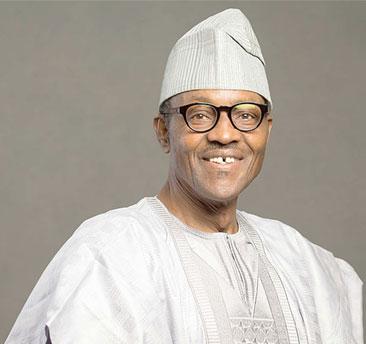
•Buhari
By Levinus Nwabughiogu
Finally, the D-Day is here. Nigerians have waited so long for it. It is a day of a great decision via elections. Nigeria’s presidency is the soul of the contest which has obviously been narrowed between Dr. Goodluck Jonathan and General Mohammadu Buhari. Who carries the day? The answer is just hours away. Read the profile of General Buhari, how he emerged the candidate of opposition All Progressives Congress, APC, the formation of party and the issues that have made Buhari hopeful of becoming Nigeria’s next president.
When the date for the Presidential election was announced over a year by the Independent National Electoral Commission, INEC, many thought, it was so far a day that would never come. Just when it was almost time, it was postponed, thereby giving more nightmares to many Nigerian who had patiently waited for it. But six weeks after the controversial shift, Nigerians can behold the day. It is finally here. It is the Election Day which would usher in a new era of political governance in Nigeria.
The first phase of the exercise would be elections into the office of president of the federal republic of Nigeria and the members of the National Assembly in both chambers-Senate and the House of Representatives scheduled to hold today. Next two weeks would be for the governorship and state houses of assembly.
But while the election into the National Assembly is considered serious, that of the president is considered more sensitive and serious. Giving the build ups so far, everyone has got the impression that it would be keenly contested. Though efforts were made to stop the postponement by especially members of the opposition, the powers-that-be eventfully had their way, citing security concerns in the north eastern part of the country as the major reason for the shift.
Essentially, two gladiators are in the great contest. This does not, however, undermine the participation of some other political parties. As at the time of filing this report, there were 14 presidential candidates in all but two of them stand obvious: They are the frontrunners. President Goodluck Jonathan of the ruling Peoples Democratic Party, PDP and General Mohammdu Buhari of the emerging All Progressives Congress, APC.
Both men are not greenhorns in the political arena. They have tasted power and so know what it is. While Jonathan rose through a civil political pedestal from the cradle of a deputy governor in his home Bayelsa State in 1999, later governor, Vice President, Acting President and President; Buhari criss-crossed the military flanks in the family of Nigerian Army, rising from a commissioned officer to a military administrator otherwise Governor and peaked to the Head of State in 1983. So, they both know what political power is.
But besides the political knowledge, something else is unique about them and thus defines their relationship. Jonathan and Buhari are overtly political parallels. They have never been allies. While Jonathan got lucky with the ruling party since his entry days, Buhari has consistently and persistently tried luck with the opposition since 2003. They first met in 2011 when they squared up for the presidential contest. The odds then favored Jonathan while Buhari stalked hard along some 12 million votes.
After four years, both are back to the trenches. Have things changed? Would Jonathan’s second missionary journey’s appeal be heeded by Nigerians or would they give a nod to Buhari who is now making the appeal for the fourth time? These are all the questions that have their answers tucked in the womb of some hours from now. But then, who is General Mohammadu Buahri?
The man Mohammadu Buhari

Buhari
Buhari does not need introduction in the Nigerian political firmament. He is a retired soldier and former Head of State from Daura, Katsina State who benefited from 1983 military coup but was toppled in another coup in 1985. He also held other positions assigned to him by the government which included the chairmanship of the outlawed Petroleum Trust Fund, PTF. But in 2003, he formally launched into partisan politics, contesting the presidential seat with the then President Olusegun Obasanjo.
One peculiar thing about Buhari is that he has always been in the opposition. First, he ran under the defunct All Nigerians Peoples Party, ANPP. He, again faced late president Umaru Musa Yar’Adua in 2007 presidential election and later formed the defunct Congress for Progressive Change, CPC in 2010 under which he contested for president in 2011, polled about 12 million votes but lost to incumbent president Goodluck Jonathan of the PDP. His party, CPC, was one of the political parties that fused with three others to form the All Progressives Congress, APC.
According to most analysts, determination, simplicity, technical competence, courage, selflessness, forthrightness and foresight with unrepentant hate for corruption among others virtues are what have endured many Nigerians to him. Besides, Buhari is arguably a poor man when compared with his contemporaries within the military and political scenes. He had occupied positions but never compromised his principles and never used such positions to enrich himself.
But even as this goes, many see Buhari as a religious bigot which has been his albatross. This is why most people have refused to stop playing back some statements credited to the him mostly on religious lines.
How he emerged as APC presidential candidate
Unlike the PDP’s coronation of President Goodluck Jonathan at the Eagles Square, Abuja, APC’s Buhari faced a touch primary election. It was a very rigorous process which kept him and indeed every other stakeholder in the exercise awake all night in Lagos between 10 and 11 December 2014.
Venue of the primary election was the Teslim Balogun Stadium and the contestants outside Buhari were the former Vice President Atiku Abubakar, incumbent governors of Kano and Imo States, Dr. Rabiu Kwankwaso and Chief Rochas Okorocha respectively and the publisher of Leadership Newspaper, Sam Nda-Isaiah.
At first, not many people thought that with the nova riche like the former Vice President Atiku and the rest of power-welding Kwankwaso and Okorocha plus the media chief, Isaiah, that Buhari, a pensioner would sweep the votes of the delegates the way he did. delegates votes. Many expected him to win but not overwhelmingly. He did. And eventually, Buhari cruised home to victory with a total of 3, 430 votes. The details of other results were: Kwankwaso 974 votes, Atiku 954 votes, Okoroacha 624 votes and Isaiah getting paltry 10 votes.
His acceptance speech
Buhari pledged to fight corruption and religious intolerance amongst other things. The speech which is dissected below is adjudged memorable by most analysts whether Buhari wins or not.
No dividing line between Christians and Muslims
Hear him: “My nomination is not because I am better than any of the other contestants. I see it as a tribute and mark of confidence to carry the torch as we all join hands to rescue our dear country Nigeria, from those who have led us into the current state of insecurity, poverty, sectarian divide and hopelessness among our people.
“I stand before you today to ask that you join me in a common cause. My call to you is not to realize the personal fulfillment of one man. This Common Cause is nothing less than the love for our nation and concern for its present condition. And a resolve to make things better for Nigeria.
“What I say today is for all Nigerians: Christian and Muslim, Southern and Northern, rich and poor, young and old, man and woman. We are all citizens of Nigeria. There is no dividing line among us that I care to honour. Either we advance as one or fail altogether.”
Perhaps, the implication of this is that there is a changed man who is now more determined and committed to a national cause.
What PDP has failed to do for Nigerians
Buhari was not done. Again, hear him make more commitment while lashing out to failed leaders.
“My choice and my colleagues’ choice and wish is that we progress together. Preserving the nation’s future is a scared obligation to all of us in this party. Leaders should be wholly committed to fulfilling this obligation otherwise they have no business being leaders.
“Sadly, the current administration does not believe in this obligation. By their actions they are leading us to calamity.
“At International Conferences, the Nigerian delegation is usually among the largest but at the same time the least effective. Our president should have the status and the voice of Africa’s largest nation. But in political influence we are among the weakest.
“Shall we at home continue to live in a condition where the Power Holding Company and its successors seem only to have the power to hold us in darkness?
“Shall we continue in a situation where 250 of our daughters have been abducted and the government has been unable to rescue them or provide credible information about what steps they are taking?
“Shall we live in a nation where several people were trampled to death in search of jobs in a stadium and yet no one has taken responsibility for the tragedy?
“Shall we live in a nation where the ranks of the poor swell and their poverty increase while the consorts of the powerful enjoy unprecedented wealth? The lives of the poor are bled dry while those of the powerful soak in excessive abundance.
“My answers to these questions are “No, No, No, No!” It is time to close this demeaning chapter in our nation’s history”, he said.
My words, my bond—Buhari
Indeed, many are the challenges militating against the realization of a new Nigeria. But General Buhari on that day made a pact with Nigerians that if voted into office as the next president, he would do a new thing in an encompassing five critical areas of Nigeria’s national life.
He said: “I ask that you join this effort, not for me, but to establish a better land for all of us. I understand and accept the hard challenge ahead. When all is said and done, let it be written that Muhammadu Buhari gave his all for this nation. As such, I make these five pledges regarding the government if we are elected next February;
* We will govern Nigeria honestly, in accordance with the constitution.
* We will strive to secure the country and efficiently manage the economy.
* We will strive to attack poverty through broadly-shared economic growth and attacking corruption through impartial application of the law.
* We will tolerate no religious, regional, ethnic or gender bias in our government.
* We will return Nigeria to a position of international respect through patriotic foreign policy.
* We will choose the best Nigerians for the right jobs. Our government will be committed to the cause of the common man. Whether you are a Christian from Bayelsa State or a Muslim from Katsina State, you are first and foremost a Nigerian in my eyes. I shall treat you equally as my people, my national family, my brothers and sisters. There can be no genuine love of our country without loving all its people in our diversity.”
He continued: “Just as APC stands as a new party for a new Nigeria, our government will institute new policies to realise the new Nigeria.
“We shall institute just policies that afford people the dignity of work and pay them a living wage for their sweat and toil. We intend to do this by instituting a national industrial policy, coupled with a national employment directive, that together shall revive and expand our manufacturing sector, creating jobs for our urban population and decreasing our reliance on expensive foreign imports.
“We shall implement a national infrastructure master plan that will provide construction and related jobs across the land. Furthermore, by improving our transportation infrastructure through road, rail and port construction we expand the outer bounds of economic growth as no economy can grow beyond the capacity of its infrastructure.
“Agriculture remains the backbone of the economy. Our government, when elected, will establish an agricultural policy that provides farmers a dignified living
through improved inputs, improved extension services, access to credit and price support mechanisms.
“On corruption, the government will enhance EFCC’s powers to investigate independently. Moreover, we intend to plug the holes in NNPC accounting. There will no longer be two sets of books, one for public consumption and another for insiders who profit from this slick fraud. In an APC government, the public will know how much NNPC makes and where all the money goes.
“No longer shall illegal flows of massive sums leave these shores to finance other economies. While our people languish in poverty, we effectively give financial aid to nations that is not justified. I am sick of this. It must stop. The money saved will finance jobs, health care and the provision of social safety net for the needy, weak and vulnerable of our land.
“We will be a compassionate government, for out of compassion arises the truest forms of wealth and progress a society can attain. We shall open the door to tertiary education to excellent students who otherwise could not afford it. Pregnant and poor women and children shall be entitled to basic health care.
“This is a Nigeria that I envisage but it is a far cry from the Nigeria that is now. Change is imperative if we are to avoid the impending national failure. Poor leadership placed us in the ditch. Continuation of poor leadership will only dig a deeper trench for all of us to fall in”, Buhari said.
How APC was formed.
What later became APC was made possible by the conglomeration of the hitherto, Nigeria’s three major opposition parties namely, the Action Congress of Nigeria (ACN), the Congress for Progressive Change (CPC), the All Nigeria Peoples Party (ANPP) – and a faction of the All Progressives Grand Alliance (APGA) in February 2013. On July 31, 2013, the Independent National Electoral Commission, INEC, formerly registered the party. APC initially didn’t have all the boost until the coming of five governors who deserted the existing ruling Peoples Democratic Party, PDP for it in November 2013. The development was later to attract 37 members of House of Representatives and also a handful of Senators from the senate who defected to the party a month later. Since then, the party has continued to grow.
The campaign issues
For the APC, PDP’s weaknesses are their strength. Though there are a number of issues, three majorly stand out to be APC strength-base. The strength is found in the pervasive insecurity in the land especially in the north eastern hemisphere of the country which the PDP government has failed to completely stamp out. The next one is corruption. To most people, corruption is really ubiquitous in the country especially within the corridors of power. The allegation of financial embezzlement is legion and so, APC feels that Buhari would work to stamp out corruption if voted into power. Unemployment also comes very handy. It could be recalled that many youth lost their lives at the recruitment test conducted by the Nigerian immigration Service, NIS, in 2014. This, the opposition, holds as evidence of joblessness in Nigeria despite federal government claims of creation of millions of jobs.
Last line
Whatever may be the outcome of the today’s elections, one thing stands sure: that Nigeria will be either the winner or the loser. It is certainly not PDP/Jonathan or APC/Buhari. And for this reason to prevail, it behoves the political actors and the rest of Nigerians to eschew all parochial interests and pursue national interest by first accepting the verdict of INEC.
The apparent aggression which is resolvable in courts can come later. But will this be the case or would Nigerians be treated to the ugly meals of violence and trepidation? The reality or otherwise of all these would be determined in the hours ahead.
Disclaimer
Comments expressed here do not reflect the opinions of Vanguard newspapers or any employee thereof.