By Prince Osuagwu
When Dr. Omobola Johnson, Minister of Communication Technology, while delivering a policy paper at the recently concluded International Telecommunications Union Conference, said that Nigeria was quickly able to contain the dreaded Ebola disease as a result of the widely available telecoms infrastructure, it again brought to the fore, how pervasive the impact of telecommunications is.
She revealed that “Mobile phone applications were deployed to reduce reporting times of infections by 75 percent. Test results were scanned to tablets and uploaded to emergency databases with field teams getting text message alerts on their phones informing them of the results. The combination of the internet and mobile phones has opened up huge opportunities for Nigeria”.
However, recent research results by Pyramid Research Strategic Consulting Group while supporting Johnson’s assertions, also warned that Nigeria may lose all telecom attracts if sustenance policies are not continually put in place. The research estimated that Nigeria may lose among other things up to N400 billion, that telecom was supposed to contribute to GDP between 2014 and 2018.
The benefits of the growth of the telecoms industry have transformed the way Nigerians live, work, and play. From a mere 500,000 connected lines 14 years ago, there are more than 100million active lines and the number is still growing. Internet penetration was 0.1 percent of the population in 2001; it currently stands at 28 percent, which is about 50million users. While many of the research findings are self-evident and known by informed Nigerians, the research report however gives them a stamp of authenticity.
For instance, the Pyramid report stated that Nigeria is the largest mobile market in Africa in terms of subscribers and the continent’s second largest in terms of revenue. More than 100million subscribers were added to the telecoms networks in a little over a decade. In terms of subscriber growth, it averaged 15 percent per annum, which is one of the world’s fastest growth rates over the last five years.
The exponential growth rate experienced in the telecoms sector and the attendant benefits have been held up as models for other sectors, particularly power, transportation, and housing, among others.
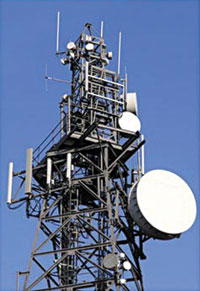
Currently, the industry can boast of having attracted investment to the tune of over US25 billion. Such investment manifests in the more than 25,000 kilometres of fibre optic cable laid across the country, more than 25,000 base stations erected for voice and data services, more than 20 Terrabytes of international fibre capacity at Nigeria’s coasts. Overall, Nigeria is regarded as having one of the fastest growing telecom markets in the world.
Broadband is key
After connecting more than 100 million people, voice services have long ceased to be novel. Subscribers are demanding for more and Pyramid Research said that broadband deployment is key to meeting subscribers’ expectations. Broadband is expected to deepen the delivery of a more robust internet infrastructure that will usher in industries that gobble up data.
However, the Nigerian telecoms market is said to be operating below its real potential especially as mobile broadband penetration, at an estimated 10 percent of the population, is lower than in a number of African countries
To tap fully into the net’s sweeping impact on growth, jobs and prosperity, Nigeria may need new investments and apparently grow broadband penetration to meet and surpass the target. To attract new businesses into the country, additional investments are also required to maintain the performance of existing networks.
Without exception, telecom operators are on daily basis, complaining of huge challenges they face optimising their networks to deliver seamless services to consumers. Some of the major hurdles standing in their way to providing high quality of service (QoS) are vandalism of fibre networks, cable cuts and multiple taxation.
The research put the average number of fibre cuts experienced by the industry every month at a high 500. It reminds that vandalism and cable cuts add a huge cost burden on the telecom operators. But more importantly they lead to severe erosion of quality of service and create pain and frustration for millions of customers unable to communicate seamlessly on account of the inevitable service infractions.
On multiple taxation, Pyramid Research warned that it has become the most critical risk to industry growth, having taken a more pernicious turn over the past few years.
Proper policies
One of the major reasons why the telecoms sector deserves to be supported by the right policies and incentives is its central and very pivotal role in transforming the lives of Nigerians and their businesses. Another factor is its contribution to the gross domestic product. With the telecoms sector alone contributing about nine percent to the country’s GDP, accounting for 30 percent of foreign direct investment over the past 10 years, $25billion in network investments and $4billion in spectrum fees, as well as 10 percent of federal taxes, forging the right policies to support the sector to continue to engender growth and development across various facets of life should occupy the time of policymakers.
Without the right policies in place to drive further growth in the telecoms sector, Nigeria could lose an estimated N400billion in contribution to GDP by 2018. Other forms of losses include less aggressive technology deployments, shortfalls in tax and regulatory levies and impact on the overall productivity of the economy – and this from mobile broadband alone; operators would be less inclined to deploy new technology such as LTE; government’s broadband penetration target of 20 percent may not be achieved, which would lead to potential revenue loss from less than expected broadband uptake. Another potential pitfall is FDI to the sector, which will likely suffer a decline.
Pyramid suggested areas that policies should address to include resolution of multiple taxation by implementing the government’s National Tax Policy at all levels. This is in addition to issuing Executive Orders to all Federal and State Agencies to ensure compliance with Section 2(2) of the Taxes and Levies Act; issue directives to the Inspector General of Police to deploy his men to ensure compliance with the Act; enact revenue codes at state level to govern collection of levies, fees and charges; conduct a thorough survey of current regulations and legal taxes and levies.
Disclaimer
Comments expressed here do not reflect the opinions of Vanguard newspapers or any employee thereof.