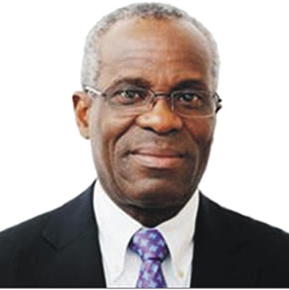
Layi Fatona is the Managing Director of Niger Delta Exploration and Production Plc, Nigeria’s foremost indigenous and independent operator of small to medium sized fields. He was the guest speaker at the Lagos oil club, where he enunciated the operations of the company in the last 10 years. He spoke to Sweetcrude on the sidelines as reported by Sebastine Obasi. Excerpts:
 Niger Delta is said to have achieved half a trillion cubic feet of gas since inception. What would you say about the federal government’s gas to power project, taking into cognizance the government stance that lack of gas supply is an impediment to regular power supply? What can Niger Delta do to leverage on this opportunity?
The most important thing for us is that we have managed to commercialise and monetise all our gas resources. Therefore to tap into our reserves, if a credible buyer approaches us today, we can actually talk of a business and opportunities of supply.
In our own case, I can say that we have the most available ready to supply gas resources coming out of Ogbele, as long as the end user is within a reasonable proximal location to us. In other words, somebody in Warri who wants to buy gas from Niger Delta that will be a tall order. But for anybody who wants to take gas from our immediate catchment area, there is opportunity for us to talk and reach a deal. That is a competitive advantage that we offer today as a Nigerian medium gas company.
Licenses were given to private refineries some years back but none of them has come on stream. What lessons do you think can be learnt by other emerging oil and gas companies, in terms of refinery development?
For those of them like us, they need patience. They cannot invest in gas today and realise all their investments in two or five years, as you could otherwise do if you are producing oil. Gas is long term and long term reward. If you see what is happening in the state of Nigeria, mind you this time last year, people were buying gas at a dollar and government has set the tone.
Today, you are supposed to be paying $2.50 for gas. Something can only happen. As demand increases, as suppliers come in, there will be new opportunities and there is only one direction that gas prices can go. They will only go up. For companies like us, there is plenty of space to invest in gas and realize your investment over time. But you have to be patient.
You said that Niger Delta Exploration is already in South Sudan. Are you not mindful of the war situation there?
Why is everybody talking about what is going on in South Sudan. There is nothing going on in the South. What is going on Iraq? What is going on in Syria? As far as I am concerned, the requisite peace you get in South Sudan is equivalent to what you get anywhere in the world. While there, they also asked me about Boko Haram in Maiduguri. That is thousands of kilometers away from Niger Delta.
The perception of security and safety is in the mind of the beholder. As far as I am concerned, South Sudan offers the tranquility and peace any investor is looking for. I don’t have any regret that we are investing in South Sudan. Indeed, I am pleased that we could take the opportunity when it manifested.
For a company like Niger Delta, if we are going to continue to grow as a company, we have to look for new opportunities at affordable cost. I think stepping out of Nigeria to places like South Sudan, offered us such opportunities where we can grow the company at very minimal cost and still do very serious things that we can do in Nigeria but that can take us quite substantial time to realise.
What do you think can be done to revitalise exploration and production activities given the fact that there have been no new investments for some time now?
Better investing environment, and the passage of the PIB. It is often said that a bad PIB is better than no PIB at all. We are all hungry for the PIB to be passed, the industry deserves it. The Petroleum Act is old and needs to be revised, and whichever way it is revised, there needs to be a mutual discussion between the regulators and the practitioners, but that is not visibly happening.
The Central Bank of Nigeria has directed banks to rein in on loans to oil and gas companies. With this clamp down on your exposures, how are you going to fund your capital projects?
There should be a rethink by the CBN on this issue. Viable lending by banks to oil and gas companies should rather be encouraged.
You said there have been no host community-induced interruptions in the operations of your company, Niger Delta. How did you achieve that?
We have a Host Community Development Trust Fund, where we pledged five percent of our net profit every year to the host communities. We have been doing yearly in the last nine years; that is the covenant. It made host communities stakeholders and protectors of the company’s facilities. The fund is managed by NDPR Community Development Trust with the active participation of the Host Community’s Advisory Committee, CAC.
It enshrines the doctrine of zero interruption, maximum benefit, strengthens local governance and establishes a framework for transferring visible development to the host communities. It is a modest initiative to ensure that development is anchored on the people. The cumulative cash funding to the trust is $7.127 million.
What is the state of OML 54?
OML 54 was owned by Chevron. It has been relinquished and reverted back to the federal government. The Ogbele field in OML 54 was awarded to our company.
What is the nature of your partnership with the Nigeria LNG Ltd., and how has it impacted on the operations of NDPR?
We are the first company to take flared gas as well as associated and non-associated gas to NLNG. We completed building the100 mmscf/d Ogbele Gas Plant & commenced plant/production testing such that by November 2012, we achieved the first gas delivery into NLNG Bonny Plant.
As at February 23rd, 2015, NDPR has delivered 19.024 Bcf of gas from Ogbele to NLNG. It is a strategic partnership between us and NLNG off-taking. This is a company that only restricts its off-take gas to its owner companies, NNPC, Total, Shell and Agip. Here we are a very small, unknown company joining the pack, which again is a privilege for us. To build the plant to a technical level acceptable to NLNG is quite a demanding task, but we have succeeded.
Disclaimer
Comments expressed here do not reflect the opinions of Vanguard newspapers or any employee thereof.