By Japhet Alakam
Nigeria is blessed with good talented artists, this is reflected with the number of artists making waves in international arena and back home, a visit to many galleries and the quality of works displayed gives credence to that.

Lagos 1, YEOBA, one of the works by Akin Disu
This was replicated recently at Didi Museum Lagos, where for three good days, art collectors, lovers, culture enthusiast and others were treated to a historic exhibition by someone who can be described as a man of many parts, a chemist, Urbanist, engineer, printmaker and former director of Eagle paints, Akin Disu.
The exhibition titled. Layer Cake, an exhibition of prints with a historical theme, which ended recently showcased the artist’s journey into his method, from a historical perspective thus displaying a visual narrative into the making of Lagos, by implanting icons of cultural relevance in historic context.
It featured a selection of 4 main pieces of the work done in mixed media, screen print, acrylic, paper and canvas referencing the historical layers that make up Lagos.
As one enters the gallery, one will be greeted with well printed art works that shows the cultural components of Lagos, at its formative stages of pre-Portuguese influence, and towards an evolving centre of economic activities in West Africa and by the side, the artists/teacher took out time to explain to the viewers meaning and importance of each work.
Sponsored by Arewa textile Plc, the show which was opened in a private show by HRM Oba Idowu Oniru also witnessed the presence of HE Chief Ernest Shonekan represented by Chief Mrs Shonekan , HRH Erelu Abiola Dosumu National Poet Chief JP Clark and prominent members of Lagos society, it also had a workshop for students of Holy Child and Methodist Boys High School
According to the artist, “it is four in the collection, YEOBA , IDEJO , EYINGBETI , and DANKOLO make up Layer Cake and from that we derived the prints which are in limited editions. Its a collaborative approach to creating a new social language for the arts. Complimenting the city’s past and encompassing the future. And my method is screen printing, I chose it because of its commercial nature, which means you work with with clothes of people and you can get a lot of images out of it.”
According to him, “the central message is for the children, its for them to have a point of contact with their history. When they know that the works are about your people, they will be poised to ask questions and in the process go on research to know more. It is just like a ladder or a connection between the youth and their history.”
Disu who pointed out that it took him time to come out with a solo because he wanted to come out with a message revealed that the exhibition will be shown in UK and United States.
The works highlights how the peoples of Benin, now in modern day Edo State; Nupe or Tapa, under Niger State; and Islam through some Malian cultural influence fused into the Yoruba values to make up the greater Lagos that the Portuguese and British met on the ground before colonial era.
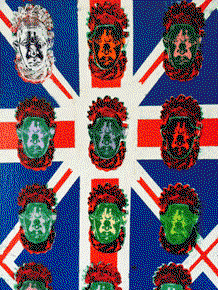
On display were works such as Eyo masquerade, a festival identity of the city and Idejo people, a symbol of the Lagos land owners; ancient Bini queen mother mask, Iyoba; and symbol of the aristocrats, but nomadic-like Dankolo people from Mali are printed with fluorescent colours to explain the artist’s thematic choice of a Lagos history that hardly finds its way into pictorial contents. Disu, through the work stressed that “the crown of the Lagos monarchy has its roots in the ancient Bini.”
Other issues were the confirmation that Lagos – pre-colonial era – had always been a convergence of commercial and cultural activities from peoples across West Africa.
From Disu’s Lagos series comes Iyoba, a dissolving and fading of multi-colour images that represent what he noted as the “Benin funeral mask of Queen Idia with the British Union Jack “.
The icon, Idia mask, otherwise known as Iyoba (Queen Mother) reminds one of a controversial original mask of the same icon, dated 16th century in provenance, and currently incarcerated inside the British Museum, in the U.K.
Disclaimer
Comments expressed here do not reflect the opinions of Vanguard newspapers or any employee thereof.