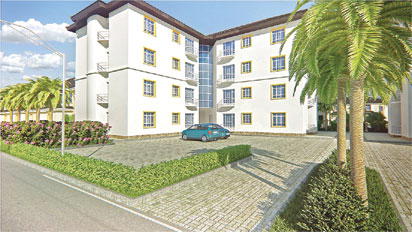
The Federal Capital Territory Administration (FCTA) has revealed plans to ensure that all houses in the territory are occupied not later than six months after completion. This comes against the backdrop of numerous cases of unoccupied houses in Abuja despite the growing needs for housing by residents of the territory.
A survey carried out by News Agency of Nigeria (NAN) shows that multi-billion naira housing estates built by private estate developers in different parts of the Federal Capital Territory (FCT) have remained unoccupied. Many of the housing estates surveyed were reported to be under lock and key years after they had been completed by their owners.
According to the report, it costs between N2.5 million and N3 million to rent a two-bed bungalow in areas such as Maitama, Asokoro, Wuse and Garki, while the cost of renting the same apartment ranges between N800,000 and N1.2 million per annum in privately built estates outside the municipal areas. It also costs between N400,000 and N700,000 to rent a two-bed room apartment in the satellite towns such as Kubwa, Lugbe and Karu areas per annum.
In a bid to curb the trend, FCTA is mapping out measures to check the activities of owners of housing estates that remained unoccupied for more than six months after completion. Mr. Dominic Odenigbo, Head of Aesthetics and Amenities, Department of Development Control of the FCTA, disclosed this to NAN in Abuja.
He noted that the reason for constructing a house is habitation, adding that the purpose would have been defeated if after completion such houses remain unoccupied for years. According to him, some owners of such unoccupied estates were not eager to allow tenants into their houses and estates because their sources of funds could be questionable.
“Part of our condition for granting building approval is for that construction to commence not later than six months after approval and completed, at most, two years after. But we have observed that several of the houses in the city and in some mass housing estates are not occupied for several years after construction and that is not acceptable. Some builders acquire these structures as a way to tie down illegally acquired wealth so, they might not be eager to rent them out. To stop this trend, we plan to include a clause in the approval that would compel builders to rent or occupy such houses not later than six months after completion,” Odenigbo stated.
Disclaimer
Comments expressed here do not reflect the opinions of Vanguard newspapers or any employee thereof.