Herdsmen…
By Emmanuel Una, Calabar
On March 24, 2014, a farmer in Bebi in Obanlikwu local government area of Cross River State shot dead a Fulani herdsman for allowing his cattle to graze at his cassava farm.
The farmer was said to have met the herdsman right in his farm and demanded to know why he allowed cattle to eat the leaves of his cassava.
This reportedly angered the Fulani man who brought out a gun and attempted to shoot at the farmer. However, as things turned out, the farmer dispossessed the Fulani man of the gun and in turn shot him at close range.
The herdsman, mortally wounded, was rushed to the Obanlikwu General Hospital, Busi, some five kilometres away, but did not survive the gun shot ; he died hours later.
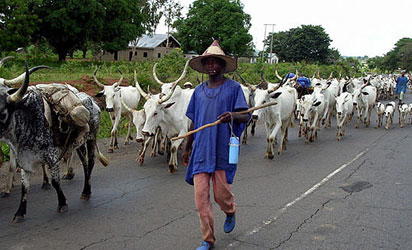
That is the most recent incident of communal intolerance between the natives in Cross River and Fulani herdsmen who are found virtually in all parts of the state.
This incident is, however, small when compared to another in July 2012 when a village, Ntan Obu, in Odukpani local government area of the state was attacked by suspected Fulani herdsmen allegedly in collusion with villagers from neighbouring Ikpanya, Akwa Ibom State which left over 50 people killed and almost all residential homes set ablaze.
What led to the crisis was the reported lease of the flood plains, a rich grassland belonging to the Ntan Obu people to one Alhaji Bature to graze his cattle by their Ikpanya neighbours which did not go down well with the Ntan Obu people who preferred to use the rich soil for planting of crops.
Angered by the refusal of the Ntan Obu people to allow them the use of the land, the suspected Fulani herdsmen, allegedly in collaboration with the Ikpanya villagers, invaded Ntan Obu on the night of July 16, 2012 and killed scores of people including the chief of the community.
In other parts of the state like Ogoja, Yala, Ukele, Bekwara, Obudu, Boki and Akamkpa, herdsmen are avoided like the plaque. Many of the communities in the state, fearful of the negative impact the presence of the herdsmen and their cattle is capable of inflicting on their land and crops, usually send them away before they have any opportunity of settling down.
For instance, in early 2013, over 200 Fulani herdsmen and their families, who reportedly fled communal crisis in Taraba State, descended on Obanlikwu but the communities refused them the use of their land.
They asked the herdsmen to relocate and when they refused, the leaders of the community appealed to the Cross River State governor, Senator Liyel Imoke, to prevail on them to leave their land. Imoke had to provide them with relief materials and assisted them to return to where they came from.
The mistrust between the Cross River natives and herdsmen could be understood from the speech of Chief Linus Okom, Ada Bekwara, recently, when Imoke visited the northern senatorial district of the state to inaugurate the PDP caucus there.
Okom, who is the chairman of the caucus, singled out the havoc suspected Fulani herdsmen and their cattle were inflicting on the land and crops in Ogoja area and appealed to the governor to seeks ways of asking the herdsmen to leave.
Imoke did not respond but the look of alarm on his face while Okom narrated the ordeal of farmers to him showed that he was really concerned about the situation.
Disclaimer
Comments expressed here do not reflect the opinions of Vanguard newspapers or any employee thereof.