By Suzan Edeh
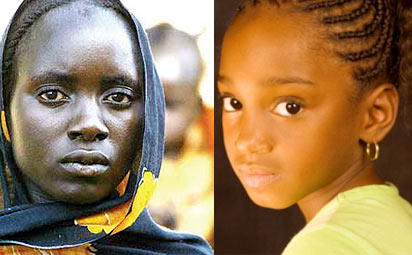
WHen the Girl Child Education Project, GEP was introduced in Bauchi State, residents and stakeholders in the state breathed a sigh of relief because they felt that a solution has been found to the problem of out of school girls.
According to the 2012 Global Management Report, GMR about 10.5 million children are out of school in Nigeria with the North-East zone of the country recording the highest figure. Bauchi State falls within the category of states in the North-East with a high rate of 58.2 children who are out of school.
Apart from the GMR, the 2010 Nigerian Education Data Survey, NEDS shows that the literacy rate among children between the ages of five to16 years in the country is 41 percent, with a record of 8.7 percent being males and seven percent females in the North-East region.
Worrisome aspect of survey
The most worrisome aspect of this survey is that there is a low literacy level among the girls occasioned by early marriage, poverty, low quality of learning environment and low value accorded to girls’ education. Harmful practices, local beliefs and norms among others have impacted negatively on girl education.
The need for increased literacy among girls in the North necessitated the introduction of the Girl Child Education Project, GEP. The project was inspired by an earlier initiative which was geared towards promoting and enhancing girls’ participation in education. This earlier initiative was championed by the African Girls’ Education Initiative, AGEI through UNICEF and its government partners and funded by the Norwegian Government.
This is a joint undertaking by the Federal Government of Nigeria, DFID and UNICEF to boost girls’ schooling in Northern Nigeria and accelerate progress towards the MDGs, especially with respect to gender equity. The project which was first launched in Nigeria in 2004, to address the gender disparity in education, was implemented in two phases. The first phase (2005-2008) covered six states of Bauchi, Borno, Jigawa, Katsina, Niger and Sokoto. The support got 423,000 girls into primary schools and 225,000 girls transited to Junior Secondary Schools.
The second phase was implemented in four states; Bauchi, Katsina, Niger and Sokoto from 2008 to 2012. In Bauchi state, the Girls’ Education Project 2 commenced alongside GEP One with the replication of GEP in all the 20 Local Government Areas of the State.
The implementation of the second phase of the GEP in Bauchi recorded tremendous successes as there was an increase in the enrollment of girls in schools by eight percent .The total girls enrollment increased from 290,469 in 2009/2010 to 685,644 while in 2010/2011, the enrollment increased from 304,929 to 737,505.
It was against this backdrop
that the State Government signed a N2 billion memorandum of understanding, MoU with UNICEF and DFID to support the third phase of the Girl Child Education Project in the Bauch State. During the implementation of the second phase of the project , the State government pledged the sum of N344 million but only N52million was released as at November 2013.
As part of its efforts to strengthen the sustainability of the project, a high-level advocacy meeting with Bauchi State policy makers on the third phase of Girls’ Education Project recently took place in Jos, the capital of Plateau State.
The meeting was attended by the Speaker of the State House of Assembly, .Alhaji Yahaya Mohammed Miya, the Commissioner for Education, Finance, Budget and Planning, the Chairman of SUBEB, Provost College of Education Azare, Dr.Garba Babaji as well as representatives of relevant Ministries, departments and agencies. Also in attendance was Dr.Abdulai Kaikai, Chief of Field Office, UNICEF Bauchi.
The facilitators stressed the need for the timely release of budgetary allocations by State Governments for the funding of the Project in order to address the problem of out of school children.
Out of school children
The UNICEF Chief Field Officer, Abdulai Kaikai, said the aim of the meeting was to exchange information and engage Bauchi State policy makers on the quality of basic education in the State, identify mechanisms and concrete actions to address the bottlenecks/challenges hindering Girls’ Education in Bauchi State as well as improving quality of girls’ education in the State through creating opportunities to fund the project.
At the meeting, participants resolved to initiate strategic plans that will ensure increased enrollment of girls in school by engaging in media advocacy, partnership with state education boards and lobbying for increased budget allocations through the State House of Assembly. UNICEF’s Education Specialist, Saratu Yunusa said the basic education intervention of the agency are in 13 high burden states that are selected based on the lowest education indicators of enrollment, attendance, completion and gender disparity.
“In the North, focus is given on increasing access and equity to education as well as improving quality. Interventions are based on service delivery and system building as well as a focused concentration of five states in the North including Bauchi state with the presence of the Girl Child Project GEP,” she said.
While giving an overview of the Girls Education Project, the UNICEF,Education Specialist, Mairama Dikwa said the GEP 1 and 11 informed the design of the third phase of the project and is presently implementedinBauchi,Kastina,Niger,Sokoto and Zamfara.
She explained that the GEP3 commenced in May 2012 and will be implemented to 2020. The projects are provided for by DFID and managed by UNICEF and a team of 11consultants posted to the state.
Disclaimer
Comments expressed here do not reflect the opinions of Vanguard newspapers or any employee thereof.