By EMMANUEL EDUKUGHO
Going by a report of the United Nations Children Fund, Nigeria is among the 24 countries with a good number of undernourished children in the world.
The reason for this trend is not farfetched. Inadequate nutrition in childhood undermines the ability of individuals to develop their full capabilities. Lack of essential minerals like iodine and iron, for instance, can impair brain development.

In developing countries such as Nigeria, it is estimated that 40 per cent of children aged four years and younger suffer from anaemia because of insufficient iron in their diets.
Poverty is inextricably linked with food insecurity and hunger. It also increases the cycle of homelessness as there are thousands of street children across the country.
To lend credence to this, the World Bank says 66 per cent of the Nigerian population live below the poverty line of less than $2 USD a day. This clearly indicates that poverty is still and would remain a growing problem for some time to come.
At present, many children live in environments without adequate shelter, sanitation, clean drinking water and adequate health care facilities. About 10 million children of school age are not in school due mainly to poverty and the unemployment status of their parents who cannot afford to provide them with basic education. This situation could be alarming considering that the Federal Government had assured of nine years primary and junior secondary education as stipulated in the Universal Basic Education Act 2004, with stringent penalties for parents whose children and wards are found on the streets during school hours.
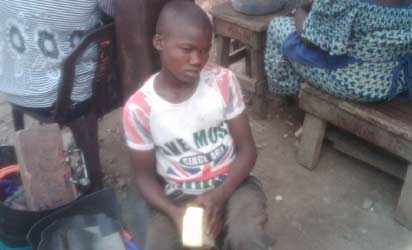
Thanks to poverty, many parents have been compelled to send their children to the streets to hawk food items such as groundnuts, oranges, mangoes, sachet water, minerals, bananas, carrots, tomatoes, pepper, vegetables and cooking oil, just to mention a few. Due to their tender ages, some of these child-hawkers are usually kidnapped by ritualists, sexually abused or knocked down by moving vehicles on busy street. The few lucky enough to be in school experience so much hardship as a result of unconducive learning environments like over-crowded classrooms, inadequate ventilation, insufficient reading books, writing materials and disgruntled/poorly paid teachers.
In the rural areas, some children often go to school every morning with their own small writing desks and chairs.
Yet, as of 2012 over N80 billion made available by the Federal Government under the UBE 2004 Act in respect of funding remained in the vault of the CBN because most of the states had been unable to provide the counterpart funds required to access the UBE money.
Infrastructural decay has become prevalent in most schools as classroom buildings are dilapidated, windows destroyed, school compounds flooded during the rainy season, even as toilets are inadequate and potable water/ recreational and sporting facilities are lacking.
Five-year-old Master Femi Adeola attends a community primary school at Nosada. He is in Primary 2. His father is a cassava farmer while the mother sells vegetables in the local market. Speaking in Yoruba, he said: “I don’t eat in the morning before leaving home. My dad gives me N20 which is not regular. I will wait till break time before using the money to buy rice and beans without meat. On my return home, I go immediately to help my father in the farm.”
Meanwhile, over 50 per cent of children are malnourished in developing nations as against less than 5 per cent in the developed ones. In the Nigerian food consumption and nutrition survey recently carried out, 42 per cent of Nigerian children were stunted while 25 per cent were underweight.
Undernutrition undermines the survival, growth and development of children and diminishes the strength and capacity of the nation.
According to WHO and UNICEF, 88 per cent of deaths are attributed to unsafe water, inadequate sanitation and poor hygiene. Diarrhea kills about 1.5 million children in the developing world and 200,000 Nigerian children annually.
Those living in poverty have a higher prevalence of disability and chronic illness and suffer lower life expectancy than those of higher income levels. Children from poor homes are more commonly affected by diseases, respiratory and gas-trointestinal infections, wheezing illness.
Research has shown that there is a high tendency of educational failure for children from poor or low income backgrounds. They usually drop out faster than their counterparts from affluent homes. The situation is the same regarding juvenile delinquency and teenage pregnancies.
Education, the main driver of growth and economic, technological and scientific development is still not adequately accessible in Nigeria, thereby contributing to high incidence of poverty in the country.
To worsen the situation, corruption has held the nation captive coupled with bad governance, bribery and all manner of malpractices at all levels of government and strata of the Nigerian society.
Children and youths are the worst hit as they roam the streets jobless, homeless, eventually resorting to social and other vices.
Disclaimer
Comments expressed here do not reflect the opinions of Vanguard newspapers or any employee thereof.