By Jude Njoku
A PLETHORA of abandoned or underutilised buildings currently dot the nation’s landscape. Lagos, the former seat of the Federal Government and unarguably, the country’s commercial capital, is littered with most of these structures, majority of which used to be beehive of activities in the 1980s and 1990s. They were, however, abandoned when many Federal Government-owned ministries and establishments relocated to the Federal Capital Territory, FCT, Abuja.
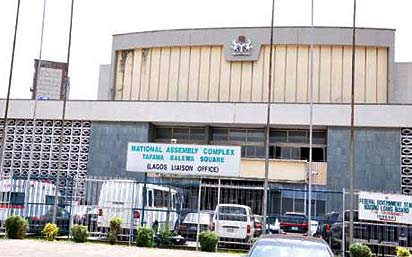
Some of these buildings include the Independence Building which used to house the ministry of Defence , Glass House by Okesuna Street which housed the Federal Ministry of Works and Housing, Ministry of Education Building, the National Assembly Complex at Tafawa Balewa Square and the 37-storey NECOM House at No.15 Marina Street, which was sold to a company owned by Chief Alani Bankole, father of the former Speaker of the House of Representatives, Mr. Dimeji Bankole at a paltry sum of N4 billion. Others are the NITEL Building, former Supreme Court Building, former Navy Headquarters on Marina, which the Ministry of Foreign Affairs once used, the NNPC Complex in Ikoyi, NITEL offices at Falomo and Iponri and the uncompleted NPF Building at Okokomaiko, off the Lagos-Badagry Expressway.
An aggrieved Governor of Lagos State, Mr. Babatunde Fashola told his audience at the 6th Town Hall meeting on security, that these abandoned Federal Government properties now serve as hideouts for criminals, including armed robbers and miscreants, popularly called Area Boys.
“There are a number of abandoned offices and houses all over Lagos resulting from the movement of Federal agencies to Abuja. These buildings attract criminals and miscreants who use them as hideouts for planning criminal activities and sharing their ill-gotten loot.
An example is a 17-storey building abandoned since the 70s by the Federal government in the Okokomaiko area of Badagry Expressway, which has become a hideout for criminals who terrorise residents of of the area. The security agencies have conducted a number of joint raids on the property but as long as it remains standing and unutilised, it will always attract criminal elements and remain a constant security issue,” Fashola was quoted as saying.
A forum of Lagos elders,
which included Oba Rilwanu Akiolu and former Federal Commissioner of Works, Chief Femi Okunnu, had made a strong case for these buildings, some of which are national monuments, to be handed over to Lagos State Government.
While the owners of Great Nigeria House and similar high-rise buildings on the Island are making huge profits from their investments because these properties are fully occupied, the ones owned by the Federal Government are inhabited by hoodlums who use them as their base to perpetrate all forms of crime.

*Old Senate Building, Lagos.
The President of the Nigerian Institution of Estate Surveyors and Valuers, NIESV, Mr. Emeka Eleh called on the Federal Government to lease such properties to private sector investors. He was however quick to point out that some investors may be unwilling to lease such properties because of inconsistencies in government policies.
Issue of ten year lease
“The government can still go through the PPP. There are those who can take the lease. Why people are shying away is because they don’t know what would happen tomorrow. If Government can give you a 10-year lease today, another government can come and cancel the lease; you may have borrowed money from bank and you are stuck. Nobody wants to be going to court everyday, so that issue of government’s policies being consistent is the only way that can create confidence in the PPP arrangement,” he said.
Eleh who described the plethora of abandoned and under-utilised Federal Government-owned buildings that dot the Lagos landscape as unfortunate, noted that vacant houses deteriorate faster than the ones in use. “ Vacant houses run down faster than occupied houses. Naturally, once a house is vacant for some time, it tends to run down very fast.
Therefore, our advice to the government is, if the houses are not being used by the government, since the capital has moved to Abuja, government should lease the houses to individuals who can use them. Governments at various tiers will make money because the individuals will pay tenement rates, the person who leased it will also make money and employment will be created because people will work there and society will be better off. I don’t subscribe to the houses being left vacant. Government must find a way to ensure that these properties are utilised,” he said.
NIESV 2nd Deputy President, Dr. Bolarinde Patunola-Ajayi had a slightly divergent view. “ What I think is the solution is that there should be a synergy between the Federal and State Governments, because I believe this type of abandoned or neglected projects that are wasting away can even be in some other States, apart from Lagos.
Trading off property
Even when the States and the Federal are in the same party, you still see this dichotomy, this is mine, that is yours. I believe that the best solution would be to collaborate with the states. When the state needs it, release it to them, if you want to sell it, sell it. Let there be a way by which it should be traded off so that these properties will now be in use.
There are demands for spaces in Lagos. The Lagos State Government is erecting new buildings for its offices, meanwhile there are these buildings lying unused and overgrown with weeds. I believe there should be synergy so that Federal, States and Local Governments will not strictly say, this is mine.
In fact, the Federal Government should be able to ask, Lagos State, “can you give me a space for so so department, ministry or a representative office of a commission? They should be able to give, even freely. That is what I believe can be done to make all these vacant, neglected properties to be in active use,” Dr.Patunola Ajayi said.
Also reacting to the spate of abandoned and under-utilised Federal Government properties, the immediate past President of the International Facilities Management Association of Nigeria, IFMA Nigeria, Pastor Stephen Jagun, decried the practice whereby people treat government-owned property as nobody’s property. He noted that if these abandoned and under-utilized houses belonged to individuals or corporate organisations, they would have turned them around to make huge profits.
Jagun who is also a former General Secretary
of the Lagos State Branch of NIESV, called for the setting up of an estate unit or department in every Federal Ministry, to take inventory of all properties belonging to such ministries in any part of the country. The unit will determine the occupancy level of each government-owned property as well as what to do with the vacant ones. Government should then lease such vacant spaces to individuals, even if the rent is low. This way, he said, the government can make some money instead of allowing the buildings to remain vacant and thereby run-down.
Vacant building spaces
Jagun declared that until Nigerians start running government business as their own personal business, things like this will continue to occur. He questioned the rationale whereby a government agency or parastatal is looking for accommodation to lease in the same city when another government agency has numerous vacant building spaces in the same city.
“It is a shame that the Federal Government recently set up a committee to audit its properties abroad. That means that some of these buildings are either vacant or under-utilized. Some people who have retired, resigned or transferred might still be making use of these properties and paying nothing to the government,” he lamented. He therefore called on the government to take an inventory of such abandoned or under-utilized properties in the country and put them into immediate profitable use.
What may stall private sector involvement: VF recalls that almost seven years after the
Federal Government concessioned the multi-billion Naira former Federal Secretariat Complex in Ikoyi to Messrs Resort International Ltd, the solidly built edifices have remained abandoned due largely to unresolved issues between the Federal and Lagos State governments. Specifically, the concessionaire wanted to convert the edifice into a luxury residential estate comparable to the 1004 Flats, a move which Lagos stalled with its Town Planning regulations which forbids such conversions.
Disclaimer
Comments expressed here do not reflect the opinions of Vanguard newspapers or any employee thereof.