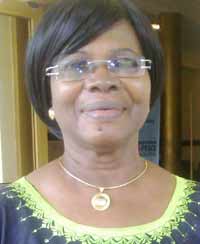
Akinsete
BY JOSEPHINE IGBINOVIA
A 1963 Scotland-trained medical doctor, Prof.(Mrs.)Ibironke Akinsete is one of the few Nigerian women who have engraved their names on the sand of local and international medical practice. Currently the Chairman of PathCare Medical Laboratory, Prof, as she is fondly called, is a Haematologist of great repute. A former Chairperson of the National Agency for the Control of AIDS and Presidential Adviser on HIV/AIDS, she sits on the board of several organisations. Prof Akinsete who will be seventy-five in May stresses the need for preventive healthcare in this interview.
There is an increase in cases of sudden deaths in recent times; could there be a remedy?
What I advise is that everybody should keep a record. You should know your weight, height, body mass index, blood pressure, and all. You should know how frequently you do your exercises, you should know your diet, you should know if you’re obese or not, etc. We’re talking about prevention nowadays, so, everybody should know all these. What screening test have you done? When last did you check your cholesterol level? When last did you have your pap smear done? How often have you done it?

Prof Akinsete
Do you know your blood glucose level? When last did you screen for HIV? If you’re a man over 50, when last did you have your prostrate screened? It is only when you have a jotter or book to record of all these that you can observe when there is a deviation from the normal in your health status. If you’re a woman, when last did you have your breasts screened? As a parent, have you vaccinated your teenage daughter against the Human Papilloma Virus? You need to know about yourself! You don’t like yourself if you do not know anything about yourself!
Why is it so important for us to be knowledgeable about our health?
It is important because if you have a deviation from the normal, you could correct it early. That’s what we mean when we say prevention is better than cure. It is better than waiting until when things have gone haywire before you start running around.
But our public healthcare centres have a very poor administrative system that makes things difficult for people to visit regularly…
You know what you want to prevent and what screening needs to be done. There are so many places you can have health screening done now in Nigeria. Even if you go to the general hospitals or private hospitals, you can specifically tell them what you want and it will be done for you. So, it is up to you to find them.
As a medical expert, how would you assess our healthcare system?
Our primary healthcare system still needs a lot of intervention. It is not yet as good as we want it to be because when you have good healthcare system at the local government level, people can go in and have their check-ups! There also needs to be a lot of awareness creation for the populace. People should always know where to go when things happen and when they are not happy about something. But in spite of that, there are still things you can do to know your health status.
In general, what’s your assessment of healthcare delivery in Nigeria?
It can be better, and I’m happy they’re working at it. We cannot compare ourselves with the developed world. One thing we must also know is that government cannot do everything. When we understand that we ourselves need to be involved, then we will begin to see significant changes. One of the ways you could get involved is by finding out things about your body so they don’t reach a stage of no-repair when you begin to call for government’s intervention.
There seems to be a hike in cancer related diseases these days unlike in the past, why is it so?
What it means is that there is better diagnosis and greater awareness. When these two are in place, you identify diseases more easily. Any cell in your body actually has the potential to become cancerous.
Looking back to your early days in the medical field, what has changed about the practice?
Ohh…things have improved. In those days, we could only measure things using body fluids like blood and urine, but now, so many more things can be measured because of thousands of scientific discoveries. Diagnostics are much better now than when I qualified so many years ago. There are so many instruments.
Considering these developments, do you agree with some people who still believe there is a fall in the standard of practice?
I don’t think there is a fall in the standard of practice. It depends on what you’re measuring, your expectations, outcomes and your indicators.
Let us deviate a little to your personal life as we round up; have you always wanted to be a doctor?
Yes. I was very interested in biology and I’m a very curious person. I’ve always been interested in finding out about the human body and how it works. The human body is however very complex that even now, we do not know everything about it. For instance, only very little has been known about the brain and how it functions. There are so many things yet to be discovered.
Disclaimer
Comments expressed here do not reflect the opinions of Vanguard newspapers or any employee thereof.