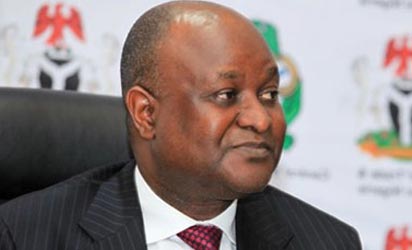
Tunde Lemo
*’Early passage of budget good but…’ *Says banking now conducted in ethical manner
We had to jettison universal banking and we said that banks should be structured such that they can protect depositors money. So if you are a bank sitting on depositors money, you shouldn’t have the means by which money travels into your subsidiaries- that is not deposit taking.
There are fears that the global credit crunch may affect our banks. How safe are depositors funds and how effective is Asset Management Corporation of Nigeria, AMCON, in terms of achieving its objectives?
There are new rules on what banks can do with depositors money, that came when we began to unbundle the banks. We had to jettison universal banking and we said that banks should be structured such that they can protect depositors money. So if you are a bank sitting on depositors money, you shouldn’t have the means by which money travels into your subsidiaries- that is not deposit taking.
We restructured the financial institutions through AMCON and through new regulations to ensure the rascality of the past does not repeat itself. This also ensures good corporate governance. We also came up with new eligibility criteria which, of course, includes that you don’t become evergreen as the MD/CEO; once you do ten years, you should leave. So we dusted up our corporate governance coat and the result, of course, is that the banking business is conducted in a more rational and ethical manner today than before.
It is not only that the banks were challenged, they were restructured through AMCON activities. Some of them now have been acquired by other institutions; today we can beat our chest and say that all twenty deposit banks that we have today are strong. We didn’t just do that because of the significant fall in money supply, the CBN also took on what we call reflection activity which,by injecting money into the system, we will be making money available; we had to reduce interest rates. We brought down bank lending rates. Also, we reduced liquidity ratio from 40% to 25% which means that we give the banks additional headroom.
All that we did to increase money supply and ensure that the economy continues to grow inspite of the challenges; which was why Nigeria didn’t experience recession. In order climes, there was recession, even the growth rate fell, but here we still have 5.6, to 7% growth rate.

Lemo
And we used the opportunity to begin to address why banks were not lending to the real sector. All the initiatives you see around agriculture,all the initiatives around Bank of Industry and then all the money we made available to SMES, aviation, agriculture are also to ensure that the economy is reflected by redirecting attention and credit to the real sector. Of course we are not alone in it. Government also is conducting its activities in such a manner that would ensure that the private sector grows.
Some critics have alleged that AMCON is also targeting performing loans instead of only bad debts?
You know the nature of AMCON. AMCON actually has its portfolio-bad loans. I don’t expect anybody to sing AMCON’s praises if they are doing well. This information is confirming that they are doing what they are supposed to do. Because AMCON activities are actually drawing water out of the rocks. These loans in the books of the banks were bad before now and they have been transferred to AMCON.
AMCON has additional legal powers to ensure recovery which is what they are doing. And, of course, the more you are doing that, the more painful it gets for some people. It gladdens my heart that AMCON is doing well, which was why there are complaints here and there but, beyond that, I think AMCON has performed well, in the sense that the house is poised to restructuring the financial institutions. They will begin to take steps to divest into financial institution, so all deserve our cooperation and support.
What is your take on the proposed rebasing, which was last done in 1990 and what impact will it have on the economy?
The way the GDP is computed now, the base year is 1990. In Ghana, the base year was 1996. They have rebased to 2009 or 2010. You can see the impact on their GDP numbers. For me, if we rebase from 1990, we are going to experience significant increase in our GDP. I believe our GDP is understated now because the base year is quite far. That is why I believe that we can still become very great even though some people say it will be difficult not only for the camel to pass through the eye of the needle but also for Nigeria to be one of the biggest economies in 2020. If the economy is rebased and we focus on high growth drivers in Nigeria, in agriculture, the real sector and manufacturing and we remove those structure constraints around energy, around transportation and I believe through hard work, we can still get there by 2020.
In terms of growth rate, how much growth has the economy recorded since last year?
You will recall that in January 2012, about a year ago, government partially removed subsidy on petrol. The implication of that when we run the numbers, our inflation numbers should have taken us to 14-15 percent but, because of the very tight monetary policy action of the CBN, we were able to chain the monster and we achieved 11-12 percent inflation in spite of that challenge. I think that is quite commendable. And then on the foreign exchange side, we have been able to achieve stability. This is inspite of the fact that ours is a mono economy. The foreign exchange market is volatile but, given our propensity also to import, and the rate at which Nigerians actually go for imported goods, the CBN still managed to keep the exchange rate fairly stable. We closed the year with about 157 naira per barrel, then look at the reserve level, by October, it grew to about 47 to 49 billion US Dollars. And then you look at the progress we have made in the real sector. Agriculture, which accounts for 42% of our GDP, has continued to receive greater attention of commercial banks; before the new policy, the credit to the agricultural sector was 1.4% of total bank credit.
We have been able to increase that to about 3.5% now. And the target is that, by 2017, bank level should rise to 10%, which is why when you decompose our GDP growth number last year, most of our growth has been coming from the non-oil sector that the CBN has redirected attention to. And I think this call for celebration. CBN has delivered on its mandate of price stability and in terms of taming inflation. We are not yet there. Our overall objective is to check inflation, to single digit territory but due to structural constraints that we have and maybe, of course, the need to manage ourselves as a result of the partial subsidy removal, that could not be achieved.
Going by the CBN monetary policy, if we continue in that trajectory, before long, we are gong to see our single digit inflation in Nigeria. So, the totality of that is that we have been able to achieve fairly stable micro economy because of the CBN’s action.
What does the early passage of the budget portends for the economy?
Well, early passage of the budget is indicative of every other thing working well, that we are going to have a successful year. We are going to have a very good budget performance, particularity capital expenditure. I look at budget performance from the point of view of capital expenditure not recurrent expenditure. However, budget is just a statement of intention. We have to keep our eyes on the ball to ensure that the revenue projection is achieved. Of course if you don’t achieve revenue projection, you cannot perform on the expenditure side. It’s either you increase your deficit or increase your borrowing or of course you reduce your spending. So I believe that it’s too early to start celebrating.
It is a good thing though but we all need to sit down and ensure that the revenue projection is achieved. And then, of course, if we diligently implement the budget, particularly the capital expenditure, then we should have a successful year. Among other bodies, we are going to complement all of that, ensuring that we keep an eye on inflation, we continue to ensure genuine stability because it is when you have stable exchange rate that you have low inflation given the fact that importation accounts for significant portion of general commercial activities in Nigeria. And, of course, you can have imported inflation if you allow exchange rate devaluation. So altogether, I believe the output is bright and we should be able to have a successful 2013.
What are the indices that can make the economy grow beyond the present state of inflation and unprecedented rate of unemployment?
Mine is just a general comment; when we talk about the economy generally, let us not be sentimental. I look at the entire economy. It is very well clean that the only way this economy can grow is if there significant capital information. We free up resources to the private sector because the private sector is the sector that actually can give us quantum leap in employment. How many people can the public sector employ? It’s been proven all over the world that smaller governments help the private sector to thrive and help the economy to grow better. And it is within that context that this argument is being made really. And the Federal Government has actually acknowledged that. From 2013, they are going to gradually reduce overheads, they will reduce recurrent expenditure, in favour of capital expenditure and resources will free up into private sector to speed up employment opportunities.
We have overhead everywhere in all parts of the public sector, what is important is for Nigeria generally to look at the big picture. What kind of economy do we want in 2020? All the economies that are celebrated, what is the size of the public sector relative to the economy? In which direction should we be heading? And I think we all agree together that we should be heading in the direction of small governments in future. How that works out, we leave that to the politicians to give us the details.
What should Nigerians expect from CBN in 2013?
The CBN will continue to pursue the goals that they have set out. If you look at our Act, what the role of the CBN is, we will keep our eye on the ball. We will continue to work hard on price stability, we will continue to ensure stability of the exchange rate, we will continue to pursue our developmental objectives, through the development financial institutions and we will also continue to work hard on these other elements. I mean ensuring that the payment system is as efficient as it can possibly be, we will continue to sponsor and continue to support everything we have to do to ensure that commercial activities, our payment system becomes electronic as much as possible as we are going to do in 2013.
Disclaimer
Comments expressed here do not reflect the opinions of Vanguard newspapers or any employee thereof.