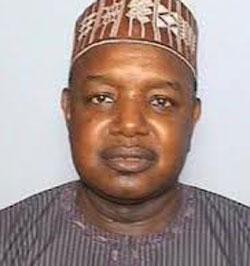
Gov. Atiku Bagudu
By Wale Akinola
Senator Atiku Abubakar Bagudu (Kebbi Central, Kebbi State) is a member of the Senate Constitution Review Committee as well as the chairman of the upper chamber Committee on Interior. In this interview, Bagudu speaks on the latest move to amend the Constitution and the politics of his home state.
Some can hardly believe that an unassuming person like you would be in politics…?
I don’t think Nigerian politics, is, in any way, different from politics in other climes, in the sense that it is driven by concerns to participate and do things differently. And since the resumption of politics in this republic in 1999, many people of goodwill have joined the political fray with a view to contributing to the development of the country, and it is quite interesting to note that the quality of the participants has been improving which of course has raised the quality of governance.
I was a university lecturer. I worked in the banking sector and I was a private businessman, so coming into politics gave me a perspective that somebody who is totally a government person would not have. And I think the combination of my experiences has enabled me to see the Nigerian project much more better.
The introduction of the N5000 bank note by the Central Bank of Nigeria is generating much controversy?
About five years ago, we had a major currency restructuring where different currency notes were introduced; since then, we have moved to the use of electronic means of payment. Many Nigerians are using card than you have five years ago, debit, credit cards. Many Nigerian businesses are using the point of sale machine which is an alternative to cash.
The Central Bank of Nigeria has introduced on a pilot basis the cashless initiative in Lagos which is to be extended to other parts of the country. So, one would have thought that this is a very well thought out project and one can see the merits. And, therefore, the introduction of high denomination currency like the 5000 naira note does not appear to be in tandem with that well thought out policy.
I think the reasoning behind the introduction of the 5000 naira note is not well articulated, certainly there was no enough consultation. A currency is a piece of paper or coin that is supposed to be trusted and people are going to use, so if you want to introduce it, just as the CBN has done before, you have to engage the stakeholders, the Nigerian public, because once confidence in the currency is not there, it will endanger its acceptance.
When Professor Charles Soludo was last talking about this issue at that time, what he was talking about was currency denomination size in which we would reduce the size of the currency note. I know that this is a different governor but Central Bank, I have worked there before, runs a very effective committee system that there is policy continuity irrespective of who the governor is.
One would have expected to see a more well developed argument on the issue and I think they have not been able to convince the people that the introduction of the higher denomination will not lead to some measure of devaluation of the currency because of the well founded argument about currency rounding up, that whenever you introduce a higher denomination, people tend to round up.
Your governor is said to be a quiet person which is why he isn’t much in the media, or is it that he has resentment for the media?
Certainly, the Kebbi State governor, under the leadership of Alhaji Saidu Nadamu Dankingari, does not resent the media because the government also has ministry of information, special adviser on media, we have friends in the media and we try as much as possible to put in the media what is really being done in Kebbi.
But, sometimes, government is a balancing act, it involves spending of government money because you have to place adverts, you pay honorarium for logistics which is an element that costs money too to government just like his ministry and, sometimes, because of pressing priorities, you are not putting as much money as you should to the media project but most of the laudable projects of the governor and his deputy have been in the press for a while.
The first major task that was undertaken by the Dakingari-led government was the education sector reform. The current INEC chairman, Professor Attairu Jega, who is also an illustrious son of Kebbi, was made to chair a committee which reviewed the education sector in the state and came up with policies very early in the administration of the government in 2007 and everything he has recommended is being implemented.
A similar committee was set up, equally headed by an illustrious son of Kebbi, Professor Hamid, to review the health sector and that saw the creation of additional over 100 primary health care centres constructed, staff employed, equipment provided and, all over the state, you have free maternal health care and certainly the rural roads programme, to my mind, is one of the best in the country which was designed to ease evacuation and transportation of food items from the rural areas to the urban centres such that there is really no place in Kebbi now that I cannot access in four hours.

Sen. Atiku Bagudu
On the social scene, one of the things that was done by the governor was the programme to rehabilitate all mentally challenged people, and he did it in the most modest way and he did not put it in the media because of the thinking that it could expose such people to victimization. Currently, under the SUREP programme, among others, there is a proposed bill which will ease administration of the SURE funding with representation from all strata of society.
All these programmes have helped to steer Kebbi as one of the most peaceful states in Nigeria but it has not been without challenges because, in general, we know that the resources available to the state is inadequate and, therefore, among others, we want to see increased revenue allocation to the state government such that laudable programmes as they are being done presently can improve.
But even at that, he is so quiet that even on national issues, he hardly talks. Is that a deliberate action?
We have seen a lot of Nigerian public officials who you will describe as quiet or unassuming but very brilliant people. The late President Yar’Adua was one of such people. President Jonathan is one of such people, and may be when he was state governor, his comments on national issues did not hit the mainstream media as aggressively as some other governors did but certainly these are very brilliant people and they express their opinions, may be they are modest.
You can really say a public official is shy except they are only shy when it borders on self promotion and certainly Saidu Dankingari is one of such that do not see the need to promote himself, he believes that his work and conduct in office will be noticed primarily by the people who elected him and, of course, those people should be able to judge what he does or does not do. And I believe that the people of Kebbi are generally proud, they are aware of what he is doing and approve his leadership style.
Virtually everybody wrote off the PDP during the last year general elections. How was the party able to turn the table to remain as the ruling party?
I think two elements are responsible. One, may be those analyse that were undertaken before the election were done by those people who could have been more informed. Sometimes we judge based on the reviews that we read and not based on factual evidence because I remember at that time, that some of us when we read the analyses by our friends in the media, even from some people we quite respect, we just laughed that where did they get this background information from? Why shouldn’t they just come over and find things out for themselves because we knew that the evidence on ground was such that we could not expect anything better than an outright win because the governor had performed excellently.
What is your take on the issue of state police because the southern governors appear more in support of it while their northern counterparts are opposed to it?
There are many people in the South who have expressed opinions for and against state police. Former President Olusegun Obasanjo came out to express his opinion among others. In the North also, there are people who are for it and some are against it. I remember the former national security adviser, Umaru Shinkafi, writing an article in support of the creation of state police where as Gambo, a former Inspector General of Police, took a different view.
So there is no unanimity, this issue is not region based. When the Senate held its retreat in Asaba, I am a member of the Constitutional Review Committee, there were three strands of issues debated. There are some people who believe that state police is good but the current reality is that if you have a state police, there is no assurance that it would not lead to fragmentation of the country. There are some people who believe police isn’t good because if the police has failed, then we should fix it. If it has failed because it does not have enough personnel, equipment, then that is what we should be addressing.
There are some people who were of the view that some states won’t have the resources to fund and manage a state police, some are of the view that having state police, what happens to the federal? Are you going to disband it? Or run in parallel with states? Some of us have expressed the view that reasons being given for the creation of state police are good but certainly not now. I believe we are not ripe given the security challenges we face, the reality of the Nigerian federation, we re not ready for state police.
There is the issue of congestion in the Nigerian prisons and dilapidated physical structures which iis why t is so easy for jail breaks like the recent one in Oko. What is the Senate doing in regard to this?
The committee and indeed the entire Senate are concerned about the state of our prisons and we have started the process, we are in the third reading of the bill, to reform the prisons and those elements of the reform include making sure that whoever, unfortunately goes to prison in Nigeria should come out a better person, that means rehabilitated, trained so that he can be a better member of the society.
The second element is that we have considered a number of motions in tandem with the prison reform bill about what to do with awaiting trial problem. It is the main problem of the prisons because of the about 50,000 population of the prisons, about 36,000 are awaiting trial.
When I was at Oko prison, I saw a case of somebody who was detained, a young man of 17, since 1997 on the order of a military administrator then, the last time he was in court was in 2004. Another element is the infrastructure constraints that the prisons face.
Sometimes, they don’t have vehicles, you can see somebody who misses a court date because that same morning that he was expected to honor the date, the vehicles of the prisons broke down, or they may even have many people going to different courts at the same time and the vehicles are not enough to convey them. The security of the prisons is another issue which relates to their age, the Senate is looking into it with a view to enhancing the funding of the prisons.
The Boko-Haram menace is on the rise. It does appears the Federal Government isn’t doing much to tackle the menace?
To say the Federal Government isn’t doing enough isn’t correct, maybe the best of the government isn’t enough because Nigerians just want this thing to go away and, sometimes, when a problem starts, it is usually long and difficult for it to disappear. More money has been spent, a lot of intense activities are being undertaken by our security services and that, to me, is quite commendable because a lot of them have lost their lives in this period.
Again, this problem has been on the decline, because we have seen more activism by religious leaders, civil society to complement what the government is doing because security issues involve the community, there is need for more community vigilance. The new security adviser, Colonel Dasuki, immediately he got to office, visited Borno and Yobe which really cooled down the tempo.
He has been to many places including Jos in trying to see that the tension is brought down. But more than that, I think the issue of unemployment is a major contributing factor in arresting this violence. If there are jobs, if the perpetrators are busy all day, if there is something they do that brings food on their table and money into their pocket, I think this will go a long way in reducing the tension.
There has been agitation for states creation. Is it politically wise or economically stupid given the fact that some of the present ones can hardly pay workers salaries how much more doing something developmental?
I am a member of the Constitutional Review Committee, so in answering this question, I am talking as an individual and senator but not on behalf of the committee. States creation is a reflection of the failure of the nation to achieve the aspiration of so many people. Development has been left for so long because if it had been addressed, there is no way we would still be talking about states creation now. What we have seen around the world is the tendency for countries to cooperate and even collapse into one. We have seen the European Union trying to become one nation.
The whole objective of the World Trade Organization is that we should be one global world. There is the mutual distrust amongst members of the society ,one community thinks the other community is exploiting them and, out of desperation, they follow a similar pattern; so I think emphasis should be on how we can move the country forward, security is given so that people’s aspirations can be met rather than subdividing the country further into units of organization and independent such that no development is achieved.
Disclaimer
Comments expressed here do not reflect the opinions of Vanguard newspapers or any employee thereof.