Nigeria has no shortage of innovators.
Across the country, entrepreneurs are building solutions for agriculture, healthcare, education, finance, climate and countless other sectors. But for many founders, access to the right support system can still depend heavily on where they live.
The National Innovation Hub Standards Framework (NIHSF) is designed to help change that.
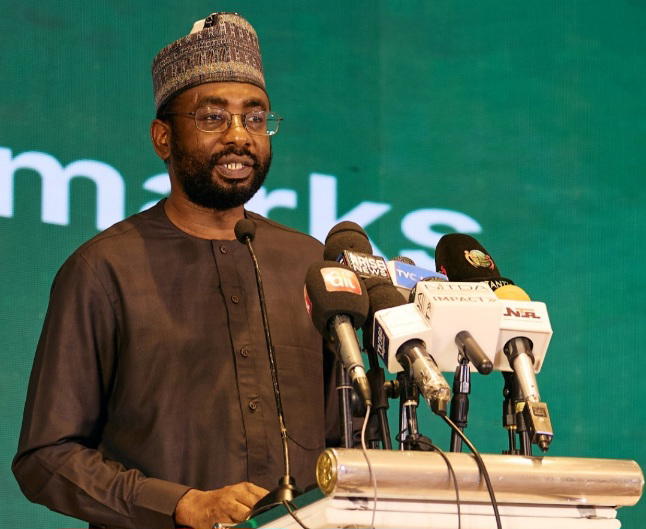
On 20 August 2026, government leaders, innovation hub operators, development partners, ecosystem builders and other stakeholders gathered at the Abuja Continental Hotel for the National Innovation Hub Standards Framework Stakeholder Validation Workshop.
The gathering was not simply about presenting a completed policy or framework.
It was an opportunity to put the proposed Framework to the test.
Stakeholders reviewed its structure, examined its proposed standards and assessment approach, identified potential implementation challenges and contributed recommendations ahead of further refinement and pilot implementation.
Why Innovation Hubs Matter
Innovation does not happen in isolation.
Behind many successful startups are the ecosystems that provide founders with access to mentorship, networks, skills, infrastructure, business support and opportunities to test and grow their ideas.
Innovation hubs play a critical role in making this possible.
However, while Nigeria has more than 339 identified innovation hubs, their capacity, resources, services and levels of maturity vary significantly across the country.
The proposed National Innovation Hub Standards Framework seeks to provide a clearer pathway for hubs to assess where they are, identify areas for improvement and strengthen their ability to support entrepreneurs.
The goal is not to create identical hubs across Nigeria.
Rather, the Framework recognises that different regions have different strengths, challenges and opportunities.
Building an Ecosystem by Design
In his opening remarks, Kashifu Inuwa Abdullahi, Director-General of the National Information Technology Development Agency (NITDA), described the validation exercise as an important step towards making innovation more evenly distributed across Nigeria.
He emphasised the importance of being intentional about ecosystem development, noting that innovation ecosystems need to be consciously designed and strengthened.
With hundreds of hubs already identified across Nigeria, the opportunity is to build stronger innovation infrastructure beyond the country’s traditional technology centres.
The proposed Framework provides a pathway for hubs to understand their current capacity and work towards greater maturity over time.
As the Director-General noted, “the objective is not to replicate one innovation model everywhere, but to enable each region to build around its own strengths and opportunities”.
Infrastructure, Technology and Innovation
Delivering the keynote address, Dr Bosun Tijani, Honourable Minister of Communications, Innovation and Digital Economy, placed the conversation within Nigeria’s broader digital transformation agenda.
He highlighted three interconnected layers necessary for technology to drive economic and social development: foundational infrastructure, technology systems that enable innovation, and the innovators and businesses building solutions on top of those systems.
Nigeria is investing in strengthening its digital infrastructure, including connectivity and other technology systems. However, these investments must also translate into opportunities for the people and businesses developing solutions to real challenges.
This is where innovation hubs become increasingly important.
Stronger hubs can provide the environment where entrepreneurs gain access to the knowledge, networks and support required to transform ideas into sustainable businesses.
Taking Innovation Beyond Major Cities
For Victoria Fabunmi, National Coordinator of the Office for Nigerian Digital Innovation (ONDI), strengthening innovation hubs is directly connected to strengthening the startups they support.
Using a simple analogy, she described startups as the “babies” of the ecosystem and innovation hubs as the “mothers” that help nurture them.
The proposed Framework is therefore focused on strengthening the support structures around founders.
The broader ambition is to ensure that innovation is not concentrated only in major urban centres.
A founder with a promising solution in Yobe, Zamfara, Jigawa, Osun or any other part of Nigeria should be able to access stronger local support systems without necessarily relocating to Lagos or Abuja.
More Than a Framework on Paper
One of the most important parts of the workshop was the opportunity for stakeholders to actively interrogate the proposed Framework.
Participants engaged with discussions around the Framework’s architecture, classification and assessment model.
They also took part in breakout sessions where different stakeholder groups reviewed assigned areas of the Framework and provided recommendations.
The sessions explored areas of agreement, potential challenges, implementation risks and issues that may require further refinement before pilot implementation.
This validation process is essential because Nigeria’s innovation ecosystem is diverse.
The realities of a hub operating in Lagos may differ significantly from those of a hub serving founders in Akwa Ibom, Yola, Kano or other emerging innovation communities.
The Framework must therefore be practical enough to accommodate different operating environments while still providing a clear pathway towards improved quality and capacity.
A Shared Ecosystem Effort
The workshop also highlighted the importance of collaboration between government, development partners, the private sector, academia, innovation hubs and entrepreneurs.
Representatives from institutions and development partners joined the conversation, reinforcing the shared responsibility required to build sustainable innovation ecosystems.
The European Union Delegation to Nigeria and ECOWAS, for example, highlighted the importance of innovation hubs as critical parts of the digital economy and welcomed the developmental approach of the proposed Framework.
The Framework is being positioned not as a restrictive instrument, but as a tool that can support continuous improvement and ecosystem development.
What Happens Next?
The Abuja workshop is part of a broader validation journey.
Insights and recommendations from stakeholders will contribute to the refinement of the proposed National Innovation Hub Standards Framework ahead of pilot implementation.
The process will continue to bring ecosystem voices into the conversation, helping to ensure that the final Framework is practical, inclusive and responsive to the realities of innovation hubs across Nigeria.
The ambition is bigger than standardisation alone.
It is about creating stronger environments where ideas can grow.
Where innovation hubs can build sustainable systems.
Where founders can access better support.
And where the next generation of Nigerian innovation does not depend solely on geography.
Because when innovation hubs are stronger, startups have a better chance to thrive.
And when startups thrive across more communities, the impact can reach far beyond the ecosystem itself.
Disclaimer
Comments expressed here do not reflect the opinions of Vanguard newspapers or any employee thereof.