By Paul Olayemi
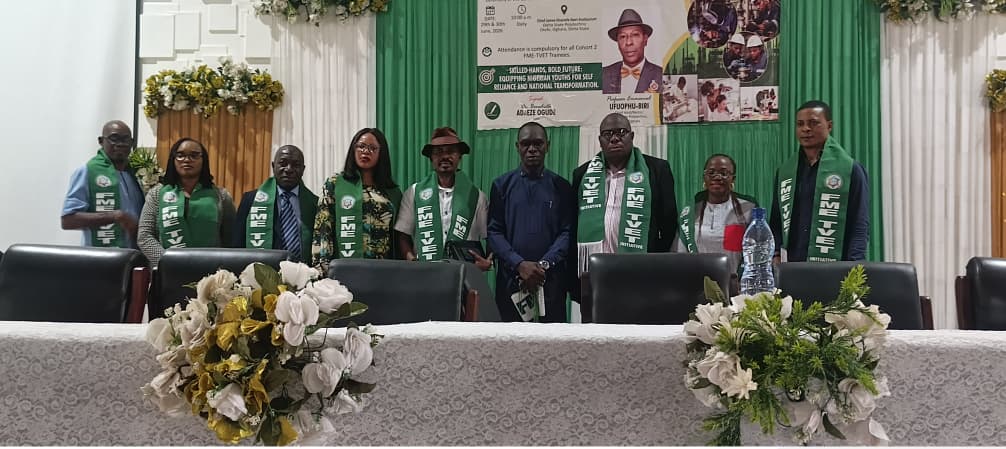
The Rector of Delta State Polytechnic, Otefe-Oghara, Professor Emmanuel Ufuophu-Biri, has once again stressed why skills acquisition matters for undergraduates across Nigeria’s tertiary institutions. He made the point during the flag-off and induction ceremony for the FME-TVET COHORT 2 training programme, held on Monday, 29th June 2026, at the Chief James Onanefe Ibori Auditorium on the Polytechnic’s campus.
The event carried the theme “Skilled Hands, Bold Future: Equipping Nigerian Youths for Self-Reliance and National Transformation.” Declaring it open, the Rector explained that the initiative, a joint effort between the Federal Ministry of Education and the National Board for Technical Education (NBTE), is designed to arm undergraduates with practical skills, skills that could turn them into employers rather than job-seekers, capable of generating and managing resources on their own instead of waiting on formal employment. He was represented at the event by his deputy, Dr. Samuel Ogbogu, who described the programme as well-timed, given how quickly the world is shifting and how important it is to adapt rather than fall behind.
Speaking further, the Rector observed that even amid global uncertainty, some people and institutions still manage to move forward, simply because they’re willing to adjust rather than force old methods onto new problems. He invoked the idea of natural selection, noting that only those willing to adapt tend to survive difficult times. In his words, the skills acquisition programme has arrived at exactly the right moment, a chance for participants to change their circumstances and gain an edge despite the challenges around them.
He urged the participants not to treat the training lightly. Learning the material isn’t enough, he said; they need to master it well enough that their success becomes a story worth telling. Quoting Femi Johnson, he reminded them that “a man should either be a master of his trade or depart from it,” encouraging them to approach the programme with genuine seriousness and diligence.
Earlier in the ceremony, Dr. Benedicta Ogude, Director of the Centre for Skills Acquisition and Gender Promotion (CSAGP), delivered the welcome remarks. She explained that the scheme operates under the National Skills Qualification (NSQ) framework, Nigeria’s system for certifying practical, industry-relevant skills. Unlike traditional academic assessment, she noted, the NSQ measures actual competence rather than time spent in a classroom, and she described the programme as a kind of passport for participants seeking global mobility.
Dr. Ogude also outlined what trainees stand to gain: full funding, globally recognised certification, a monthly stipend, and a start-up pack awarded to outstanding participants. It’s a package meant to remove financial barriers while giving young people real tools to launch something of their own.
The Polytechnic’s Registrar, Efedi Chukwuemeke, administered the oath to the new COHORT beneficiaries, formally welcoming them into the programme. They were then inducted by the Rector, again represented by Dr. Ogbogu, marking the official start of their training journey.
This latest cohort adds to a string of recent developments at the Otefe-Oghara institution. The Polytechnic has been expanding its academic footprint in other ways too, having secured approval from the National Board for Technical Education for sixteen new academic programmes spanning fields like food science, civil engineering, and mechatronics, part of a broader push toward producing graduates equipped for both local and global demands.
That expansion, paired with initiatives like the FME-TVET COHORT programme, reflects a consistent institutional philosophy under Prof. Ufuophu-Biri’s leadership: that technical and vocational skills, not just academic credentials, are what will carry Nigerian youths through an increasingly unpredictable job market.
For the newly inducted participants, the real test now begins. What Dr. Ogude called a “passport for global mobility” only works if the training translates into tangible, marketable skill, something the Rector made clear he expects from every one of them.
Disclaimer
Comments expressed here do not reflect the opinions of Vanguard newspapers or any employee thereof.