By Joseph Erunke, Abuja
The Federal Government has launched a nationwide National Learning Assessment as part of efforts to address Nigeria’s learning crisis, improve teaching standards and reduce learning poverty across the country.
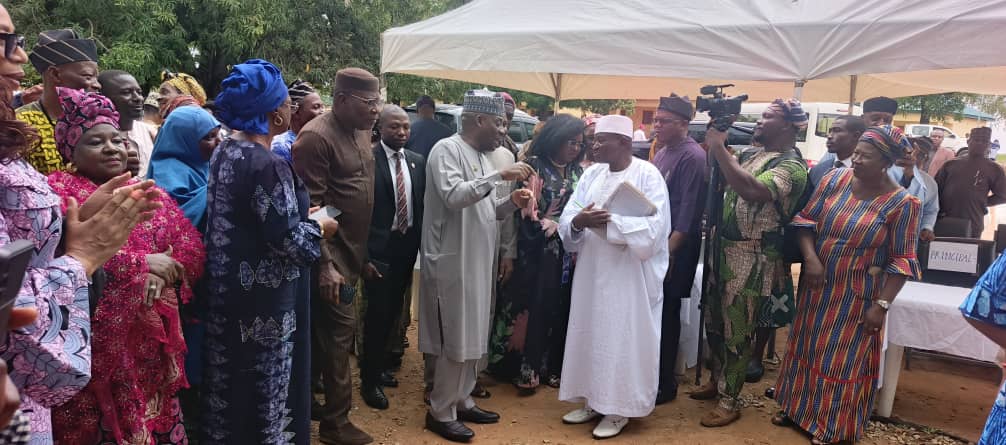
Minister of Education, Dr. Tunji Alausa, disclosed this on Friday while monitoring the exercise at Government Secondary School, Kuje, Junior Secondary School, Kuje Central, and Topaz Model Primary School in the Federal Capital Territory (FCT).
The assessment covers pupils in Primary Three and Five, as well as students in Junior Secondary School Two, and evaluates their proficiency in English Language, Mathematics, Basic Science and cognitive skills to measure literacy, numeracy and overall learning outcomes.
Alausa described the exercise as a key component of the Federal Government’s education reform agenda, saying it would provide reliable data to support evidence-based policymaking and improve learning outcomes.
He noted that Nigeria has not conducted learning assessments consistently, explaining that the last national assessment was carried out by the Universal Basic Education Commission (UBEC) in 2023, while the previous exercise was conducted by the Federal Ministry of Education in 2019.
The minister announced that the assessment would now be institutionalised every three years, with UBEC directed to make budgetary provisions for subsequent exercises beginning in 2029.
“The importance of learning assessment is that we need to know the quality of education we are giving our children at different levels. We must know whether they are actually learning because learning outcomes are the foundation of national development,” he said.
Alausa acknowledged that Nigeria has struggled with learning poverty in recent years but expressed optimism that ongoing reforms would improve educational outcomes.
“This assessment will provide us with current benchmarks. Once we know where we stand, we can implement targeted interventions to improve literacy, numeracy and overall learning outcomes across the country,” he added.
He said the initiative aligns with President Bola Tinubu’s education reform agenda, describing education as central to building a globally competitive economy.
According to the minister, the government is standardising learning assessments nationwide to ensure consistency in evaluating students’ academic performance over time.
“This is part of our broader strategy to transform education and ensure every Nigerian child receives quality education comparable to global standards,” he stated.
During the inspection tour, Alausa expressed satisfaction with the condition of the schools visited, commending improvements in infrastructure, cleanliness and the learning environment.
He described Government Secondary School, Kuje, and Junior Secondary School, Kuje Central, as well-maintained, noting that students appeared healthy, motivated and were learning in conducive environments.
“I was impressed with what I saw. The schools are clean, the students are happy, and the learning environment is conducive. I commend the FCT Administration for the improvements,” he said.
At Topaz Model Primary School, a private institution, the minister praised the school’s management for maintaining quality facilities despite classroom congestion.
He also acknowledged the role of private schools in expanding access to education, saying they have helped accommodate thousands of children who might otherwise have remained out of school.
“Private schools have contributed significantly to keeping children in school. We should continue to encourage them while ensuring effective regulation and adherence to established standards,” he said.
He stressed that while infrastructure is important, the quality of classroom instruction and pupils’ learning outcomes remain the true indicators of educational success.
Also speaking, the Mandate Secretary for Education in the Federal Capital Territory Administration (FCTA), Dr. Danlami Hayyo, said the minister’s visit underscored the FCT Administration’s commitment to improving education through sustained investment in infrastructure.
Hayyo disclosed that the administration has renovated more than 120 public schools, including Government Secondary School, Kuje, where part of the monitoring exercise took place.
He said the renovations covered classrooms, boarding facilities, toilets and other essential infrastructure aimed at creating a more conducive learning environment.
“The Honourable Minister has seen firsthand the progress made by the FCT Administration in improving the quality of education. We will continue to support every initiative of the Federal Ministry of Education to strengthen learning outcomes across the country,” Hayyo said.
He described the National Learning Assessment as a critical step towards improving educational standards and ensuring Nigerian students remain globally competitive.
The nationwide assessment is expected to generate data that will guide future education policies, curriculum reforms and targeted interventions to improve learning outcomes across schools in Nigeria.
Disclaimer
Comments expressed here do not reflect the opinions of Vanguard newspapers or any employee thereof.