By Nnasom David
Human rights activist and Country Director of Accountability Lab Nigeria, Friday Odeh, has raised concerns over the planned redevelopment of Jabi Lake Recreation Centre in Abuja, calling on the Federal Capital Territory Administration (FCTA) to provide transparency on the agreement and consult affected users of the facility.
The concerns followed the defence by the Minister of the Federal Capital Territory (FCT), Nyesom Wike, of the decision to reallocate the popular recreation park for private development.
Recall that in February 2026, the FCTA signed a development agreement with Suburban Broadband Limited and Akida Hills Limited to transform Jabi Lake into a recreational hub.
However, the decision has attracted criticism from some residents and stakeholders, including Sarah Omakwu, a senior pastor of Family Worship Centre, Abuja, who recently appealed to the minister not to allocate the park for private development.
Omakwu, in a video shared on her Instagram page, was seen kneeling while appealing to Wike, saying she could not fight the minister but pleaded that the recreation centre should remain accessible to the public.
Reacting during a media chat in Abuja on Wednesday, Wike dismissed the appeal, saying he was not influenced by emotions, while explaining that the redevelopment was aimed at improving the environment.
The minister said the facility had previously been allocated to a company with the intention of developing it into an entertainment destination, but had instead become surrounded by illegal structures.
“But they have turned it into shanties. One of these days, I went there and said, ‘This can’t be; there is a hotel, and who would come to stay in that hotel when there are shanties all over? You don’t know if there are criminals,” Wike said.
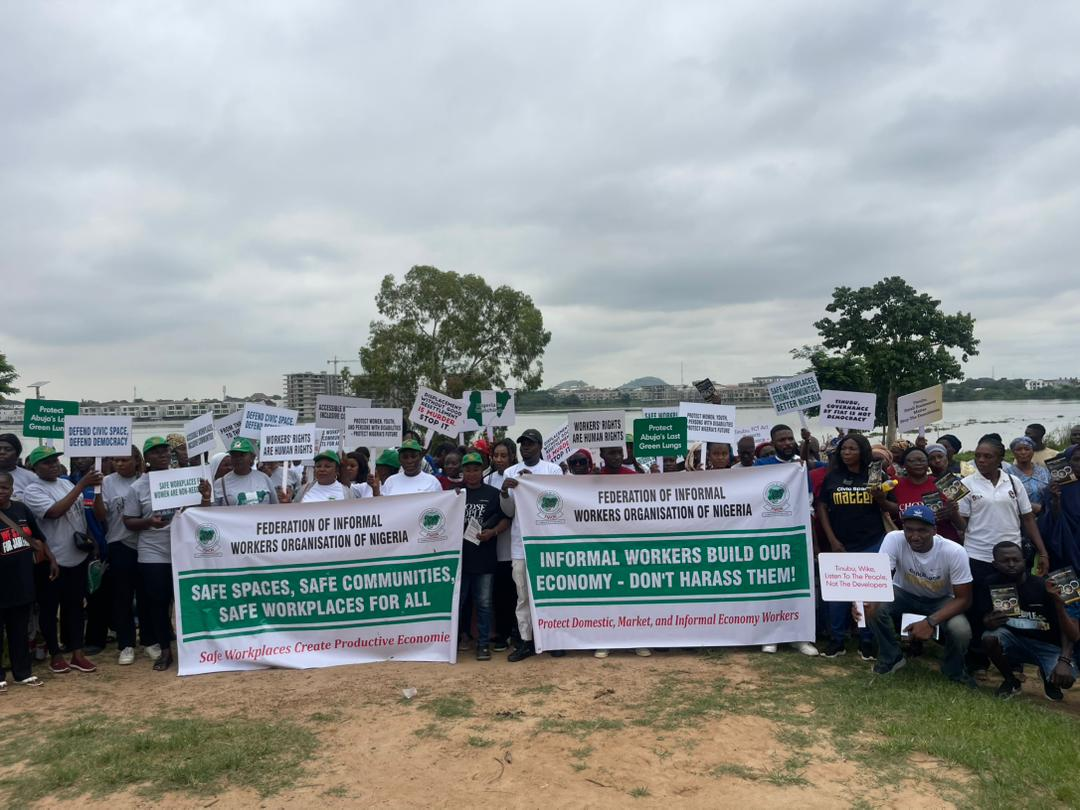
Speaking on the matter during a protest in Abuja, Odeh, who is also an anti-corruption advocate, said stakeholders were not opposed to development but were demanding accountability, consultation and transparency in the process.
According to him, available public information indicates that Jabi Lake has historically served as a public recreation space, with informal workers and other users depending on the park for their livelihoods.
He said the recent takeover of the facility by the two companies had led to the displacement of informal workers and regular users of the park.
“We are not against development. What we are saying is that the MOU has not been made public. Nigerians have the right to know what is happening in their city,” Odeh said.
He demanded that the FCTA publish the memorandum of understanding and provide details of the ownership structure, procurement process and agreements surrounding the redevelopment.
The activist also questioned whether proper procurement procedures were followed before the land was allocated, noting that the process should comply with the provisions of the Public Procurement Act.
Odeh further said affected informal workers were not consulted before the redevelopment plan commenced, stressing that residents’ voices must be considered in decisions affecting public spaces.
He also raised questions over claims of previous revocations of the land, asking authorities to clarify the status of ground rents allegedly paid over the years and where such funds were directed.
“We are saying have a plan, have a social protection plan. Publish all the agreements and the land ownership details. Nigerians have the right to know and they have the right to be consulted,” he said.
Odeh said Accountability Lab Nigeria, in collaboration with the Federation of Informal Workers Organization of Nigeria (FIWON) and Solidarity Center, had taken steps to seek clarification from relevant authorities.
He disclosed that requests had been submitted under the Freedom of Information Act to the FCT Minister and relevant agencies, but responses were yet to be received.
He added that petitions had also been sent to the National Assembly, as well as anti-corruption agencies including the Independent Corrupt Practices and Other Related Offences Commission (ICPC) and the Economic and Financial Crimes Commission (EFCC), urging investigations into the procurement process.
Odeh maintained that the group’s position was not against private investment but for a transparent process that protects public interest and ensures that development benefits residents.
Disclaimer
Comments expressed here do not reflect the opinions of Vanguard newspapers or any employee thereof.