By Esther Onyegbula
The Nigeria Hub of the National Institute of Health Research Global Surgery Unit (NIHR GSU) says it has transformed surgical research, strengthened capacity building and improved patient care across Nigeria over the past 10 years through landmark international collaborations and clinical trials.
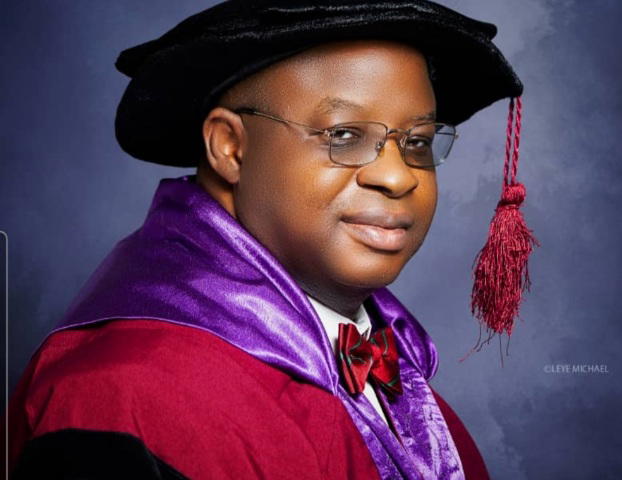
The Nigeria Hub Director of the NIHR Global Surgery Unit, Prof. Adesoji Ademuyiwa, disclosed this while reviewing the organisation’s achievements since it began operations in collaboration with international partners in 2016.
Ademuyiwa, a Professor of Surgery at the College of Medicine, University of Lagos, said the organisation had changed the landscape of surgical research in Nigeria by enabling large-scale, multi-centre international clinical trials that were previously impossible due to inadequate funding.
He explained that the NIHR GSU Nigeria Hub was established to advance surgical research and improve surgical care across the country while investing in the training of future healthcare professionals.
According to him, the collaboration involved institutions including the University of Birmingham, the University of Edinburgh and other partners in selected low and middle-income countries, noting that the current funding cycle would officially end this month.
“Our work is about 10 years now; 10 years of medical impact, achievements and successes. In these 10 years, we have recorded a lot.
“Before NIHR Global Surgery Unit was formed, most of our research had been single institution-based retrospective research because there was no funding to support large, prospective, randomised controlled trials.
“So it was NIHR, to my understanding, that supported the first international, multi-centre, randomised controlled trial in surgery, in which Nigerian surgeons are actively involved,” he said.
Ademuyiwa said Nigeria had played a leading role in several global surgical studies conducted through the network.
He revealed that in the FALCON trial, which recruited 5,788 participants globally, Nigeria contributed 2,165 participants, representing 37.4 per cent of the total enrolment across 12 centres nationwide.
He added that the country also enrolled 2,679 participants, representing 20.1 per cent of the 12,800 recruitment target in the CHEETAH trial conducted across 64 clusters in different countries.
The professor further disclosed that the PENGUIN trial, the third global surgical randomised clinical trial, targeted the recruitment of 12,942 participants across 15 centres worldwide, including Nigeria, while results from the study were still being awaited.
He listed other major studies undertaken by the collaboration to include GlobalSurg 1, GlobalSurg 2, CovidSurg, ASOS-Paeds, HIPPO study, CAMELs study and Enhanced Monitoring Using Sensors After Surgery (EMUs).
According to him, the organisation had also supported several observational studies focusing on post-surgical mortality, cancers and cholecystectomies.
“We are currently looking at appendicitis in the ALLIGATOR study, which is also likely to recruit similar numbers across the world.
“These studies have also assisted in recommending change to our surgical practice.
“Like the CHEETAH trial, we were able to show that changing gloves and instruments at closure of fascia and skin reduces surgical site infection by about 15 per cent.
“The Federal Ministry of Health has incorporated this into the surgical safety checklist across federal hospitals in Nigeria,” he said.
Ademuyiwa described the collaboration as unique because it ensured that researchers from low and middle-income countries were actively involved from the conception of research projects to the publication of findings.
He said the approach had significantly strengthened research capacity, with several researchers from developing countries leading publications in high-impact international journals.
“This model is also different from earlier models where HIC partners organise surgical outreaches without adequate investment in capacity building of the LMIC partners,” he said.
Highlighting the hub’s human capacity development efforts, Ademuyiwa said more than 500 surgeons and surgical residents had been trained in good clinical practice and research.
He added that 600 community health extension workers had received training in stoma care and identification of surgical site infections, while 100 medical students were trained in data management and another 150 acquired laparoscopic skills.
He further disclosed that more than 1,000 medical students had also benefited from mentorship through a student-led medical conference organised by the hub.
While acknowledging that the organisation encountered several operational challenges over the years, Ademuyiwa said they were successfully overcome through institutional support.
He commended the management of the University of Lagos, the university’s College of Medicine and the Lagos University Teaching Hospital for providing accommodation for the data centre, simulation centre and research office, describing their support as instrumental to the success of the Nigeria Hub.
Disclaimer
Comments expressed here do not reflect the opinions of Vanguard newspapers or any employee thereof.