By Stephen Adewale
On Thursday, July 2, 2026, Oduduwa Hall will do what great halls in old universities know how to do best.
It will gather memory, gather hope, gather intellect, and allow the past to speak to the future in a voice dignified enough to outlive applause.
At Obafemi Awolowo University, Ile-Ife, the Faculty of Arts will host its 3rd Distinguished Alumni Lecture for the 2025/2026 academic session.
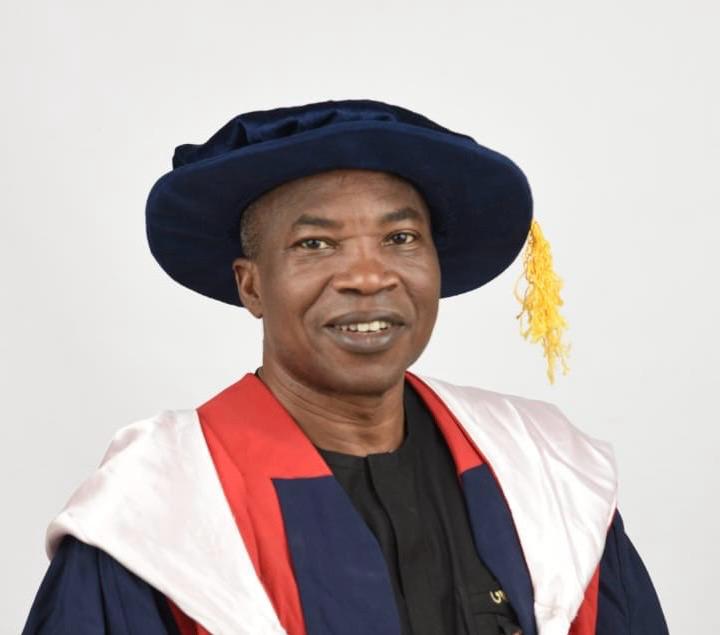
The lecture, titled “Versatility of Formal Education in Music,” will be delivered by Mr Lanre Delano, B.A. Music, University of Ife, a distinguished alumnus and one of the pioneering figures in the history of formal music education at the institution.
The event may appear, at first glance, like another beautifully arranged university programme with a lecture, a chairman, invited dignitaries, citations, tributes, photographs, speeches and protocol.
Yet, anyone who understands the grammar of universities will recognise something larger at work. This is a homecoming with intellectual weight. It is the return of a trained voice to the house that helped tune it.
It is a Faculty asking the wider society to listen again to the arts, to music, to memory, to formation, and to the quiet but enduring labour through which universities turn talent into legacy.
Every university has a sound. Some sound like factories of certificates. Some sound like markets of ambition.
Some sound like crowded corridors of anxiety where degrees are pursued as survival documents.
However, the greatest universities sound like orchestras with each faculty carrying its instrument, each department contributing its rhythm, and each generation adding a fresh movement to a score that began before it arrived and will continue after it departs. OAU, at sixty-five, belongs to that rarer tradition.
It has carried the weight of scholarship, leadership, culture and national service with a voice that still commands attention.
Within that grand orchestra, the Faculty of Arts has always supplied some of the deepest notes.
The Faculty of Arts is where societies come to hear themselves think. It is where language is refined, history is interrogated, religion is interpreted, philosophy is made restless, literature is given breath, performance is given meaning, and music is lifted from sound into knowledge.
A nation may build roads, laboratories, banks and ministries, but without the arts, it may still fail to understand its own soul.
The arts provide the inner ear of civilisation. They hear what statistics cannot hear. They preserve what power often forgets.
They ask human questions in a world that is too easily seduced by machines, markets and speed.
That is why the choice of music as the theme of this distinguished lecture is striking. Music is among the oldest proofs that humanity was never created for silence.
Long before people wrote constitutions, drafted treaties, built parliaments or founded universities, they had already found rhythm.
They sang grief before they developed official archives of pain. They chanted praise before theology became a discipline. They beat drums before political manifestos acquired grammar.
They composed lullabies before childhood became a field of policy. They mourned, worshipped, resisted, celebrated and remembered through sound.
Music is the bloodstream of human feeling.
It is possible to know a people by the way they sing. The hymn reveals their theology. The dirge reveals their wound.
The anthem reveals their longing for belonging. The drumbeat reveals their communal pulse. The festival song reveals their appetite for joy. The work song reveals how labour once found rhythm against fatigue.
Even silence in music can speak with the gravity of a cathedral bell. Sound has always possessed a mysterious authority as it enters the body before argument reaches the mind.
Yet music, for all its emotional power, is often misunderstood in public discourse. Many celebrate the glamour of performance but ignore the discipline that makes performance endure.
They applaud the singer but overlook the years of training behind breath control, phrasing, harmony, notation and interpretation.
They enjoy the organ, the choir, the orchestra, the band, the producer, the composer and the performer, but they rarely pause to ask what intellectual architecture sustains the sound.
A society that consumes music without respecting music education is like an audience applauding a symphony while refusing to acknowledge the score.
Formal education in music gives talent a spine. It gives sound a grammar. It gives beauty a method. It teaches the musician that melody is memory in motion, harmony is disciplined coexistence, rhythm is time made intelligible, and silence is sometimes the most eloquent note in the room.
It shows that the trained musician is not confined to the stage. They may become a performer, teacher, composer, publisher, producer, critic, consultant, church musician, cultural entrepreneur, archivist, scholar, advocate or builder of institutions. Music education opens many doors because music itself speaks many languages.
This is where Mr Lanre Delano’s return to Ile-Ife becomes more than a ceremonial honour.
As one of the pioneering students of the Music Degree Programme at the then University of Ife, he belongs to the first movement in the university’s formal music story.
To be a pioneer is to stand where the road is still uncertain. It is to enter a room before tradition has fully furnished it. It is to believe in a programme before public prestige has gathered around it. It is to carry the delicate burden of beginnings.
Such people are living archives. They carry history in their names, in their choices, in their professional journeys, and in the institutions they help to strengthen.
When a pioneer returns, the past does not return as nostalgia. It returns as evidence. It tells students that beginnings matter.
It tells teachers that their labour travels farther than lecture notes. It tells the university that its classrooms may become seedbeds of futures it cannot yet imagine.
The theme of the lecture also speaks to a national moment. Nigeria is a country of staggering musical vitality. Its popular music now travels with the confidence of a diplomatic passport.
Its rhythms fill clubs in London, festivals in Europe, playlists in America, weddings in Lagos, and streets across Africa. Nigerian sound has become a global currency of youth, swagger, memory and movement.
Yet, the spectacular success of popular music should not blind us to the deeper labour required to sustain a mature musical civilisation.
Behind any serious musical culture there must be training, theory, composition, preservation, criticism, instrumentation, copyright knowledge, performance discipline, music technology, sacred music studies, archival consciousness and institutional support.
Without these, brilliance may flare like fireworks and disappear into the night of history. Formal education helps music outlive the season of excitement.
It turns sound into heritage. It ensures that a generation does not hand over only vibes, but also standards, methods, memory and mastery.
A nation that dances without investing in music education is spending cultural capital without replenishing it.
That is the sharp public meaning of the Faculty of Arts Distinguished Alumni Lecture.
It insists that the arts are not decorative luxuries for ceremonial occasions. They are infrastructure of the mind.
They are the tuning fork of national imagination. They teach people how to listen before they shout, how to remember before they judge, how to feel before they condemn, and how to create before they destroy.
In a country often trapped in political noise, the discipline of music offers a powerful civic lesson on why harmony is impossible where every instrument insists on playing alone.
The Faculty of Arts understands this more than most. Its disciplines are sometimes wrongly described as soft, yet they deal with the hardest matters of human existence.
They deal with memory, meaning, belief, language, beauty, justice, identity, mortality and power. These are the bass notes beneath every society. Remove them, and public life becomes thin, metallic and tuneless.
A country can possess wealth and still lack refinement. It can build towers and still lack beauty. It can produce graduates and still lack wisdom. It can amplify voices and still lack listening.
Therefore, the lecture arrives like a well-struck chord in a noisy season. It asks the public to reconsider the value of the humanities through the gateway of music.
It says that the classroom and the concert hall are not enemies. It says that the church organ and the university lecture can belong to the same grand conversation.
It says that the disciplined study of music can lead to worship, enterprise, scholarship, cultural diplomacy, publishing, mentorship and philanthropy. It says that a degree in the arts can become a lifelong composition of service.
Delano’s own work gives this argument a human face.
Through Church Organ Projects in Nigeria, widely known as CHOPiN, he has helped expand the place of organ music in Nigerian worship and cultural life.
His advocacy, installations, consultancy and publishing have contributed to a field that requires patience, expertise and missionary conviction.
The organ, after all, is no ordinary instrument. It can whisper like prayer and thunder like judgement. It can carry the tenderness of a hymn and the majesty of a procession.
In sacred spaces, it teaches worshippers that sound can rise like incense.
His contribution to the Department of Music at OAU deepens the beauty of the occasion.
By donating his personal two-manual Allen organ to the department and helping to facilitate a brand-new three-manual Allen organ with the support of friends and the Allen Organ Company, he has given back in the language of his vocation.
Those instruments are not cold objects. They are waiting classrooms. They are sleeping choirs.
They are future recitals folded into wood, wire, keys and soundboards. They wait for students whose fingers will one day wake them into music.
This is the finest meaning of alumni culture. Alumni are not only names on anniversary brochures.
They are bridges between memory and possibility. They are proof that a university’s labour can ripen into public value.
When they return with generosity, they turn gratitude into institution-building. They make remembrance practical.
They give younger students the courage to believe that what begins in a lecture room may one day become a life of consequence.
The distinguished guests expected at the programme will add colour and dignity to the occasion.
The Vice-Chancellor, Professor Adebayo Simeon Bamire; the Dean of the Faculty of Arts, Professor Gbenga Fasiku; the Chairman of the occasion, Chief Femi Agbaje; His Imperial Majesty, Oba Ghandi Afolabi Olaoye, Orumogege III, the Soun of Ogbomoso; Rt. Rev. Oluranti Odubogun, retired Bishop of Ife; members of the university community; alumni; students; and friends of the Faculty will gather under one roof.
But beyond the splendour of protocol, the event will be animated by a larger idea that the arts remain indispensable to the formation of persons, institutions and societies.
Oduduwa Hall, on that day, will become more than a venue.
It will become an instrument. Its walls will hold echoes of past lectures, old convocations, student memories, academic debates and public ceremonies.
Its stage will receive a conversation that belongs to the university and the country. Its air will be tuned by expectation.
The lecture will begin with words, but the best lectures do not end when the microphone goes off. They continue as inner music in those who heard them well.
Some students may leave with renewed pride in the creative disciplines. Some alumni may hear the quiet summons to return, support and strengthen their departments.
Some parents may think differently about music as a serious field of study. Some policymakers may be reminded that culture is not an afterthought in national development.
Some teachers may find fresh encouragement in the knowledge that their labour, often invisible, may one day return in the form of distinguished lives.
There is a profound beauty in this circular movement. A student enters the University of Ife when the Music Degree Programme is still young.
He receives training, carries it into the world, builds a career, serves institutions, promotes organ music, supports sacred sound, publishes, advocates, gives back, and then returns to speak to another generation.
That is how education becomes a refrain across time. The first note is struck in youth, but its echo may travel for decades.
On this basis, the 3rd Faculty of Arts Distinguished Alumni Lecture should be understood as a cultural event, an intellectual event, and a moral event.
It celebrates music, but it also defends education. It honours an alumnus, but it also honours the teachers and institutional traditions that helped make his journey possible.
It gathers dignitaries, but it also speaks to students who are still trying to believe in their own future. It belongs to OAU, but its meaning travels far beyond Ile-Ife.
In an age of restless noise, the university must teach society how to listen again. In an age of hurried ambition, it must teach depth.
In an age of cultural forgetfulness, it must protect memory. In an age where many want the fruits of creativity without watering its roots, it must insist on training, discipline and continuity.
The Faculty of Arts, through this lecture, is doing precisely that. It is raising a hand gently but firmly and saying: let the music be studied, let the arts be honoured, let the humanities breathe, and let education recover its full human sound.
When July 2 arrives and Lanre Delano stands before the audience, the moment will carry the solemnity of a hymn and the lift of an anthem. It will be the sound of return.
It will be the sound of gratitude. It will be the sound of a Faculty reminding the world that beauty can be disciplined, talent can be trained, memory can be renewed, and the arts can still give society its most humane voice.
Long after the hall empties and the last formal applause fades into the evening air of Great Ife, the deeper music of the occasion will remain.
It will remain in the Department of Music whenever a student touches an organ with ambition. It will remain in the Faculty of Arts whenever a lecturer defends the dignity of the humanities.
It will remain in the conscience of alumni who understand that the house that trained their voices still deserves their song. It will remain in the larger public argument that no society can afford to treat music, culture and the arts as decorative afterthoughts.
For when a university teaches a life to sing, the melody may leave the campus, cross cities, enter churches, build institutions, return as gratitude, and awaken generations still waiting for their own first note.
Stephen Adewale
writes from the Department of History, Obafemi Awolowo University
Disclaimer
Comments expressed here do not reflect the opinions of Vanguard newspapers or any employee thereof.