..link lead pollution to miscarriage, infertility
By Peter Duru, Makurdi
The Initiative for Human Rights and Gender Awareness (IHRGA), Civil Society Organisations, CSO, government agencies, development partners and representatives of mining host communities in Benue State have raised alarm over what they described as the devastating human, environmental and socio-economic consequences of unregulated solid mineral extraction, alleging that mining activities have contributed to miscarriages, infertility, gender-based violence and widespread environmental degradation.
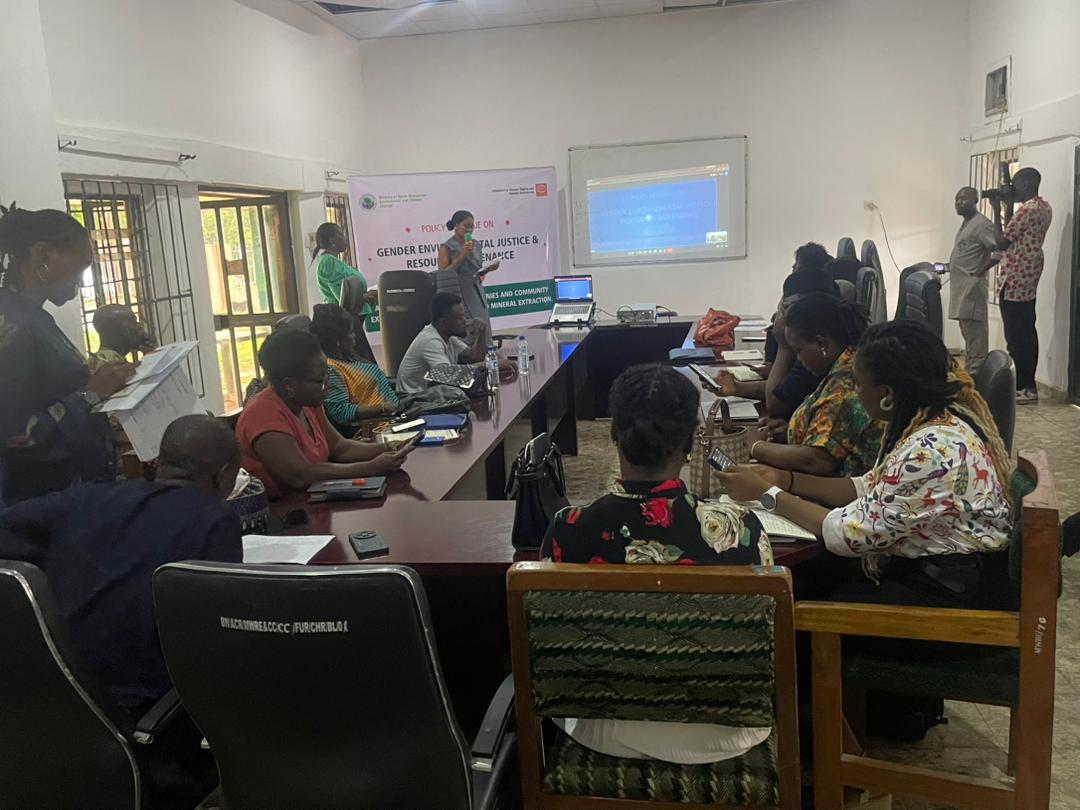
The concerns were contained in a communiqué issued at the end of a one-day Policy Dialogue on Gender, Environmental Justice and Resource Governance in Benue State, with the theme “Amplifying Survivor-Led Testimonies and Community Experiences on the Impact of Solid Mineral Extraction.”
The dialogue was convened by IHRGA, Civil Society Organizations Benue (CSO-B), and the Benue Network of Non-Governmental Organizations (BENGONET) in collaboration with the Benue State Ministry of Water Resources, Environment and Climate Change and the Benue State Geo-Mining Company Limited.
The meeting, held in Makurdi, attracted international partners including International Alert, Terre des Hommes (TdH), Christian Blind Mission (CBM) and other civil society organisations.
According to the communiqué, the dialogue provided a gender-inclusive platform for survivors and residents of mining host communities to present first-hand accounts of the social, economic and environmental impacts of solid mineral extraction.
Participants observed that “women, children, Persons With Disabilities (PWDs), and other marginalized groups bear the primary, disproportionate burdens of unregulated mining operations.”
The stakeholders alleged that foreign companies and some local mining operators had consistently violated the principle of Free, Prior and Informed Consent (FPIC) by commencing mining activities without adequately consulting host communities.
The communiqué stated that “Chinese companies and local businesses are responsible for mining in Benue State and allegedly completely disregard the principles of Free, Prior, and Informed Consent (FPIC) before commencing extraction.”
It further alleged that in communities including Jato-Aka (Turan), Adagi/Ikyulav-Ya, Ikyogen and Abande in Kwande Local Government Area, mining operators acquired community lands at values far below acceptable rates, with women suffering the greatest disadvantage because many lack secure land ownership rights.
The participants also accused mining companies of routinely expanding excavation beyond approved boundaries without seeking fresh community consent.
On public health, the stakeholders expressed grave concern over alleged contamination of water sources and farmlands by lead mining activities.
According to the communiqué, “testimonies directly linked this pollution to an increase in miscarriages, stillbirths, and infertility among young women, some as young as 25 years old.”
The participants also reported increasing cases of arthritis, pneumonia and other chronic respiratory illnesses, particularly among children, attributing the trend to prolonged environmental exposure caused by mining operations.
The communiqué noted that affected children often suffer long hospital stays, disruption of education and reduced productivity later in life.
The dialogue also highlighted worsening insecurity around mining communities.
Participants alleged that heavy militarization of mining sites had created an atmosphere of fear, while unregulated corporate security arrangements were fueling conflicts and threatening lives.
The communiqué stated that economic hardship had forced many young people into dangerous mining jobs where they face “fatal risks, including frequent and catastrophic mine collapses.”
It added that many local farmers were no longer able to access their farmlands because of insecurity and restrictions around mining locations, while mining operators continued to enjoy unrestricted access to land and forest resources.
The stakeholders further lamented that heavy trucks transporting minerals had damaged rural roads, contributing to fatal accidents and restricting the movement of women and other vulnerable groups.
The communiqué also alleged an increase in Gender-Based Violence within mining communities. According to the participants, “the influx of foreign workers and transient laborers has driven an increase in Gender-Based Violence (GBV), including sexual exploitation, harassment, and abuse of local women and adolescent girls.”
They further lamented that despite decades of coal extraction in Owukpa, Ogbadibo LGA, the host community continued to suffer poor road networks, inadequate healthcare facilities and weak educational infrastructure.
The stakeholders claimed that while the Federal Ministry responsible for mining and a few local leaders benefited from mining proceeds, host communities continued to bear the environmental and social costs. They also observed that fear of retaliation discouraged residents, particularly women and youths, from reporting mine-related abuses, injuries and cases of GBV.
The communiqué noted that the Benue State Mineral Resources and Environmental Management Committee (MIREMCO) remained constrained because mining licences are issued by the Federal Government, limiting the state’s regulatory powers.
To address the identified challenges, participants resolved to work with the Benue State Government to develop a comprehensive gender-responsive policy on Gender, Environmental Justice and Resource Governance.
They also called for strict enforcement of Free, Prior and Informed Consent (FPIC) procedures before mining activities commence, with women actively involved in negotiations.
Other resolutions included the establishment of mechanisms to regulate corporate security personnel, protect survivors of GBV, strengthen mine safety standards, monitor mining operations to prevent boundary encroachment and environmental pollution, expand community rights education and promote alternative livelihood programmes to reduce dependence on mining.
The participants further pledged to strengthen women-led advocacy in mining communities, encouraging women to lead negotiations on environmental protection, community development and equitable resource governance.
The communiqué was endorsed by IHRGA, CSO-B, BENGONET, the Benue State Ministry of Water Resources, Environment and Climate Change, Benue State Geo-Mining Company Limited, the Benue State Bureau for International Cooperation and Development (BICD), International Alert, Terre des Hommes, Christian Blind Mission, Lawyer Alert, Women in Climate Leadership, and representatives of affected communities from Kwande and Ogbadibo LGAs.
Disclaimer
Comments expressed here do not reflect the opinions of Vanguard newspapers or any employee thereof.