By Benjamin Njoku
The Federal Ministry of Arts, Culture and Tourism has been urged to enact enforceable regulations with clear reporting channels and strong sanctions to address the systemic barriers confronting young women across Africa’s growing creative sector.
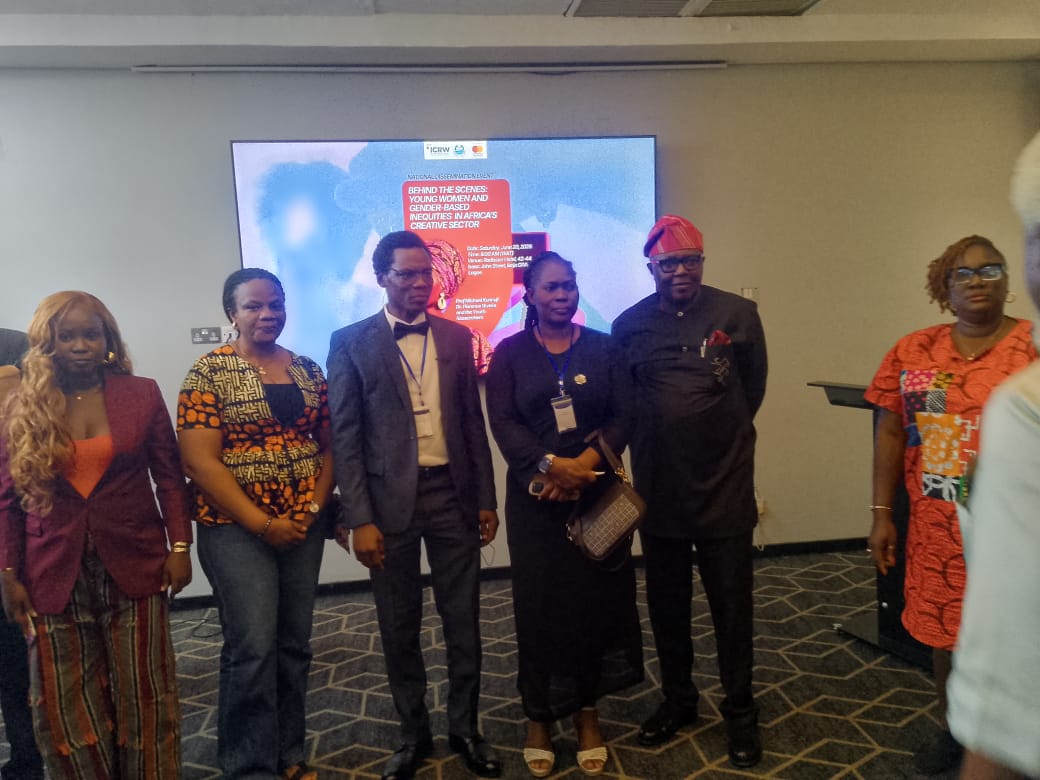
The call came at a dissemination event held recently in Lagos to spotlight the obstacles limiting young female creatives in Nigeria. The one-day event brought together academics, young researchers, students, and stakeholders. It was the outcome of “Behind the Scenes: Young Women and Gender-Based Inequities in Africa’s Creative Sector (BTS)”, a multi-country research project running in Nigeria, Ethiopia, Ghana, Kenya, Rwanda, Senegal, and Uganda.
Led by researchers from the University of Lagos, UNILAG, in partnership with the International Center for Research on Women, ICRW, and supported by the Mastercard Foundation, the BTS project generates evidence on the barriers young women face. It also promotes policy reform, workplace inclusion, youth empowerment, and safer professional environments, in line with several UN Sustainable Development Goals. A major highlight was the presentation of findings from the Nigerian study by Principal Researcher Dr. Florence Ewomazino Nweke of the Department of Music and Sound Production, Faculty of Creative Arts, UNILAG.
Nweke said women are more visible in music, film, media, and other creative spaces, but deep-rooted societal expectations and patriarchal attitudes still shape how they are treated. Many face unequal recognition, limited access to leadership, sexual harassment, and constant pressure to prove their competence in male-dominated spaces.
“Unequal pay, sexual coercion, denial of opportunities, and disproportionate exploitation are not isolated incidents, `they are systemic,” she stated. “Women navigate these risks daily with little institutional protection or recourse.” She added that young female creatives are starved of funding and leadership access:
“Without access to funding, credit, or collateral-free finance, female creatives cannot acquire equipment, scale their businesses, or compete on equal footing. The result is predictable: male dominance in ownership and leadership persists across nearly every creative sub-sector. Equipment acquisition remains out of reach. Business scaling is structurally impeded. Leadership pathways are blocked, not chosen.”
She also noted that stereotypes frame creative fields as male domains, dismissing women’s ideas and stalling career growth regardless of talent. “Cultural norms frame creativity itself as masculine, compounding invisibility for female creatives,” she said.
Professor Michael Kunnuji of the Department of Sociology, UNILAG, warned that ignoring these issues risks reversing gains in the sector.
“We are risking going back to square one if the outlined issues confronting young female creatives are not given urgent attention,” he said. “If not addressed, it will lead to job losses in the creative sector and deny the country’s economy a needed boost.” He called for collective action to close the gap, urging creative associations and guilds to set up grievance mechanisms and leadership benchmarks across all sub-sectors. The University don also asked donors and development partners to provide tailored grants and loans with reformed collateral requirements to help women thrive.
Disclaimer
Comments expressed here do not reflect the opinions of Vanguard newspapers or any employee thereof.