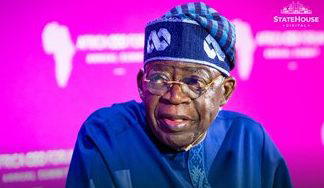
President Bola Tinubu
By EHIMHANTIE AIDAGHESE
As Nigeria moves gradually toward the 2027 general elections, much of the political conversation is understandably focused on the economy, insecurity, and the fortunes of the various political parties. Yet another factor may prove equally consequential: the gap between public policy and public understanding.
President Bola Ahmed Tinubu’s administratioan has undertaken some of the most far-reaching economic and fiscal reforms since the return to democratic rule in 1999. Whether one agrees with these policies or not, their political consequences cannot be fully understood without examining how they have been communicated, interpreted, and, in many cases, misunderstood.
This reality became apparent to me last year when I wrote two open letters to the President and the leadership of the National Assembly regarding Sections 9(4), 9(5), and 64(c) of the Petroleum Industry Act (PIA), which require the Nigerian National Petroleum Company Limited (NNPCL) to allocate 30 per cent of its annual profits to frontier basin exploration.
My concern was not exploration itself but the absence of a sunset clause and the constitutional implications of permanently earmarking substantial public revenues for a specific programme. In a federation where revenue distribution is governed by Section 162 of the Constitution, legitimate questions arise regarding transparency, accountability, and the rights of the federating units.
At the time, very few educated Nigerians appeared to understand the significance of the issue. The public conversation was largely silent. Yet the implications were enormous. Billions of naira that could have been distributed among the federating units were potentially being diverted indefinitely into exploration projects whose commercial viability remained uncertain.
Then came Executive Order No. 9 of February 2026.
When the Federal Government issued the Order, it exposed a persistent misunderstanding of the fiscal and constitutional issues surrounding the Frontier Basin Fund. By requiring NNPCL to allocate 30 per cent of its annual profits to frontier basin exploration, the Petroleum Industry Act (PIA) had created a funding mechanism that this author, as well as The Guardian and The Punch in their respective commentaries, considered difficult to reconcile with Section 162 of the Constitution. Executive Order No. 9 sought to address that controversy by reversing the arrangement and reaffirming the constitutional framework governing the allocation of public revenues.
However, much of the public debate focused on alleged job losses and accusations that President Tinubu was usurping the legislative function. These arguments overlooked a fundamental point: the Frontier Basin Fund was never conceived as a job-creation programme. Its primary purpose was to finance exploratory activities in frontier basins.
Concerned by the growing misconceptions, I wrote an essay titled “Executive Order 9: Setting the Record Straight—A Policy Rebuttal on Federation Revenue, the Frontier Exploration Fund, and Constitutional Compliance.” Published on 2 March 2026, the essay was posted on my Facebook wall and subsequently shared on the Facebook page of a business publication, where the contrary narrative had gained significant traction and was attracting widespread criticism of the policy.
The episode reinforced a broader lesson: complex policy issues are often reduced to political talking points, while the underlying constitutional and fiscal questions receive far less attention than they deserve.
This tendency is not unique to the PIA debate. In Nigeria, complex policy issues are often reduced to political slogans, while the underlying structural questions receive insufficient attention. The result is a public discourse that frequently becomes disconnected from the realities of governance.
The removal of fuel subsidy illustrates this challenge perfectly.
For decades, economists, development experts, and successive governments acknowledged that the subsidy regime was fiscally unsustainable. It became synonymous with waste, inefficiency, and allegations of corruption. Yet few administrations were willing to bear the political cost of ending it. President Tinubu took that decision on his first day in office and immediately absorbed the political consequences, still paying the price.
There is no denying the hardship that followed. Transportation costs increased. Inflation accelerated. Families struggled under the weight of rising living expenses. These realities are undeniable.
Yet there is another side to the story that receives far less attention. The removal of the subsidy significantly increased revenues available to the three tiers of government. Monthly allocations to states rose dramatically. Governors who once complained about inadequate resources suddenly found themselves receiving unprecedented inflows from the Federation Account. This is where the conversation becomes interesting.
Many of the same commentators who demand restructuring and true federalism continue to direct virtually all public anger toward the President while paying comparatively little attention to the performance of state governments. Yet true federalism is not merely about transferring more resources to the states. It is also about transferring responsibility and accountability.
If states now receive significantly larger allocations, should citizens not demand corresponding improvements in education, healthcare, infrastructure, and security? If governors are beneficiaries of increased revenues, should they not also become subjects of increased scrutiny?
A federation cannot function effectively when power is decentralised, but accountability remains concentrated at the centre. Decentralisation (more money or allocations) must therefore be accompanied by a corresponding transfer of responsibility, with states prepared to assume greater obligations and be held accountable for their performance.
The same principle applies to security.
Recent incidents of kidnapping and attacks on educational institutions have once again pushed security to the forefront of national discourse. Inevitably, comparisons have emerged with the insecurity that characterised the latter years of President Goodluck Jonathan’s administration, particularly after the abduction of the Chibok schoolgirls.
The political implications are obvious. Security crises often shape public perception more powerfully than economic statistics, policy reforms, or constitutional arguments. Fear can be a potent political force. However, there is a crucial difference between then and now.
Nigerians are far more informed, connected, and politically aware than they were a decade ago. Social media, digital journalism, and alternative information platforms have expanded the public’s ability to interrogate official narratives and political messaging from multiple perspectives.
This does not mean the government should expect sympathy or reduced scrutiny. Nigerians rightly demand results. They want security, economic opportunity, and governance that improves their daily lives. What it does mean, however, is that voters may be less receptive to simplistic political narratives and more inclined to examine issues on their merits.
As 2027 approaches, the central political question may not simply be whether President Tinubu’s reforms have succeeded or failed. It may also be whether Nigerians fully understand what those reforms were intended to achieve.
This is where commentators, academics, lawyers, journalists, and public intellectuals assume a critical responsibility. They serve as the bridge between public policy and public understanding. When that bridge collapses, misconceptions flourish, public debate becomes distorted, and democratic accountability suffers.
The battle for 2027 will therefore be fought on two fronts.
One front will involve the traditional contests over economic performance, security, and governance. The other will involve the struggle to shape public understanding of those issues. In modern politics, perception often becomes political reality.
For President Tinubu, the greatest challenge may not be defeating his political opponents. It may be ensuring that the public understands the reforms his administration has undertaken before those reforms are judged at the ballot box.
Whether that happens may ultimately determine not only the outcome of the next election but also how history remembers one of the most consequential periods in Nigeria’s democratic journey.
Disclaimer
Comments expressed here do not reflect the opinions of Vanguard newspapers or any employee thereof.