By Esther Onyegbula
The United Nations Global Compact Network Nigeria, UNGCNN, has urged Nigerian businesses to move beyond policy commitments and embrace human rights accountability as a strategic tool for building trust, attracting investment and ensuring long-term business sustainability.
The call was made at the Private Sector Dialogue on Business and Human Rights themed, “Business and human rights as a business advantage: Building the accountability practices that earn lasting trust,” held in Lagos on June 19, 2026.
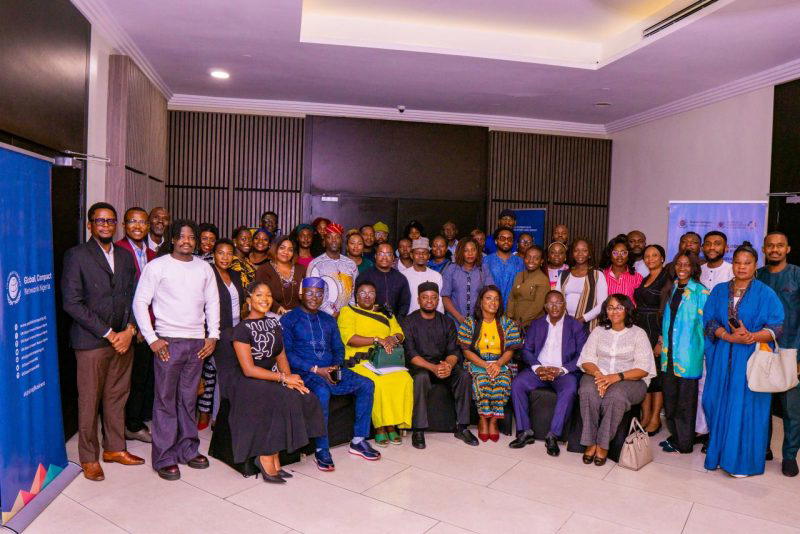
The event brought together over 60 participants, including business leaders, sustainability professionals, policymakers and human rights advocates, to examine how organisations can strengthen accountability frameworks, improve stakeholder confidence and create sustainable value through responsible business practices.
Speaking during her welcome address, Chief Executive Officer and Executive Director of UNGCNN, Naomi Nwokolo, said the growing expectations of investors, regulators, consumers and business partners have made accountability and respect for human rights central to business success.
According to her, companies can no longer afford to treat human rights as a peripheral issue.
She said: “Accountability is built when commitments are translated into clear processes, responsible decisions and visible action. It is built when stakeholders can see and experience that the company takes its responsibilities very seriously.
“The real value of this programme will be seen in what happens after today, the policies that have been strengthened, the risks identified, the conversations started internally, and the decisions that will be made differently.”
Also speaking, Board Chair of UNGCNN and Company Secretary of MTN Nigeria, Uto Ukpanah, challenged Nigerian businesses to move from declarations to measurable evidence, noting that global investors and business partners now demand proof of responsible business conduct.
Ukpanah said human rights due diligence has evolved beyond a moral obligation and is increasingly becoming a critical factor in determining market access, investor confidence and business resilience.
“Today, human rights due diligence is no longer only a question of values. It is becoming a question of business credibility, market access, investor confidence and long-term resilience.
“Trust is a currency that must not be devalued. The companies that build trust today will be better positioned to access markets tomorrow. The companies that document credibly today will be better prepared to win partnerships tomorrow. And the companies that govern responsibly today will be the ones that endure,” she said.
Delivering an address on behalf of the National Human Rights Commission, NHRC, Deputy Director of Legal Services and Business and Human Rights Focal Point Lead, Pwadumdi Okoh Esq., described business and human rights as a strategic necessity rather than a voluntary corporate initiative.
She highlighted the benefits of implementing Nigeria’s National Action Plan on Business and Human Rights, stressing that companies that respect human dignity are better positioned to earn trust and strengthen their operations.
“Business and human rights is not a philanthropic extra. It is a strategic imperative. When companies anchor their operations in respect for human dignity, they build durable trust with workers, communities, customers and investors.
“Together we can turn Nigeria’s business and human rights action plan into a competitive advantage that sets a regional standard, safer workplaces, empowered communities, resilient businesses and a stronger economy,” Okoh said.
In a keynote address delivered on behalf of Lagos State Commissioner for Wealth Creation and Employment, Akinwande Bankole Awotafair, Director of Partnerships at the ministry, Yemisi Adeniyi, reiterated the state government’s commitment to fostering an inclusive economy and strengthening collaboration between government, businesses and civil society organisations.
Adeniyi urged companies to view human rights as a business opportunity rather than a regulatory burden.
“The future of business belongs to institutions that understand that profitability and purpose are not competing interests. They are complementary forces that, when aligned, create sustainable value for shareholders, employees, companies and society at large.
“I encourage the private sector to view human rights not as a compliance burden, but as an opportunity to create value and earn lasting trust,” she said.
A major highlight of the event was the presentation of progress reports by organisations participating in the Business and Human Rights Accelerator Programme.
Representatives of Sahara Group, Lauretta Eguabor and Ebelechukwu Ifeka, shared the company’s efforts to strengthen human rights governance, deepen stakeholder engagement and institutionalise accountability mechanisms across its operations.
Similarly, Reliance Chemical Products Limited, represented by John Eneche and Blessing Ashaolu, outlined the company’s achievements in workplace safety, environmental stewardship, human rights risk management and grievance handling systems.
Health Systems Consults, represented by Amarachi Okiee, also participated in the accelerator spotlight session.
In recognition of their contributions to advancing business and human rights principles, Sahara Group and Reliance Chemical Products Limited received awards for outstanding participation in the accelerator programme.
The dialogue also featured a high-level panel discussion moderated by Head of Programmes at UNGCNN, Gloria Okorie.
Panelists included Adwoa Kufuor, Senior Human Rights Adviser to the Office of the United Nations Resident and Humanitarian Coordinator; Chigozie Ejimogu of Verod Capital Management; Dr. Adeyemi Adun of Dangote Industries Limited; and Chinedu Igwe of NNPC Limited.
The panel examined the growing expectations around responsible business conduct and explored how accountability practices, stakeholder engagement and human rights due diligence can enhance business performance, strengthen resilience and drive sustainable growth.
Okorie urged organisations to ensure that human rights commitments are reflected in everyday business practices rather than remaining policy statements.
“One thing is very clear: the human rights conversation is a business conversation. It’s not just about compliance. It’s not just about risk. It affects each and every one of us.
“The call to action is this, go back and review internally whether your policy is just words on paper, or whether you are actually implementing human rights as it should be. The resources are here. The collaboration is available. Now it’s about action,” she said.
The dialogue concluded with participants agreeing that businesses that prioritise human rights are not only contributing to stronger communities and more inclusive economic growth, but are also positioning themselves for greater trust, competitiveness and long-term success in an increasingly demanding global business environment.
Disclaimer
Comments expressed here do not reflect the opinions of Vanguard newspapers or any employee thereof.