By Special Correspondent
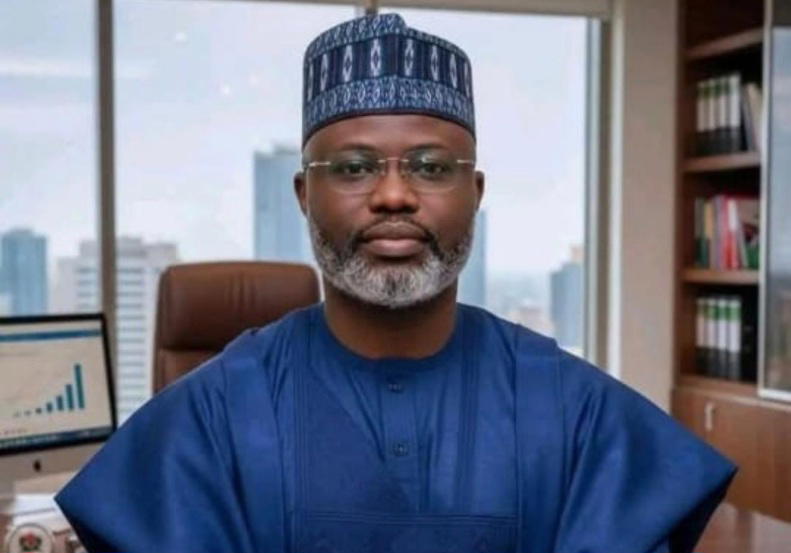
There is a peculiar breed of Nigerian leader, one who does not wait to be handed power before he begins to serve. One who builds before he campaigns, who sacrifices before he speaks, who earns trust in the marketplace and then brings that same discipline to the political arena. Ambassador Abdulfatai Yahaya Seriki Gambari, known affectionately across Kwara State as AMBA is that rare breed.
At fifty years old, born on 8 October 1975, Yahaya Seriki carries within him the story of modern Nigeria in microcosm: the cosmopolitan upbringing, the entrepreneurial hustle, the political awakening, and an abiding love for a state he calls home. His is not a story of privilege handed down it is a story earned, contested, and still very much being written.
I. The Making of a Merchant: Business Acumen and the Kursi Empire
Seriki was born in Kaduna, raised in Maiduguri, and later found his footing in Jos before his roots drew him back to Ilorin, the historic capital of Kwara State. That itinerant childhood moving through the northern cities that form the backbone of Nigeria’s commercial belt gave him something that classroom education alone rarely provides: an instinct for people and an eye for opportunity.
Long before he became a political name, Yahaya Seriki was building. He founded Kursi lnvestments Limited, a company that grew into a respected group of enterprises with interests spanning solid minerals, real estate, and trade. The Kursi brand did not merely become profitable it became a symbol of what indigenous enterprise could achieve when guided by discipline and vision.
As chairman of Kursi Investment Limited, Seriki demonstrated a management style that combined ground-level engagement with strategic ambition, earning him the title of business magnate across Kwara and beyond. His business credentials opened doors that politics alone cannot buy. The corridors he walked in building Kursi from boardrooms to community markets gave him a vocabulary of development that was practical, not performative. When he speaks of industrialising Kwara, of shifting the state from a consumption-based economy to a production and investment-driven one, he speaks as someone who has lived the economics of enterprise, not merely studied it.
His global exposure has further sharpened that perspective. In November 2025, even as crowds filled the streets of Ilorin chanting his name in a spontaneous rally, Seriki was thousands of miles away in China on a business engagement, a testament, his supporters noted, to the kind of leader who does not pause the work of development to chase political theatre.
II. The Call of Politics: A Patriot Enters the Arena
It would have been easy, perhaps comfortable, for Yahaya Seriki to remain a successful businessman, respected, influential, and safely removed from the rough and tumble of Nigerian politics.
He chose otherwise.
His entry into the All Progressives Congress (APC) was not that of an opportunist scenting power, but of a patriot sensing a moment. Kwara State, for too long, had been the personal fiefdom of powerful political godfathers, which stifled genuine representation and popular will. A resistance was forming; an organic, people-driven revolt that would crystallise into the iconic O To Ge (Enough is Enough) Movement of 2019.
Seriki was not a bystander. He was a combatant.
In 2018, he declared his intention to contest the APC governorship primary, becoming one of eight aspirants cleared by the party. His declaration rattled the old order: here was an entrepreneur with real resources, real networks, and real credibility, entering an arena that gatekeepers preferred to control. Bukola Saraki himself, according to reports at the time, reportedly attempted to lure Seriki with an appointment in exchange for his defection to the PDP.
Seriki refused. His loyalty to the APC and to the principle that Kwara deserved better was not for sale.
III. The Sacrifice That History Will Remember
There is a moment in every political story that separates the self-seeking from the selfless. For Yahaya Seriki, that moment came in the lead-up to the 2019 governorship primary. He was an aspirant with genuine grassroots support, legitimate party standing, and the financial and organisational capacity to mount a formidable campaign. And yet, when the strategic calculus demanded it when it became clear that a united front behind one strong candidate gave the APC its best chance of defeating the Saraki political machine Seriki made the harder choice.
He became the first aspirant to step down, throwing his weight and his formidable organisational capacity behind Abdulrahman AbdulRazaq. It was a sacrifice that could have been bitter. It was not. Instead, Seriki channelled every resource he had into ensuring that the APC’s preferred candidate did not merely enter the race but won it convincingly.
His reward was not a position or a title, but a responsibility: he was appointed Director General of the APC Campaign Council, the operational commander of the campaign that would produce Kwara’s governor. Few understand just how consequential that role was. The O To Ge revolution did not happen by sentiment alone. It was organised, mobilised, and executed. Seriki was at the nerve centre of that execution.
When Governor AbdulRazaq was sworn in, a new chapter opened for Kwara and Yahaya Seriki had written some of its most important opening pages.
IV. Beyond Kwara: Ascending to National Influence
A lesser politician would have rested on the laurels of 2019. Seriki instead used the years that followed to expand his footprint not just in Kwara, but at the national level.
His move to Abuja became a calculated investment in influence. His Maitama residence in the capital grew into a meeting point for some of Nigeria’s most consequential figures the Oni of Ife, the APC National Chairman, the Secretary to the Government of the Federation men who do not visit without reason. Seriki’s stock was rising.
He became a prominent champion of the City Boy Movement, one of the largest youth campaign organisations mobilised in support of President Bola Ahmed Tinubu’s re-election agenda. In doing so, he demonstrated alignment not just with the party’s state chapter, but with its national leadership, a strategic asset in a federal system where state-federal synergy determines how much development flows to any given state.
Those who observed his trajectory from Ilorin backrooms to Abuja’s inner circles were not surprised. Seriki has always understood that real power in Nigeria is networked and he has been patient, deliberate, and consistent in building those networks.
V. A Heart for the People: Philanthropy and People-Centred Initiatives
Ambassador Seriki’s politics are not abstract. They are rooted in something that all the strategy and all the ambition in the world cannot manufacture: genuine care for people.
Across Kwara State, his interventions in communities have not waited for election seasons. He has consistently supported women-led enterprises, youth empowerment programmes, skills acquisition initiatives, and grassroots economic projects that touch the lives of ordinary Kwarans where they actually live not in policy documents, but in homes, markets, and schools.
In the words of Dr. Sa’adat Yetunde Yusuf, Executive Secretary of the National Women Advancement and Political Development Initiative in Kwara: “Women see in AMBA a listener and a doer. He has consistently supported women-led enterprises and youth development programmes.”
Former Assembly member Ali Jimoh echoed this in language that captures Seriki’s brand of leadership: “Ambassador Seriki has shown what it means to lead without being in power, empowering youths, mediating peace, and investing in people.”
That phrase leading without being in power may be the most important thing said about him.
Too many Nigerian politicians discover philanthropy during campaign season. Seriki’s community investments predate and outlast any electoral cycle. For the vulnerable, for the youth who cannot afford a trade, for the woman trying to grow a business without access to capital, AMBA has been a consistent presence.
VI. The Vision: A Greater Kwara, A Stronger Nigeria
As 2027 draws near, the central question being asked across Kwara State is not whether Yahaya Seriki is capable — his biography answers that. The question is whether Kwara is ready for the kind of transformational leadership he represents.
His vision, as articulated to supporters and stakeholders, rests on clear pillars:
Economic Transformation.
Kwara must move from consumption to production. Seriki envisions a state that attracts industrial investment, builds value chains around its solid minerals and agricultural resources, and creates jobs that keep its young people at home rather than sending them on desperate journeys elsewhere. The Kursi Group experience is not incidental here he knows what it takes to build an enterprise from scratch, and he intends to apply that knowledge at a state scale.
Infrastructure and Connectivity.
A productive economy needs roads, power, water, and digital infrastructure. Seriki’s vision for Kwara includes expanding infrastructure into rural and underserved communities, ensuring that development is not a Lagos-style coastal privilege but a statewide reality.
Healthcare and Education.
The Elites Youth Network, in endorsing Seriki’s candidacy, captured his stated priorities precisely: “We expect a leadership that will strengthen our hospitals, improve access to quality education, and expand infrastructure across rural and urban communities.”
These are not platitudes in Seriki’s case they are commitments backed by a track record of community investment.
Federal-State Synergy.
Perhaps uniquely among potential candidates, Seriki understands the mechanics of federal-state partnership. His national networks built through years of party loyalty, direct engagement with Abuja’s power structure, and support for President Tinubu’s national agenda position him to be an effective advocate for Kwara’s development at the federal table.
Continuity with Innovation.
He has been clear that his vision is not to dismantle what Governor AbdulRazaq has built, but to consolidate, expand, and deepen it. The O To Ge Revolution delivered Kwara from the grip of an era but revolutions must be followed by reconstruction.
Seriki sees himself as the builder of the next chapter.
For Nigeria, his ambitions extend beyond state boundaries. He has spoken of the need for Nigeria to leverage its demographic and resource advantages through governance that actually delivers not governance captured by vested interests and recycled elites. His own rise from business to politics, from Ilorin to Abuja’s inner circle, is, in his view, a template: that competence, loyalty, sacrifice, and genuine service can and must be the currency of Nigerian public life.
VII. The People Have Spoken
In November 2025, something unusual happened in Ilorin. Citizens: artisans, traders, professionals, students, women, elders gathered spontaneously along Taiwo Road to the Post Office Roundabout. There was no political machinery behind the gathering, no party directive, no sponsored bus from a campaign office. There was simply the voice of a people who had watched a man serve quietly for years, and who had decided they wanted him to serve them at the highest level.
The chant that rang through those streets “AMBA 2027!” was not about a campaign slogan. It was about recognition. The recognition that leadership is not merely a title to be acquired, but a relationship to be earned. And that Yahaya Seriki Gambari had been earning it in business, in sacrifice, in service, and in vision for a very long time.
The question now is whether Kwara and Nigeria will meet the moment.
Ambassador Abdulfatai Yahaya Seriki Gambari, MFR, is the founder and chairman of Kursi Investments Limited, a chieftain of the All Progressives Congress (APC), former Director General of the APC Campaign Council that produced Kwara State Governor Abdulrahman AbdulRazaq, and a declared governorship aspirant for the 2027 elections in Kwara State.
Disclaimer
Comments expressed here do not reflect the opinions of Vanguard newspapers or any employee thereof.