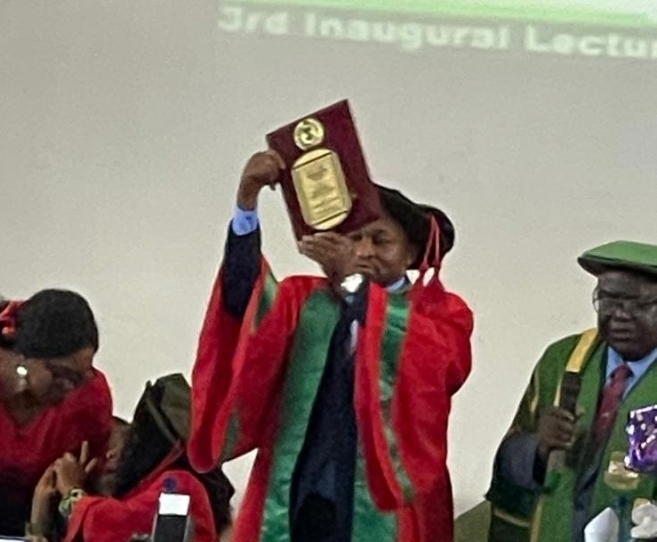
A Professor of Environmental Management and Sustainability at the University of Nigeria, Nsukka, UNN, Chidi Nzeadibe, has called for the recognition and inclusion of informal waste workers in municipal solid waste management systems across Africa.
Prof. Nzeadibe, who is also the Dean, Faculty of Social Sciences, UNN, argued that waste should be viewed not merely as refuse but as a valuable economic resource that can drive sustainable development.
Delivering the UNN’s 243rd Inaugural Lecture titled “Dealing with Waste: Expounding the Geographies of Garbage in African Cities Through the Lens of the Sustainable Development Goals,” on Thursday ,
Professor Nzeadibe highlighted the critical role played by informal waste workers, including waste pickers, scrap dealers and recyclers, in managing urban waste and supporting livelihoods across the continent.
He noted that millions of people in developing countries depend on waste collection, recycling and disposal activities for survival, with an estimated 15 million people worldwide engaged in waste picking. According to him, the sector contributes significantly to environmental protection, job creation, resource conservation and the growth of a green economy.
The scholar argued that the traditional perception of waste as a nuisance requiring disposal is gradually giving way to a resource management approach that recognizes the economic and social value embedded in waste materials.
He stressed that effective waste management can accelerate progress toward several of the United Nations Sustainable Development Goals (SDGs), particularly those related to poverty reduction, sustainable cities, employment and social inclusion.
Professor Nzeadibe also examined the impact of the COVID-19 pandemic on waste management systems, noting that increased waste generation, reduced collection services and inadequate protection for waste workers exposed weaknesses in existing policies. He called for greater attention to the health, safety and welfare of waste workers, describing municipal solid waste management as both a sustainability and environmental justice issue.
The lecturer lamented that informal waste workers remain largely excluded from government policies, social protection programmes and decision-making processes despite their contributions to urban sanitation and recycling.
He urged governments to adopt inclusive policies that formally recognize the sector, improve working conditions and provide support such as labour-saving equipment, training and access to social safety nets.
He further recommended reforms including incentives for recycling, public-private partnerships, source separation of waste, legislative support for recycling activities and greater integration of informal waste workers into city-wide waste management systems.
According to him, embracing inclusive waste management policies would not only reduce urban waste challenges but also create jobs, improve environmental sustainability, enhance social justice and contribute to achieving the SDGs across African cities.
Professor Nzeadibe concluded that recognizing and empowering the informal waste economy is essential for transforming waste management from a disposal challenge into a tool for sustainable development, poverty reduction and economic growth in Africa.
Earlier, in his welcome address, the Vice Chancellor of UNN, Professor Simon Ortuanya, thanked Professor Nzeadibe, for his scholarly contributions to the overall visibility ratings of the University.
The Vice Chancellor who was represented by the Deputy Vice Chancellor (Academics), Prof. Kamoru Usman, appreciated the academia at UNN for their impressive attendance to the lecture, which according to him, witnessed the most robed academia in attendance.
Disclaimer
Comments expressed here do not reflect the opinions of Vanguard newspapers or any employee thereof.