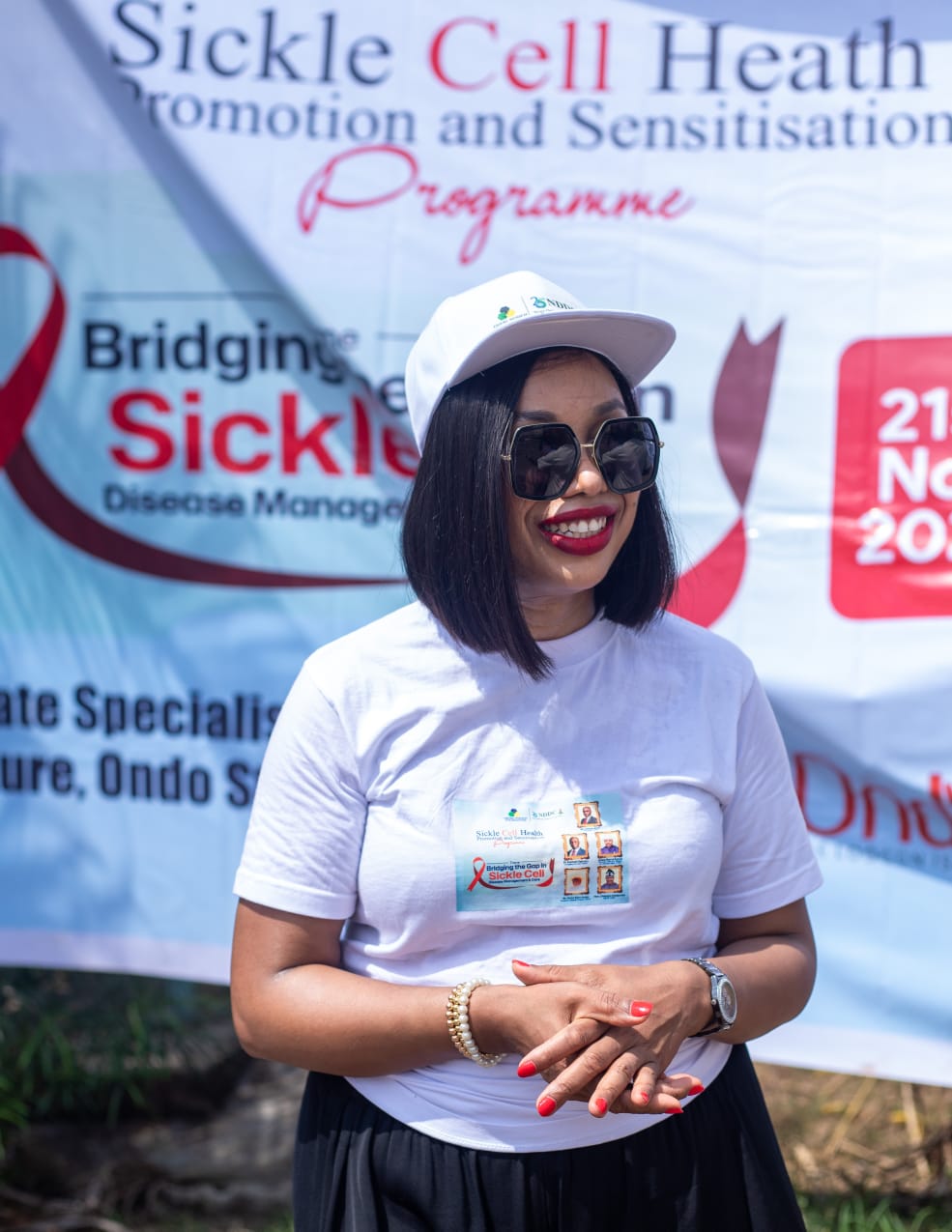
Esther Onolememen, Founder SCAIIN
By Esther Onyegbula
As World Sickle Cell Day was marked globally on Friday, the Founder of Sickle Cell Awareness Initiative Ireland, Nigeria (SCAIIN), Esther Onolememen, has called for stronger collaboration among governments, healthcare institutions, advocacy groups and development partners to improve care and support for people living with sickle cell disorder.
Onolememen, in a goodwill message to commemorate the day, said collective action remains critical to addressing the healthcare, social and emotional challenges faced by persons living with the condition, while commending the Niger Delta Development Commission, NDDC, for what she described as transformative interventions across communities in the Niger Delta.
She noted that the Commission’s support had significantly expanded access to sickle cell awareness campaigns, screening services, healthcare interventions and educational programmes, bringing renewed hope to many families who had previously felt neglected.
Describing people living with sickle cell disorder as “warriors,” Onolememen praised their resilience and determination in the face of daily challenges.
According to her, despite the physical, emotional and social burdens associated with the disorder, affected individuals and their caregivers continue to demonstrate extraordinary courage and strength.
“Living with sickle cell disorder is far more than a medical journey. It is a daily testament to resilience, perseverance, and strength. Our warriors and their families continue to inspire us through their courage and unwavering belief that a brighter future is possible,” she said.
She said collaborative efforts involving healthcare professionals, advocacy organisations, communities, development partners and government agencies had begun yielding measurable gains in awareness creation, healthcare access and family support.
“History has been made through the NDDC’s support in taking sickle cell awareness, education, and healthcare interventions directly to communities across the Niger Delta. This commitment has brought hope to many families who have long felt unseen and underserved,” Onolememen added.
The SCAIIN founder particularly applauded the Board and Management of the NDDC under the leadership of Managing Director, Dr. Samuel Ogbuku, for demonstrating compassion and commitment towards vulnerable populations in the region.
She noted that the Commission’s interventions had enabled unprecedented outreach efforts that connected healthcare services and information directly to communities where they were most needed.
Expressing optimism about the future, Onolememen said SCAIIN would continue to deepen collaboration with the NDDC Directorate of Education, Health and Social Services, alongside other stakeholders, to develop sustainable programmes aimed at improving health outcomes and enhancing the quality of life of people living with sickle cell disorder.
She said such partnerships would help promote dignity, expand opportunities and provide long-term support for affected individuals and families.
Beyond Nigeria, Onolememen acknowledged the contributions of healthcare professionals, researchers, caregivers, patient leaders and advocates across Africa working through the Umoja Africa Sickle Cell Consortium.
According to her, their efforts are helping to tackle healthcare inequalities, strengthen advocacy, advance scientific research and influence policies designed to improve the lives of persons living with sickle cell disorder across the continent.
She also highlighted recent progress in Ireland towards the implementation of a comprehensive Model of Care for Sickle Cell Disease, commending the country’s Health Service Executive, HSE, for involving patients, families, clinicians and advocates in healthcare planning.
She described the initiative as a major step towards delivering specialised and person-centred care, adding that the Irish model offers valuable lessons for African countries seeking to strengthen healthcare delivery for people living with the disorder.
According to her, stronger partnerships among governments, healthcare institutions, civil society groups and patient organisations across Africa could significantly improve treatment outcomes and access to quality care.
Onolememen stressed that World Sickle Cell Day should go beyond awareness campaigns and serve as a platform for sustained action and investment in healthcare services, research, advocacy and support systems.
“Every life matters, every voice matters, and every effort counts. Together, we are breaking barriers, challenging stigma, improving care, and creating opportunities for future generations. We must continue to work towards a future where no one living with sickle cell disorder is left behind,” she said.
World Sickle Cell Day is observed annually to raise awareness about the inherited blood disorder and to promote improved healthcare, support services and public understanding for millions of people living with the condition worldwide.
Disclaimer
Comments expressed here do not reflect the opinions of Vanguard newspapers or any employee thereof.