By James Ogunnaike, Abeokuta
A Non-Governmental Organisation, the Centre for Women’s Health and Information (CEWHIN), has called on traditional rulers, religious leaders and other key stakeholders in Ogun East Senatorial District to intensify efforts toward eliminating harmful cultural practices that violate the rights and dignity of women and girls.
The organisation said the call became imperative in view of the persistent cases of violence, discrimination and degrading treatment meted out to women under the guise of culture and tradition, noting that such practices to have far-reaching social, economic and psychological consequences.
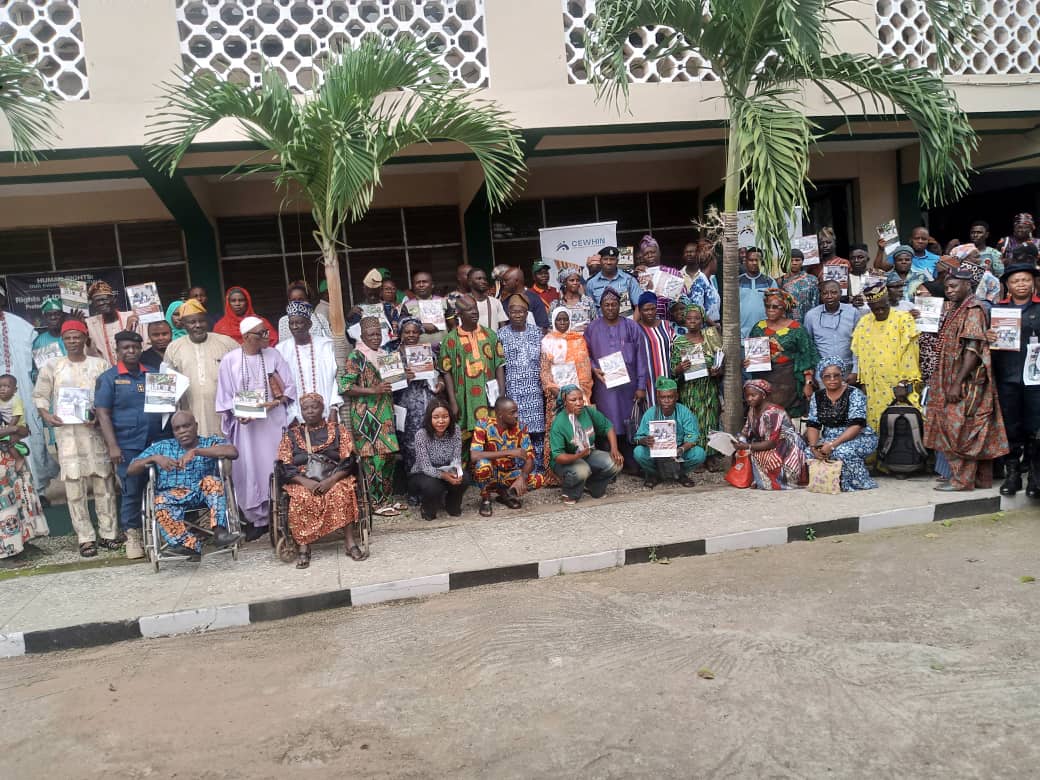
The appeal was made during a town hall meeting on the prevention of Violence Against Women and Girls (VAWG) held in Ijebu-Ode. The programme, organised by CEWHIN with support from the Ford Foundation, was themed: “Partnership for Enhanced VAWG Prevention Among Religious and Traditional Stakeholders in Ogun State.”
The programme attracted traditional rulers, religious leaders, Community Development Association (CDA) representatives, women groups, youths, artisans, civil society organisations and security agencies.
Participants identified harmful cultural practices, poverty, ignorance and limited access to education as major drivers of violence against women and girls in many communities.
They stressed the need for collective action to challenge belief systems that perpetuate discrimination and deny women their fundamental rights.
One of the participants said: “We need to break through the walls built by harmful belief systems that continue to disregard the dignity and rights of women and girls in our society. Beyond legislation, there must be stronger political will, community ownership and sustained advocacy to eradicate these practices.”
During deliberations, stakeholders examined socialisation patterns and cultural norms that contribute to gender-based violence, as well as barriers hindering effective prevention efforts. They also proposed practical, community-driven solutions aimed at reducing violence against women and girls across the state.
Among them were the Babaloja of Olabisi Onabanjo Market, Ijebu-Ode, Alhaji Amuludun Jamiu; Chief Rahmon Sikiru; Mrs Oweniwe Hellen; Chief K.M. Oyenuga; Elder Sunday Adewale; and Mr Oguntola Peter.
They observed that legislation alone cannot dismantle deeply rooted harmful traditions, urging sustained sensitisation campaigns targeting traditional institutions, religious bodies and young people.
They encouraged community chiefs and faith leaders to champion positive cultural values, challenge harmful narratives and promote alternative practices that uphold human dignity.
They further recommended continuous grassroots education, economic empowerment programmes for women and stricter enforcement of existing laws designed to protect women and girls from violence and discrimination.
While stressing that any tradition or cultural practice that undermines the rights, dignity and wellbeing of women should be discarded, they cautioned against the wholesale rejection of cultural values.
According to them, not all traditional beliefs are harmful.
“There are cultural values that promote discipline, family cohesion and peaceful coexistence within communities. Discarding such values entirely may have unintended consequences for families and society,” they said.
The stakeholders warned against allowing modernisation to completely erode positive indigenous values and traditions.
Alhaji Jamiu also advised young people preparing for marriage to conduct proper background checks on prospective spouses before making lifelong commitments.
He said: “Marriage should not be based solely on emotions or financial considerations. Young people must take time to understand the family background, values and traditions of their prospective partners before entering into marriage.”
The stakeholders further urged men to treat women with love, dignity and respect, while calling for increased awareness campaigns among youths on the dangers of harmful cultural practices and all forms of discrimination against women.
They maintained that ending violence against women and girls requires collective commitment from families, communities, religious institutions and government at all levels.
Speaking with journalists at the event, CEWHIN’s Senior Programme Officer, Julian Afachung, said the initiative was designed to engage traditional and religious leaders as frontline advocates in the fight against violence against women and girls.
She noted that traditional rulers, faith-based leaders and other influential stakeholders remain critical agents in promoting positive social values, advancing gender equality and creating safer environments where women and girls can thrive.
She said: “The overall aim of this programme is to engage traditional and religious leaders in leading efforts to prevent violence against women and girls. We want them to take ownership of the process as key community influencers and champions of change.”
Afachung added that leveraging the influence and authority of traditional and faith leaders would significantly contribute to ending violence against women and girls at the grassroots.
“We have brought them together because they are respected and influential members of society. We encourage them to use that influence to drive positive change, promote respect and equality, and help create safer environments for women and girls in their communities and places of worship,” she said.
Disclaimer
Comments expressed here do not reflect the opinions of Vanguard newspapers or any employee thereof.