By Esther Onyegbula
Nigerian entrepreneur, investor and philanthropist, Chima Anyaso, has called on global financial institutions, policymakers and development stakeholders to rethink the framework guiding capital allocation to African countries, arguing that the continent continues to face unfair financial barriers despite its enormous economic potential and strong repayment record.
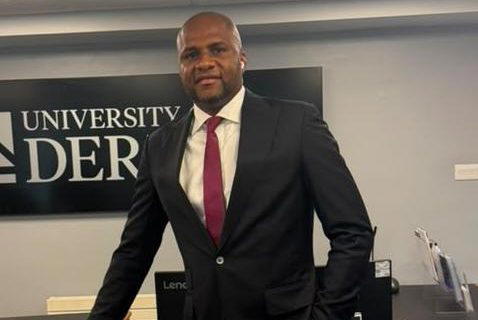
Anyaso made the call while delivering a keynote address at the University of Derby, United Kingdom, titled, “From Rule of Law to Rule of Justice: Reimagining Global Finance for Africa’s Rise.”
Addressing academics, postgraduate scholars, legal professionals, members of the African diaspora and future policymakers, he challenged long-standing assumptions that influence investment decisions, borrowing costs and risk assessments across Africa.
According to him, the current global financial architecture often penalises African nations through high borrowing costs and unfavourable risk perceptions that do not accurately reflect economic realities on the continent.
Drawing from his personal entrepreneurial experience, Anyaso recounted how access to a $35 million trading facility from a Nigerian bank transformed the trajectory of his business, enabling strategic partnerships with some of the world’s leading commodity traders and energy companies.
He said the experience demonstrated that the major obstacle facing many African entrepreneurs and economies is not a lack of ideas or ambition, but inadequate access to capital.
“Africa is not short of ideas, talent, ambition, or resources,” Anyaso said.
“What Africa has often lacked is fair access to the scale of capital needed to unlock its full potential.”
The businessman questioned whether the rules governing global finance are producing equitable outcomes, noting that several African countries continue to pay some of the highest borrowing costs globally despite implementing economic reforms and maintaining credible repayment records.
He pointed to what he described as a paradox in which a continent endowed with more than six trillion dollars in untapped mineral wealth and critical resources driving the global energy transition remains disadvantaged in accessing affordable financing.
Citing examples such as Zambia’s prolonged debt restructuring process, Ghana’s debt challenges despite years of reforms, and the widespread credit-rating downgrades experienced by African countries during the COVID-19 pandemic, Anyaso argued that perceptions of risk often outweigh objective economic assessments.
According to him, Africa’s development challenge extends beyond economics and enters the realm of justice.
“The rule of law asks whether the rules were followed. The rule of justice asks whether those rules are producing fair outcomes,” he stated.
He urged global financial institutions to ensure that financial systems are designed to advance fairness, development and shared prosperity rather than perpetuate structural inequalities.
Anyaso further advocated equal access to capital, evidence-based risk assessments, fairer interest rates and financial policies that encourage sustainable growth across the continent.
He also challenged African scholars and members of the diaspora to play active roles in reshaping global narratives about Africa by questioning outdated assumptions and advocating reforms that create a more balanced international financial system.
Addressing the audience, he stressed that Africa’s demand is not for charity but for fairness and equal opportunity within the global economy.
“Africa needs access to capital on terms that reflect reality rather than perception. If the world truly wants shared prosperity and sustainable development, then we must ensure that our financial systems consistently deliver justice,” he said.
The keynote address drew praise from attendees, who commended its integration of perspectives from law, finance, development and social justice into a broader argument for a more inclusive and equitable global economic order.
Anyaso, a prominent Nigerian entrepreneur, investor and philanthropist, has built a reputation for championing youth empowerment, enterprise development, education and policies that promote sustainable economic growth across Africa through his business and philanthropic initiatives.
Disclaimer
Comments expressed here do not reflect the opinions of Vanguard newspapers or any employee thereof.