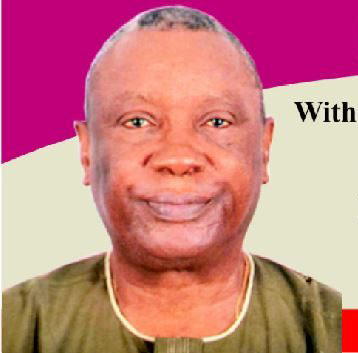
This week, we continue the narrative on boycott of elections in Nigeria
Chief Ojike did not introduce the slogans for people to boycott elections.
Chief Ojike was born in 1912 in Akeme in Arochukwu, Southeastern Nigeria. He attended the Arochukwu Primary School, finishing in 1926 and taking up a teaching appointment with a mission. He returned to college in 1929 to train as a teacher at the Church Missionary Society (CMS) Training College in Waka. A brilliant student, he won the 1931 college annual prize which was a book — Aggrey of Africa, the biography of the renowned Ghanaian educationist whose ideas of Pan-Africanism left a lasting influence on the young Ejike.
On leaving college in 1931, Ojike resumed teaching at the Central School in Abagana. In 1933 he resigned to join the staff of Dennis Memorial Grammar School in Onitsha, becoming one of the few African teachers on the staff.
His involvement in politics commenced in 1936 when he organized a successful teachers’ salary strike after teachers were granted an increase which excluded junior members of the profession. He resigned from teaching in mission schools in 1938 in preference to private schools. That same year he met Dr. Nnamdi Azikiwe with whom he established a long personal and political relationship.
Chief Ojike left for the United States of America in 1938 to continue his education at Lincoln University. His stay there sharpened his political ideology, for it was then that he met other African students like Dr. Kwame Nkrumah. Together they formed in 1941 the African Students Association of America and Canada to campaign against colonialism in Africa and injustices against the Black race in general. Chief Ojike was elected its first president.
His return to Nigeria marked an active involvement in the nationalistic politics spearheaded by Dr. Nnamdi Azikiwe who had founded the National Council of Nigerian Citizens (NCNC) and whose newspaper, the West African Pilot, had become the vocal organ of the campaign for independence. Chief Ojike joined the NCNC and contributed articles to the Pilot.
In 1949, he was fined 40 pounds on a charge of sedition because of an article in which he criticized the colonial government for the shooting of 21 miners during a labour dispute at the Udi Coal Miners, near Enugu. In 1953, he was a member of the NCNC delegation to the London Constitutional Conference which paved the way for Nigeria’s independence in October 1960. The following year he won an election on the platform of the NCNC to the Eastern Region House of Assembly, becoming the Region’s Minister of Finance; he held that office until early 1956.
Mazi Ojike Mbonu died in 1956. There is now an Ojike Memorial Medical Centre at Arondizuogu, Imo State.
In 1979, the proprietor of the Medical Centre, Dr. Kingsley Ozumba Mbadiwe, a close friend of Chief Ojike, honoured me by appointing me along with a journalist of respect, Mr. James Odafe Othinwa, as co-director of the medical centre.
In 1964, the word boycott was effectively used for the first time in the general election. Since then, there has been argument whether or not boycott has any effect.
In 1964, the NPC returned 60 of its candidates unopposed; the NCNC at that time challenged the declaration by the NPC.
On August 20, 1964, the Nigerian National Alliance (NNA) was formed. The alliance was made up of the NPC, the NNDP controlling the government of Western Nigeria, the Mid-West Democratic Front, which formed an opposition in the Mid-Western Region, and some other elements including the dynamic party of Dr. Chike Obi.
On June 3, 1964, the United Progressive Grand Alliance (UPGA) was formed. The alliance was made up of NCNC and the Action Group. The political enmity became apparent before and after the 1964 election.
The UPGA opposed the returning of 60 candidates as unopposed, including the Prime Minister, the Minister for Home Affairs, Alhaji Shehu Shagari at Sokoto West; the Minister of Economic Development, Alhaji Waziri Ibrahim, at Konduga-Mafa; and the former Ambassador to the Ivory Coast, Alhaji Abdul Razak, at Ilorin Town.
To this, the Eastern Region Attorney-General, Mr. Christopher Mojekwu, who was on a fact-finding tour of Northern Nigeria, said that for various reasons 60 UPGA candidates in the Northern Region had been unable to file their nomination papers. It later emerged that more NPC men were being returned unopposed in the North, by virtue of Northern Progressive Front candidates withdrawing in such seats as Yerwa, where the Minister of Commerce and Industry, Alhaji Zanna Buka Dipcharima, was the candidate; and in the seats of the Speaker of the Federal House, Alhaji Jalo Waziri (Gombe Central), and the Federal Minister of Works, Alhaji Inua Wada (Sumailia).
Disclaimer
Comments expressed here do not reflect the opinions of Vanguard newspapers or any employee thereof.